Labiaplasty was performed roughly 10,000 times per year in the US in 2013. By 2023, ASPS data shows that number approaching 50,000 — a nearly 5-fold increase in a decade. The reasons women pursue it are as varied as the patients themselves: physical discomfort during cycling or exercise, hygiene difficulties, visible protrusion in athletic wear, asymmetry, or simply how they feel about their body. All of those reasons are real, and all of them are yours to have.
Here’s a candid breakdown of what labiaplasty actually involves, what it costs, and when — in narrow, documented cases — insurance might step in.
Labiaplasty Cost Breakdown
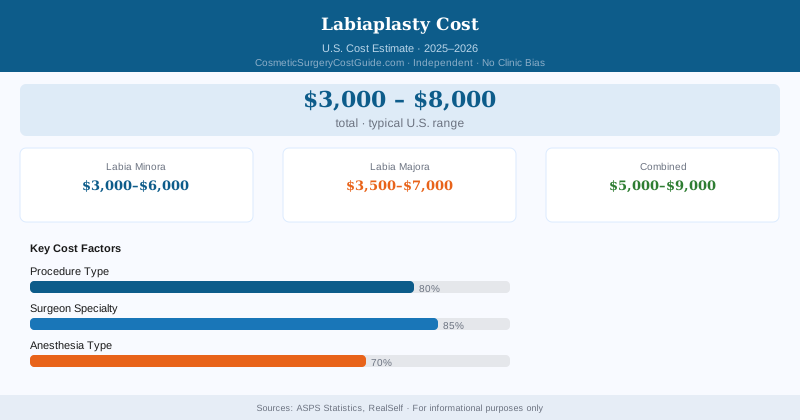
ASPS 2023 statistics put the average surgeon fee at approximately $3,000 for labia minora reduction. When you add anesthesia and facility costs, the all-in number is higher. Here’s the realistic full picture:
| Cost Component | Typical Range |
|---|---|
| Surgeon fee (labia minora only) | $2,500–$5,500 |
| Surgeon fee (labia majora only) | $2,000–$4,500 |
| Surgeon fee (both combined) | $3,500–$7,000 |
| Anesthesia (local with IV sedation) | $500–$1,500 |
| Anesthesia (general) | $1,000–$2,000 |
| Facility fee (office-based or surgery center) | $500–$1,200 |
| Total all-in (labia minora, typical) | $3,500–$7,500 |
| Total all-in (comprehensive) | $5,000–$10,000 |
Geography moves that number significantly. In major metros — New York, Los Angeles, Miami — surgeon fees run toward the upper end. In mid-sized markets, you’ll often find board-certified surgeons charging toward the lower end of that range without any quality difference.
What Labiaplasty Actually Involves
Labiaplasty most commonly means reducing the labia minora — the inner lips — though procedures on the labia majora, clitoral hood, and vaginal opening are also performed. The goal is reducing size, correcting asymmetry, or both.
Two primary surgical techniques:
Trim method: The surgeon removes tissue along the outer edge of the labia. It’s faster and simpler, and it removes the darkened edge tissue that many patients specifically want addressed. Scarring is along the free edge; well-healed trim scars are generally not visible.
Wedge resection: A triangular section is removed from the middle of the labia, and the remaining edges are sutured together. This preserves the natural-looking outer edge and tends to maintain sensation better, since the nerve-rich tissue at the border is left intact. More technically demanding — which means it matters more who’s doing it.
The procedure takes 1–2 hours. Most surgeons prefer local anesthesia with IV sedation over general anesthesia for routine cases — it costs less, reduces recovery time, and avoids general anesthesia risks. Dissolvable sutures mean no return visit to remove them.
Who Seeks This Procedure
Women who pursue labiaplasty come with a range of reasons that are all legitimate:
- Discomfort during cycling, spinning, running, or other exercise — excess tissue getting caught or chafed
- Pain or discomfort during intercourse caused by tissue getting folded or pulled
- Visible protrusion in leggings, swimwear, or athletic wear that causes self-consciousness
- Hygiene difficulties related to anatomy
- Asymmetry that’s been a long-standing source of distress
- Aesthetic preference, full stop — that’s valid too
The ACOG (American College of Obstetricians and Gynecologists) has been clear that cosmetic gynecologic procedures require rigorous informed consent, particularly regarding what the surgery can and cannot achieve, and about normal anatomical variation. In other words: your anatomy is likely not abnormal, even if it doesn’t match what you’ve seen. That context matters when you’re making this decision.
Insurance companies evaluate labiaplasty claims based on documented functional symptoms — chronic irritation, recurrent infections related to labial hypertrophy, or documented pain with activity or intercourse that conservative measures haven’t resolved. To have any realistic chance at coverage, you need:
- Functional symptoms documented in your gynecologist’s or PCP’s medical records (not just self-reported at a cosmetic surgery consultation)
- Evidence of conservative treatment — specific undergarments, hygiene protocols — that haven’t worked
- Pre-authorization submitted before scheduling surgery
- A physician willing to write detailed supporting documentation
Some insurers have blanket cosmetic procedure exclusions that make this path unavailable regardless of documentation. But for those without those exclusions, documented functional symptoms give you at least a case to make. Pure aesthetic preference is classified cosmetic and never covered.
Anesthesia: Office-Based vs. Surgery Center vs. Hospital
The setting for labiaplasty affects both cost and the type of anesthesia available:
Office-based surgical suite: Usually uses local anesthesia with oral or IV sedation. Lowest facility cost ($300–$800). Appropriate for routine labia minora reduction in healthy patients.
Ambulatory surgery center (ASC): General anesthesia or deep IV sedation available. Facility fee $600–$1,500. Preferred for more complex cases, patients with anxiety about the procedure, or when combining with other procedures.
Hospital outpatient: Highest facility cost but medically necessary for patients with complex health histories. Usually overkill for straightforward labiaplasty.
For most healthy patients, a board-certified surgeon performing the procedure in their office suite or an ASC is the appropriate setting.
Recovery: The Realistic Timeline
Recovery is more manageable than most people fear — but the restrictions are real:
- Days 1–5: Swelling and bruising are significant. Ice helps. Antibiotics are typically prescribed. Most women can work from home or return to desk work within 3–5 days.
- Weeks 2–4: Swelling improves week by week. Normal daily activities are fine.
- Weeks 4–6: Return to lower-impact exercise. Still no cycling, spinning, or activities with friction against the surgical site.
- Weeks 6–8: Return to sexual activity.
- Weeks 8–12: Full tissue healing. Final result visible around 3 months when swelling has fully resolved.
Post-op supply costs are modest: antibiotics and pain relief ($60–$130), soft breathable underwear or padded shorts ($30–$80), basic ice pack supplies ($20–$50).
Surgeon experience matters more for labiaplasty than it does for many procedures. The amount of tissue removed has to be calibrated exactly — too little, and the patient is unsatisfied; too much, and the result can cause chronic discomfort or loss of sensation that’s extremely difficult to correct. Ask how many labiaplasty procedures your surgeon performs monthly. Ask to see before-and-after photos. Ask their revision rate. You’re looking for a board-certified plastic surgeon or gynecologist with specific, ongoing training in cosmetic gynecologic procedures — not someone who added this to their menu recently.
Clitoral Hood Reduction
Clitoral hood reduction (hoodectomy) is often performed alongside labiaplasty when excess prepuce tissue is a concern. It adds $500–$1,500 to the surgeon fee but is minor in terms of additional recovery. Many surgeons offer a combined pricing structure if both are done at the same time.
Combining with Other Procedures
Labiaplasty is sometimes included in a mommy makeover package, combined with vaginoplasty (vaginal canal tightening), or scheduled alongside a tummy tuck or liposuction. Combining reduces total cost compared to separate surgeries and means a single recovery period. Combined labiaplasty plus vaginoplasty typically runs $6,500–$12,000 all-in.
Bottom Line
For labia minora reduction with a board-certified surgeon experienced in this specific procedure: budget $4,000–$7,500 all-in in most US markets. If you have functional symptoms — discomfort, recurrent irritation, hygiene problems — document them with your gynecologist before you schedule surgery. Insurance coverage is narrow, but documentation costs nothing. A consultation with the right surgeon — one who does this regularly and whose results you can actually see — is the best next step you can take.
Frequently Asked Questions
The trim method removes tissue along the outer edge of the labia minora — it's simpler and faster, and it removes the darker edge that many patients specifically want gone. The wedge technique removes a pie-shaped section from the middle of the labia, preserving the natural edge. Wedge resections tend to look more natural and preserve more sensation, but they're more technically demanding. Ask your surgeon which they use and why — their answer tells you something about their experience level.
When performed by an experienced surgeon with appropriate technique, labiaplasty shouldn't reduce sensitivity. Overly aggressive tissue removal is the primary risk — too little tissue left creates tension on the remaining structures and can affect sensation. This is exactly why surgeon experience and technique selection matter so much. Wedge resections that preserve the nerve-rich edge tissue are preferred by many specialists for this reason.
Most patients describe the first 3–5 days as uncomfortable rather than severely painful — swelling is the biggest issue. The area is very vascular, so bruising and swelling are significant in the first two weeks. Pain medication for the first week, ice packs, and careful hygiene manage most of it. Most women return to desk work within 3–5 days. The real restriction is avoiding friction-causing activities — exercise, cycling, intercourse — for 4–6 weeks.