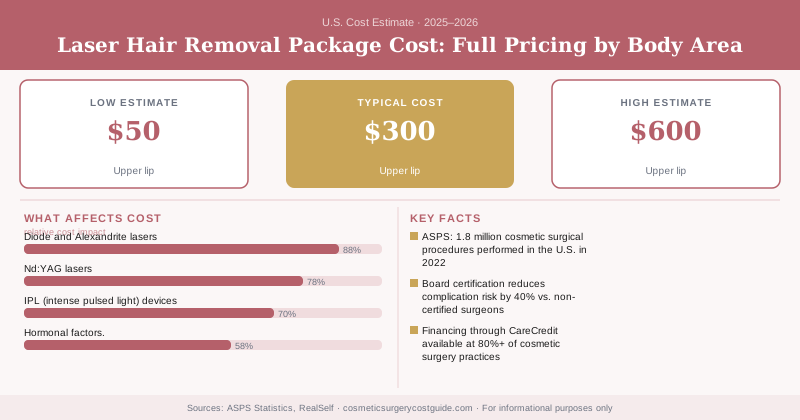
The American Society for Dermatologic Surgery has consistently ranked laser hair removal among the top five most commonly performed non-invasive cosmetic procedures in the U.S. for years — and the reason it stays popular despite an upfront package cost of hundreds to thousands of dollars comes down to simple math against a lifetime of razors and waxing appointments.
Laser hair removal package costs by area
| Body Area | Cost Per Session | Full Package (6–8 sessions) |
|---|---|---|
| Upper lip | $50–$100 | $300–$600 |
| Underarms | $75–$150 | $450–$1,000 |
| Bikini line | $100–$200 | $600–$1,400 |
| Full legs | $250–$450 | $1,500–$3,000 |
| Back | $250–$450 | $1,500–$3,000 |
| Full body | $400–$700 | $2,400–$4,500 |
Why you need a package, not a single session
Hair grows in three distinct cycles, and laser can only destroy the follicle effectively when the hair is in its active growth phase (anagen). At any given time, only a portion of your body’s hair follicles are in that phase — the rest are dormant or shedding. That’s why a single session, however well done, can never achieve meaningful long-term reduction: it only catches whatever percentage of follicles happen to be active that day.
A full package of 6–8 sessions, spaced to catch successive growth cycles, is what actually delivers the FDA-recognized “permanent reduction” result — typically 70–90% less regrowth by the end of the series. Buying single sessions à la carte without a package plan is one of the most common ways people waste money on this treatment.
Why laser type changes the price — and the value
Diode and Alexandrite lasers, common in dermatology offices and higher-end medspas, are effective across a range of skin tones and hair colors, and tend to require fewer total sessions to reach the reduction threshold most patients want.
Nd:YAG lasers are the safest choice for darker skin tones, since their longer wavelength bypasses melanin in the skin more effectively, reducing burn risk — this specificity sometimes commands a slightly higher price at practices that specialize in treating diverse skin tones safely.
IPL (intense pulsed light) devices, sometimes marketed at a lower package price, aren’t true lasers and are generally considered less effective and less predictable, particularly for lighter or finer hair — often requiring more total sessions to reach a similar result, which can erase the apparent discount.
A full-body laser package at $2,400–$4,500 sounds significant upfront, but a lifetime of monthly waxing appointments at $80–$150 per session for underarms, legs, and bikini combined can exceed $1,500–$3,000 per year. For most patients under 40 committing to years of continued hair removal, a laser package pays for itself within 2–3 years, with only occasional touch-up sessions needed afterward.
What changes your total price
Hormonal factors. Areas affected by hormonal hair growth patterns, such as PCOS-related facial or chin hair, often require more sessions than the standard package to achieve comparable reduction, sometimes needing an extended series.
Hair and skin combination. Dark, coarse hair on light skin responds fastest and most predictably; blonde, red, or gray hair responds poorly to all laser wavelengths since the laser targets melanin pigment in the hair itself, sometimes making electrolysis a better fit despite its own higher per-session cost.
Provider setting. Board-certified dermatology practices typically charge more per session than medspas, but often have access to a wider range of laser wavelengths to match your specific skin tone and hair type.
Laser hair removal performed by an undertrained technician on the wrong settings for your skin tone can cause burns, scarring, or paradoxical hair growth (increased hair growth in treated areas, more common with lower-powered devices on darker skin tones). Choose a licensed, experienced provider and confirm the specific laser type before booking — the cheapest package price is not a bargain if it comes from an inexperienced operator.
Bottom line
A full laser hair removal package runs $300–$600 for small areas like the upper lip up to $2,400–$4,500 for full-body treatment, requiring 6–8 sessions to achieve the FDA-recognized permanent reduction result. Buying a package rather than individual sessions is essential to actually seeing results, and choosing the right laser type for your skin tone and hair color matters more to your total cost-effectiveness than the sticker price of any single session.
Frequently Asked Questions
Most laser hair removal packages include 6–8 sessions, since hair grows in cycles and a laser can only effectively target hair follicles in the active growth phase at the time of treatment. Spacing is typically 4–6 weeks apart for facial areas and 6–8 weeks for body areas, since different areas have different hair growth cycle lengths.
The FDA classifies laser hair removal as providing permanent hair reduction rather than permanent removal, meaning most patients see 70–90% reduction in hair growth after a full package, with occasional touch-up sessions needed every year or two to maintain results, particularly for hormonally influenced areas.
Laser type matters significantly — medical-grade devices like diode, Alexandrite, or Nd:YAG lasers operated by trained technicians in a dermatology or medspa setting cost more than lower-powered IPL devices sometimes marketed at discount clinics, but generally require fewer sessions and produce more consistent results, often making the higher upfront cost more economical over a full treatment course.