Most liposuction focuses on one or two areas. Lipo 360 is different — it treats the entire midsection in one procedure. Abdomen, flanks, lower back, and sometimes the upper back all addressed in the same surgical session. The “360” refers to the full circumference of the torso, and it’s the approach that delivers proportional, all-around results rather than spot-reducing one area while leaving adjacent areas untouched.
The American Society of Plastic Surgeons’ 2022 statistics show liposuction as the second most common cosmetic surgical procedure performed in the U.S., with over 300,000 procedures annually. The circumferential approach has become the standard of care for full midsection contouring because it avoids the visual mismatch that occurs when only part of the torso is treated.
Lipo 360 Cost Breakdown
| Component / Scope | Cost Range |
|---|---|
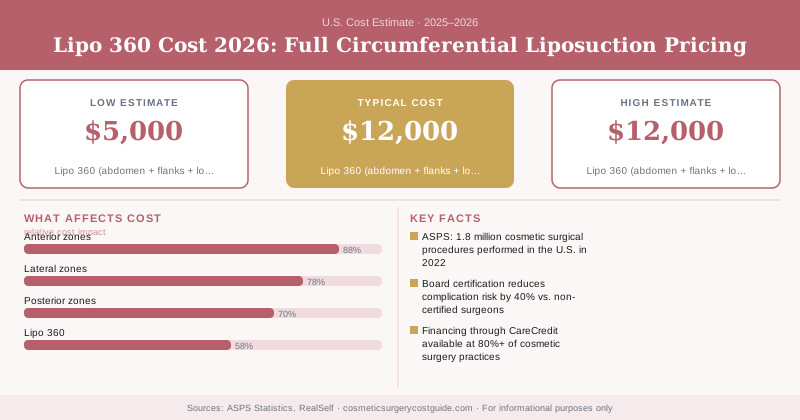
| Lipo 360 (abdomen + flanks + lower back) | $5,000–$12,000 |
| Lipo 360 with upper back / bra rolls | $7,000–$15,000 |
| Surgeon fee | $3,000–$7,000 |
| Anesthesia | $1,000–$2,500 |
| Facility / OR fee | $1,000–$2,500 |
| Compression garment | $80–$250 |
| Post-op lymphatic massage (per session) | $100–$200 |
| VASER or power-assisted lipo upgrade | $1,500–$3,500 additional |
What Lipo 360 Includes
A full lipo 360 procedure typically treats:
Anterior zones: Upper and lower abdomen — the areas above and below the navel that don’t respond to sit-ups when subcutaneous fat is the limiting factor.
Lateral zones: Flanks (love handles, muffin top) on both sides. These areas have high fat concentration in most people and are frequently the primary complaint.
Posterior zones: Lower back, including the area above the waistband. The “banana roll” beneath the buttocks may also be addressed if desired.
Treating all zones in one session has both practical and aesthetic advantages. One anesthesia event, one recovery, one healing period. And visually, the result looks proportional rather than spot-treated — you don’t end up with a flatter front and unchanged sides.
How Lipo 360 Compares to a Tummy Tuck
This is the question almost every patient asks, and the answer depends on what you’re dealing with.
Lipo 360 removes fat. It’s the right choice if your issue is excess subcutaneous fat with reasonably good skin elasticity. It doesn’t address loose skin and doesn’t repair separated abdominal muscles (diastasis recti). Recovery is faster — most patients are back to light activity within 1–2 weeks.
Tummy tuck removes both fat and excess skin, and repairs muscle separation. It leaves a scar (low on the abdomen, typically hidden by underwear). It’s the right choice when you have significant skin laxity — after pregnancy or major weight loss — and need both skin removal and muscle repair. Recovery takes 4–6 weeks.
Some patients need both: a tummy tuck for the front with lipo 360 extending to flanks and back. This combination is common in mommy makeover packages.
Good candidates: Within 20–25 pounds of goal weight, good skin elasticity, physically healthy, non-smoker. Lipo 360 works well for people who have fat deposits resistant to diet and exercise but whose skin will contract well after fat removal. Poor candidates: those with significant loose or hanging skin (lipo will make this worse, not better), active smokers, those with uncontrolled diabetes or bleeding disorders, or those expecting a weight-loss result rather than a contouring result. Lipo 360 is a body-sculpting tool, not a weight-loss procedure.
Technique Options
Traditional tumescent liposuction: The standard — fluid injected to swell the fat for easier removal, then aspirated via cannula. Effective, widely available, lowest equipment cost.
Power-Assisted Liposuction (PAL): The cannula vibrates mechanically, breaking up fat with less physical effort and trauma. Many surgeons prefer it for large-volume cases like lipo 360.
VASER ultrasound-assisted lipo: Ultrasound energy liquefies fat before aspiration. Best for hi-def work or fibrous fat areas. Adds cost but allows more precise sculpting and can improve skin retraction.
Laser-assisted (SmartLipo): Laser energy both liquefies fat and theoretically stimulates skin tightening. Benefits over VASER or PAL are debated — the skin tightening effect is modest.
Recovery Timeline
Lipo 360’s recovery spans 6–12 weeks for full results, though most patients feel functional well before that.
- Days 1–3: Rest, drains if placed (removed at 1–2 week appointment), significant soreness
- Week 1–2: Compression garment worn 24/7, swelling peaks then begins declining, return to desk work
- Week 3–6: Compression garment transitions to daytime-only, light activity resumes
- Week 6–12: Most swelling resolved, contour becomes clear, resume full exercise
Lymphatic massage in weeks 2–6 is highly recommended by most surgeons — it reduces swelling duration and can improve final contouring results. Budget 4–8 sessions at $100–$200 each.
What to Ask Your Surgeon
Before committing, get clarity on:
- Does the quoted price include all areas you want treated, or are flanks quoted separately from the abdomen?
- What technique do you use and why?
- Is the facility accredited?
- Are drains used — and if so, what’s the drain management protocol?
- What are your revision policies if results are uneven?
The ASPS notes that choosing a board-certified plastic surgeon for body contouring reduces complication rates substantially compared to non-specialist providers. For a procedure treating as much surface area as lipo 360, experience and surgical judgment matter more than in limited single-area cases.
Large-volume liposuction (over 5 liters aspirate) carries elevated risks including fluid imbalance, fat embolism, and prolonged healing. Lipo 360, depending on scope, can approach these volumes. Ensure your procedure is performed in an accredited surgical facility — not a clinic or office setting — with proper anesthesia oversight. Confirm your surgeon’s credentialing specifically for body contouring procedures.
The Bottom Line
Lipo 360 costs $5,000–$12,000 for most patients, with technique upgrades and larger scope (including back rolls) pushing toward $15,000. For people with good skin elasticity and resistant midsection fat, it’s one of the most effective single-procedure investments in body contouring available. The key is honest self-assessment: lipo sculpts a body that’s already close to its goal. It doesn’t redefine one that isn’t.
Frequently Asked Questions
Lipo 360 typically costs between $5,000 and $15,000, with the final price depending on surgeon experience, geographic location, facility fees, and the amount of fat removal needed. Most patients in major US markets pay $8,000–$12,000 for the full circumferential treatment of the abdomen, flanks, lower back, and upper back.
No, Lipo 360 is considered a cosmetic procedure and is not covered by most health insurance plans, meaning you will pay the full cost out-of-pocket. Some patients use flexible spending accounts (FSA) or health savings accounts (HSA) to help offset costs if their plans allow cosmetic procedure reimbursement, though this is uncommon.
Most patients return to light activities and desk work within 3–5 days, but strenuous exercise and heavy lifting should be avoided for 4–6 weeks to allow the treated areas to heal properly. Compression garments are typically worn for 4–6 weeks to reduce swelling and support skin retraction around the entire circumferential area.