Take fat from where you don’t want it, put it where you do. That’s the elegant logic behind pairing liposuction with fat transfer — and it’s why this combination is almost always done together rather than as two separate operations.
You physically can’t do a fat transfer without first harvesting fat, and liposuction is how you harvest it. So the two procedures are joined at the hip. The lipo slims a problem area, and the same fat gets purified and reinjected to add volume somewhere else — the face, the buttocks, the hips, or the breasts.
The approach is mainstream now. The Aesthetic Society has reported fat grafting and fat-transfer procedures among the fastest-growing techniques in recent years, and ASPS tracks liposuction as one of the most-performed body procedures in the US. Combining them is standard practice, not a niche request.
What the Combo Costs
| Combination | Cost |
|---|---|
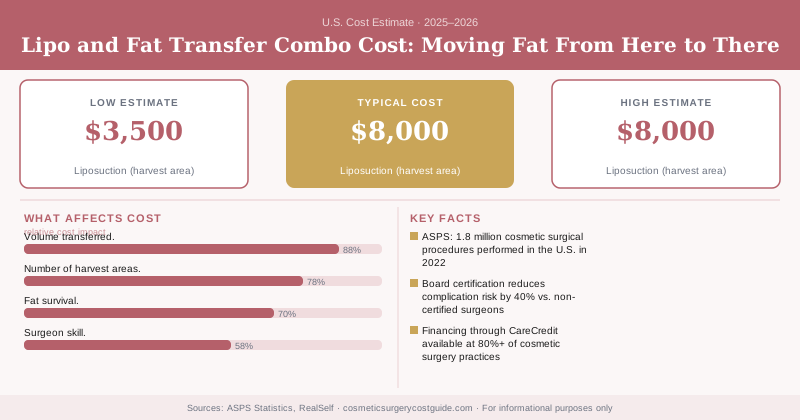
| Liposuction (harvest area) | $3,500–$8,000 |
| Fat transfer / grafting fee | $3,000–$8,000 |
| Anesthesia + facility (one session) | $2,500–$5,000 |
| Lipo + fat transfer combined | $7,000–$18,000 |
| Larger-volume transfer (e.g. buttocks) | $10,000–$18,000 |
Why It’s Always Done Together
This is the one combination where bundling isn’t optional — it’s how the procedure works. The fat you transfer comes from the liposuction. You’re already under one anesthesia and paying one facility fee, which is exactly the cost structure that makes combined procedures efficient.
A standalone liposuction runs $3,500–$8,000. The fat-transfer portion adds the grafting fee on top. Because it’s all one operation, you never pay the $2,500–$5,000 in anesthesia and facility overhead twice the way you would with truly separate surgeries.
Liposuction and fat transfer are performed together by necessity — the transferred fat is harvested by the lipo itself. Combined, they cost $7,000–$18,000 depending on how much fat is moved and where. Because it’s a single operation, you pay one anesthesia and facility fee, which is the cost advantage of any combined procedure. Know that 30–50% of transferred fat is typically reabsorbed.
What Drives the Variation
Volume transferred. Adding volume to the face takes a small amount of fat; a buttock augmentation needs far more, which raises both harvesting and grafting time and cost.
Number of harvest areas. Pulling fat from the abdomen alone is cheaper than circumferential lipo of the flanks, back, and thighs to gather enough graft material.
Fat survival. Surgeons typically overfill because 30–50% of transferred fat reabsorbs in the first few months. Some patients need a second session, which adds cost — factor it in.
Surgeon skill. Fat survival depends heavily on technique. Verify credentials through the board-certified plastic surgeon guide.
The Safety Window
Combined lipo and fat transfer runs 2–5 hours depending on volume. Larger transfers stay within standard anesthesia limits, but big buttock augmentations require extra safety precautions. Your anesthesia cost is already a single shared fee here, which is part of why this pairing is cost-efficient.
Recovery Reality
You’re recovering from two things: the lipo sites and the transfer site. Compression garments on the donor areas for several weeks, and — critically — pressure restrictions on the transfer site so the new fat establishes a blood supply. For buttock transfers, that means no sitting directly on the area for weeks.
The result settles over 3–6 months as the surviving fat stabilizes.
Buttock fat transfer (the so-called Brazilian butt lift) has historically carried one of the highest complication rates in cosmetic surgery when fat is injected too deep. Choose a board-certified surgeon who uses ultrasound guidance and injects only above the muscle. Do not price-shop this procedure — safety technique is everything.
Financing the Combo
Insurance won’t cover this — it’s purely cosmetic. Plan to pay out of pocket or finance.
Most practices offer financing through CareCredit or Prosper. A $12,000 combination on a 24-month plan runs around $550/month — confirm the APR before signing, since longer terms often carry 14–26% interest. Ask for an itemized quote, and budget a cushion in case a touch-up session is needed after reabsorption.
Frequently Asked Questions
Combined liposuction and fat transfer procedures typically cost $7,000–$18,000 in the US. This single price covers both the fat removal and reinjection, plus one anesthesia fee, making it more affordable than paying for two separate surgical procedures.
Insurance rarely covers this combination since it is considered cosmetic surgery rather than medically necessary. You should expect to pay the full cost out-of-pocket, though some patients use medical financing or payment plans to spread payments over 12–24 months.
Most patients return to light activities within 1–2 weeks and resume normal exercise within 4–6 weeks, though complete swelling resolution takes 2–3 months. You'll wear a compression garment for 4–6 weeks to support healing and optimize fat graft survival in the transfer areas.