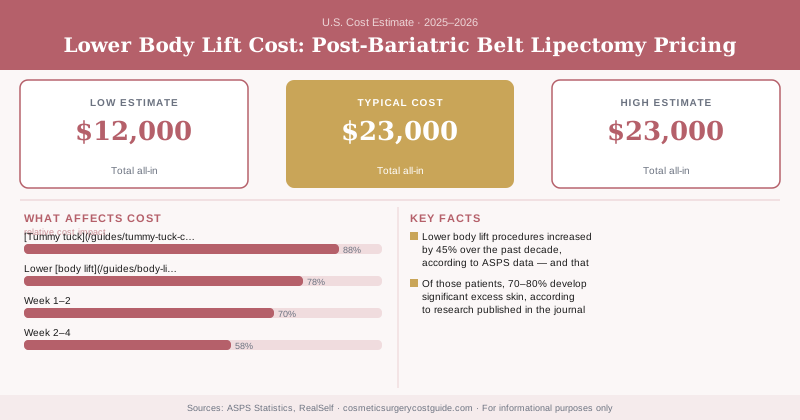
More than 250,000 weight-loss surgeries are performed every year in the US. Of those patients, 70–80% develop significant excess skin, according to research published in the journal Plastic and Reconstructive Surgery. The ASPS reported that body contouring after weight loss grew 22% in 2023 alone — a number that reflects a growing awareness that the surgical journey doesn’t end when the scale stops moving. For many patients, a lower body lift is the next logical step — and the most transformative single procedure available for post-bariatric contouring.
Here’s what that surgery actually involves, what it costs, and how to know if you’re a candidate.
What a Lower Body Lift Is (And Isn’t)
A lower body lift — also called a belt lipectomy or circumferential body lift — removes excess skin from the entire lower trunk in a single operation. The incision runs completely around the waistline, like a belt, allowing the surgeon to lift and tighten the abdomen, flanks, outer thighs, and buttocks simultaneously.
That’s the key word: circumferential. A tummy tuck only addresses the front. A lower body lift does the front and the sides and the back — all in one OR visit. The trade-off is a longer incision (visible at the bikini line and across the lower back), a longer surgery (4–6 hours), and a more demanding recovery.
The buttocks component deserves specific mention: the lower body lift doesn’t just remove skin, it naturally repositions and lifts the gluteal tissue. For patients who’ve experienced buttock descent and flattening after massive weight loss, this is often the most emotionally meaningful improvement.
Lower Body Lift Cost Breakdown
| Cost Component | Typical Range |
|---|---|
| Surgeon’s fee | $6,000–$12,000 |
| Facility fee (hospital or surgery center, 1–2 night stay) | $1,500–$3,000 |
| Anesthesia fee | $1,500–$2,500 |
| Pre-op labs and clearances | $300–$700 |
| Compression garment | $100–$200 |
| Post-op drains and supplies | $50–$150 |
| Total all-in | $10,000–$20,000 |
Surgeon fee varies enormously based on geographic market, the surgeon’s post-bariatric specialization, and whether the procedure is being performed standalone or combined with additional areas. High-volume post-bariatric surgeons in major markets command fees toward the top of that range — and their outcomes data justifies it.
How It Differs from a Tummy Tuck
This is probably the single most common source of confusion. Here’s the short version:
Tummy tuck (abdominoplasty): Incision hip to hip across the lower abdomen. Removes skin from the front. Tightens abdominal muscles. Doesn’t address the flanks, outer thighs, or buttocks.
Lower body lift: Circumferential incision all the way around the waistline. Removes skin from the front, sides, and back in one pass. Lifts outer thighs and buttocks simultaneously. Longer surgery, longer recovery — but far more comprehensive result.
After massive weight loss, a tummy tuck alone often leaves the flanks and back untouched, creating a visible mismatch between the treated and untreated areas. The lower body lift avoids that problem entirely.
Some patients want to do a lower body lift plus inner thigh lift plus arm lift in a single OR session. Most experienced post-bariatric surgeons recommend against this approach. Here’s why: combining multiple major procedures extends anesthesia time beyond 6–8 hours, which significantly increases the risk of deep vein thrombosis (DVT), pulmonary embolism, and wound healing complications.
The safer approach — and what most high-volume post-bariatric surgeons recommend — is staging. Do the lower body lift first. Allow 3–6 months for full recovery. Then address the inner thighs, arms, or breasts in a second planned surgery. Staging costs slightly more overall but dramatically reduces complication risk. Any surgeon who’s enthusiastic about doing everything at once is worth questioning closely.
Weight Stability: The Non-Negotiable Requirement
The most important candidacy criterion isn’t a size or a BMI — it’s stability. Your weight needs to have been stable within 10–15 lbs of your goal for at least 6–12 months before surgery. Most surgeons also require a minimum of 18–24 months post-bariatric procedure.
Why does this matter so much? If you lose additional weight after a lower body lift, the skin laxity returns and the result deteriorates. The surgery is too significant — financially and physically — to risk needing it redone because weight wasn’t stable first.
The ASMBS (American Society for Metabolic and Bariatric Surgery) recommends that patients who want body contouring after weight loss surgery wait for nutritional stability as well — specifically, protein levels, vitamin levels, and iron should all be in normal range before elective surgery. Nutritional deficiencies impair wound healing, and a lower body lift involves a lot of wound.
Partial Insurance Coverage: When It Applies
This is where it gets nuanced. A lower body lift as a whole procedure is elective and cosmetic — insurers won’t pay for the full thing. But if you have documented functional problems specifically related to your abdominal pannus (the apron of overhanging skin), you may qualify for partial coverage of a panniculectomy — just the abdominal skin removal component.
The documentation requirements are real. Your medical records need to show:
- Chronic skin infections or intertrigo under the pannus (at least two documented episodes)
- Conservative treatment attempted (antifungal creams, hygiene measures, specialized garments)
- Functional limitations — inability to exercise, hygiene difficulties, rash that won’t clear
If you have all of that documented, you submit for pre-authorization before scheduling surgery. The insurer may approve the panniculectomy portion. The contouring of the flanks, outer thighs, and buttocks — the parts that make this a full lower body lift — remain your financial responsibility.
It’s not a perfect solution, but if your insurer covers $3,000–$5,000 of a $15,000+ procedure, that’s real money.
Don’t assume a surgeon who lists “body contouring” on their website has specific post-bariatric expertise. Lower body lifts after massive weight loss are technically different from standard body contouring — the tissue has different properties, the skin has been stretched for years, and complication rates are higher. Ask specifically: “What percentage of your practice is post-bariatric body contouring?” and “How many lower body lifts do you perform per year?” Surgeons who are doing 30+ per year have a fundamentally different experience base than those doing 3–5.
Recovery: What the Timeline Actually Looks Like
This is major surgery. Don’t let anyone minimize it.
- Week 1–2: Drains are in place (typically 2–4 drain tubes). Limited mobility. Pain is significant but manageable with medication. Most patients need help at home.
- Week 2–4: Drains usually removed by week 2–3. Compression garment worn around the clock. Swelling is significant.
- Week 4–6: Most patients can return to sedentary work at week 4. No lifting, strenuous activity, or exercise.
- Week 6+: Gradual return to normal activity. Compression garment continued for 4–6 weeks total.
- Month 3–6: Swelling continues to resolve. Final shape becomes clearer.
- Month 12–18: Scars mature and fade to final appearance.
The compression garment is non-negotiable for 6 full weeks. It reduces swelling, supports the healing tissue, and shapes the result. Don’t try to manage without it.
Finding the Right Surgeon
Post-bariatric body contouring is a subspecialty within plastic surgery. You want a board-certified plastic surgeon who:
- Has completed fellowship training in body contouring or has a demonstrated high-volume post-bariatric practice
- Can show you before-and-after photos specifically of lower body lift patients — not just tummy tucks
- Works with a bariatric program or has established referral relationships with bariatric surgeons
- Takes time in consultation to review your specific anatomy and staging options
The skill gap between a general plastic surgeon who does a few of these per year and a surgeon with a high-volume dedicated post-bariatric practice is substantial. For a procedure with this much complexity and recovery investment, the surgeon selection decision is the most important one you’ll make.
Frequently Asked Questions
Most surgeons require 18–24 months after your bariatric procedure and at least 6–12 months of weight stability — typically within 10–15 lbs of your goal weight. Operating before you've reached a stable weight risks poor results, as continued weight loss will create more laxity and potentially require additional surgery.
Yes, but many experienced post-bariatric surgeons advise staging procedures rather than doing everything at once. A combined lower body lift plus inner thigh lift can extend OR time to 6–8 hours, which increases anesthesia risk and complication rates. Staging — doing the lower body lift first, then other areas 3–6 months later — is generally considered safer.
Partial coverage is possible in specific cases. If you have documented functional problems — chronic skin infections under the abdominal pannus, intertriginous dermatitis, inability to exercise, or documented hygiene difficulties — some insurers will cover the panniculectomy (abdominal skin removal) portion of the procedure. The cosmetic contouring components — hips, outer thighs, buttocks — are typically not covered. Pre-authorization with detailed medical documentation is required.