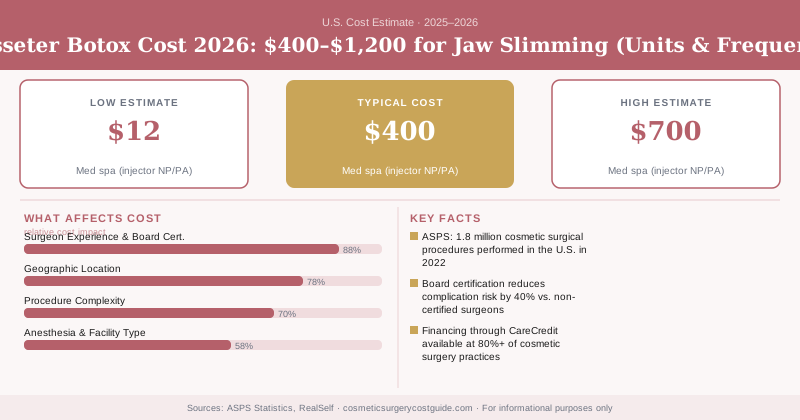
$600. That’s the quote most patients get when they first ask about masseter Botox at a mid-tier med spa in a major US city. It sounds steep for what amounts to a few injections, but it’s a fair price — and understanding what drives the cost will help you decide where (and whether) to spend it.
Masseter Botox has exploded in popularity over the last five years, driven partly by social media and partly by a real clinical benefit: it works. The American Society of Plastic Surgeons recorded over 9.2 million Botox procedures in 2023, with off-label uses like jaw slimming and bruxism treatment representing one of the fastest-growing segments. Unlike facelifts or jaw surgery, there’s no downtime, no scalpel, and the results are reversible if you don’t like them.
Here’s what it actually costs, what drives those costs, and what most clinics don’t tell you upfront.
Masseter Botox Cost at a Glance
| Provider Type | Price per Session | Notes |
|---|---|---|
| Med spa (injector NP/PA) | $400–$700 | Varies by unit count; $12–$15/unit typical |
| Dermatologist | $550–$900 | MD supervision, often higher per-unit pricing |
| Plastic surgeon / oculoplastics | $700–$1,200 | Most experienced; appropriate for significant hypertrophy |
| Price per unit (Botox) | $12–$18/unit | 40–60 units needed for most patients |
| Price per unit (Dysport/Xeomin) | $4–$8/unit | Different unit conversion — not the same as Botox units |
The Unit Question: How Many Do You Actually Need?
This is where most patients get confused. Providers price masseter Botox either per unit or as a flat session fee. When you see “$400 for masseter Botox,” that’s usually a flat fee that includes 40–50 units — enough for mild-to-moderate jaw reduction in a smaller masseter. If your masseters are heavily hypertrophied (visibly square jaw, clenching habit, or diagnosed bruxism), you may need 60–80 units to achieve meaningful slimming.
At $14/unit, that difference matters:
- 40 units = $560
- 60 units = $840
- 80 units = $1,120
Ask your provider upfront: “How many units are included, and what’s the charge if I need more?” Flat-fee quotes that don’t specify units often underdose — and underdosed masseter Botox gives subtle results that patients mistake for “Botox doesn’t work on me.”
For mild jaw slimming in a patient with otherwise normal anatomy, a well-trained injector at a reputable med spa is a reasonable choice. For patients with significant masseter hypertrophy, asymmetry, or a history of TMJ dysfunction, a board-certified oculoplastic surgeon, facial plastic surgeon, or dermatologist with injection expertise is worth the higher price. The masseter sits close to the parotid gland and several key facial nerves — inadvertent spread of toxin can cause asymmetric smile, difficulty chewing, or parotid swelling. These complications are rare but real, and experienced injectors know how to avoid them.
How Often Do You Need to Come Back?
The honest answer: it depends on your starting point.
First-time patients typically see results that last 3–4 months before the muscle regains strength. After your second or third treatment, the masseter begins to genuinely atrophy — muscle fibers reduce in size with disuse — and many patients find their results lasting 5–6 months. After 3 consistent treatment cycles, some patients only need maintenance once or twice a year.
Annual cost reality check:
- Year 1 (3 sessions): $1,200–$2,400
- Year 2+ (2 sessions/year): $800–$1,600
That’s a real ongoing commitment. If you’re doing this purely for jaw slimming aesthetics, calculate the multi-year cost before starting. If you’re treating bruxism, the equation shifts — the cost may compare favorably to the long-term cost of a night guard replacement, dental restoration, and chronic headache treatment.
The Bruxism Bonus (and Why It Changes the Cost-Benefit Calculus)
Masseter Botox isn’t just cosmetic. Research published in the Journal of Oral & Maxillofacial Surgery has shown that injecting botulinum toxin into the masseter significantly reduces teeth-grinding force and associated pain. For the approximately 8–10% of adults with chronic bruxism, this treatment can:
- Reduce morning jaw pain and headaches
- Decrease tooth wear
- Relieve TMJ-related tension
Some patients find their dentist is open to co-managing treatment — though insurance almost never covers the cosmetic indication, and coverage for bruxism treatment via Botox remains highly inconsistent across plans. Don’t count on reimbursement, but it’s worth a call to your insurer if your primary goal is bruxism management.
What to Expect at Your Appointment
The actual injection takes 5–10 minutes. You’ll feel a series of small pricks in the lower jaw area — most patients rate the discomfort as mild. There’s no numbing cream needed, though providers may offer it. Bruising is uncommon but possible. You should avoid rubbing the area and stay upright for 4 hours post-injection.
Results start to appear in 2–3 weeks as the masseter weakens. Full jaw slimming effect (from muscle atrophy) takes 4–6 weeks to develop — you won’t see the true aesthetic result immediately.
Avoid any injector who prices masseter Botox dramatically below market rate without explaining the unit count. “Masseter Botox for $199” packages typically include 20 units or fewer — far too little for meaningful results in most patients. You may also see Dysport advertised at lower per-unit prices; note that Dysport uses a different unit system (roughly 2.5–3 Dysport units equal 1 Botox unit), so comparing per-unit prices directly without conversion will mislead you on actual dose.
Bottom Line
Budget $500–$900 per session for masseter Botox at a reputable provider, and plan for 2–3 sessions in year one to achieve meaningful jaw slimming. Expect ongoing maintenance every 4–6 months in year one, tapering to twice yearly or less as the muscle atrophies with repeated treatment. If bruxism relief is part of your goal, the value proposition is stronger — and worth discussing with both your injector and your dentist. Always ask about unit count before booking, and choose your injector based on demonstrated experience with facial anatomy, not price alone.
Frequently Asked Questions
Most patients need 40–60 units total (20–30 per side) for noticeable jaw slimming. Patients with severe bruxism or very hypertrophic masseters may require up to 80 units. Results are dose-dependent — going too low on units is the most common reason treatments underperform.
Initial results last 3–4 months for most patients. After 2–3 treatment cycles, many patients find results extending to 4–6 months because the muscle gradually atrophies with repeated treatment. Some patients with moderate jaw hypertrophy achieve lasting slimming after 3 rounds and then only need maintenance once a year.
Yes — weakening the masseter muscle significantly reduces the grinding force. Many patients report less jaw pain, fewer headaches, and reduced tooth wear within 2–4 weeks of treatment. Some patients pursue masseter Botox primarily for bruxism relief and consider the jaw slimming a bonus. A dentist or orofacial pain specialist can confirm whether masseter hyperactivity is contributing to your symptoms.