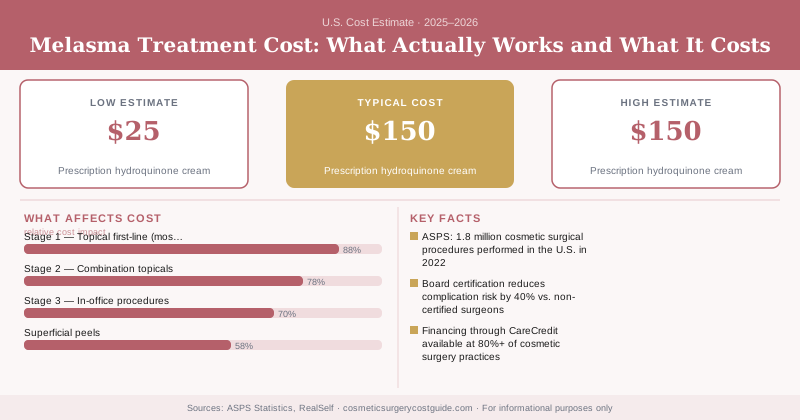
Most patients assume melasma is just a cosmetic annoyance you can laser away. Wrong. Melasma is one of the most stubborn pigmentation conditions in dermatology — it recurs, it resists aggressive treatment, and the wrong approach can make it significantly worse. That’s why the cheapest treatment option isn’t a bad laser session. It’s a $25 tube of prescription cream — and sometimes it’s the most effective thing in the room.
Melasma affects an estimated 5–6 million Americans, with women accounting for 90% of cases. It appears as brown or gray-brown patches on the cheeks, forehead, bridge of the nose, and upper lip. Hormones (pregnancy, birth control, HRT) and UV exposure are the primary triggers. The bad news: it’s not a one-and-done treatment. The good news: with the right protocol, most cases respond very well.
Melasma Treatment Costs by Method
| Treatment | Cost Range | Sessions Needed |
|---|---|---|
| Prescription hydroquinone cream | $25–$150 | Daily for 8–16 weeks |
| Triple combination cream (Tri-Luma) | $150–$300 | Daily for 8–16 weeks |
| Superficial chemical peel (20–35% glycolic) | $150–$350/peel | 4–6 peels |
| VI Peel / medium-depth peel | $250–$600/peel | 2–4 peels |
| Fraxel 1927 nm (non-ablative) | $1,000–$2,500/session | 2–4 sessions |
| PicoSure / Picoway picosecond laser | $500–$1,500/session | 3–6 sessions |
| Tranexamic acid injections | $300–$600/session | 4–8 sessions |
| Cosmelan depigmentation peel | $800–$1,800 | 1 in-office + at-home kit |
Where to Start: The Hierarchy of Treatment
Dermatologists treat melasma in stages. Starting with aggressive lasers is a common mistake — and an expensive one.
Stage 1 — Topical first-line (most cost-effective): Prescription 4% hydroquinone is still the gold standard. Used daily with a broad-spectrum SPF 50+, it lightens most cases within 8–12 weeks. Cost: $25–$80/tube through your dermatologist or compounding pharmacy. If you’re not using sunscreen consistently, no treatment will hold.
Stage 2 — Combination topicals: Tri-Luma (hydroquinone + tretinoin + fluocinolone) is FDA-approved specifically for melasma and significantly outperforms hydroquinone alone. A 30g tube costs $200–$350 at most pharmacies. With GoodRx coupons, some patients find it under $100.
Stage 3 — In-office procedures: When topicals plateau, in-office treatments add value. Chemical peels (glycolic, salicylic, TCA) are the most accessible and affordable entry point. They’re not curative — melasma will return without sun protection — but they accelerate clearing.
The American Academy of Dermatology (AAD) estimates melasma affects up to 6 million Americans, with a disproportionate impact on Fitzpatrick skin types III–V (Hispanic, Asian, Middle Eastern, and darker skin tones). A 2024 meta-analysis in the Journal of the American Academy of Dermatology found that picosecond lasers had significantly lower rates of post-inflammatory hyperpigmentation (PIH) compared to traditional Q-switched lasers, with a 73% improvement rate at 6 months — making them preferable for darker skin tones despite higher per-session costs.
Chemical Peels for Melasma
Superficial peels (glycolic 20–35%, lactic acid): $150–$350 per session. Minimal downtime — mild redness for 1–2 days. Best for mild cases or as a maintenance treatment. 4–6 sessions typically recommended.
VI Peel: $250–$600. A medium-depth chemical peel specifically formulated with a blend including TCA, retinoic acid, salicylic acid, and vitamin C. Particularly popular for melasma across multiple skin tones. Downtime: 5–7 days of peeling. One to two sessions often produce meaningful improvement.
Cosmelan: $800–$1,800 for the full protocol (in-office application + at-home maintenance kit). A proprietary intensive depigmentation treatment with strong clinical evidence for melasma specifically. Popular in Europe and increasingly in the U.S. Results last 12–18 months with proper maintenance.
Laser Treatments: When They Help vs. Hurt
Laser for melasma is genuinely complex. The same heat energy that disrupts melanin can also trigger more melanin production — a rebound effect that’s worse than the starting condition. This is why protocol matters enormously.
Fraxel 1927 nm: The most studied fractional laser for melasma. Works by gently disrupting the epidermis where most melasma lives. Best for lighter skin tones (Fitzpatrick I–III). Requires pre-treatment with hydroquinone for 4–6 weeks to reduce rebound risk.
Picosecond lasers (PicoSure, PicoWay): Deliver energy in ultra-short picosecond pulses (trillionths of a second) rather than nanosecond pulses, generating less heat and significantly less rebound pigmentation risk. Preferred for darker skin types. Cost is higher per session ($500–$1,500) but safety profile is better.
What to avoid: Q-switched Nd:YAG lasers and intense pulsed light (IPL) have higher rebound rates for melasma, especially in darker skin tones. They’re not necessarily wrong, but they require very careful protocol management.
Why Melasma Comes Back
Melasma is a chronic condition, not a curable one. UV exposure — even 5 minutes in the sun without protection — can trigger recurrence months after successful treatment. Heat (infrared radiation from ovens, saunas, exercise) can also flare it. Hormonal changes (stopping or starting birth control) frequently restart the cycle.
This means any cost estimate should include the cost of maintenance:
- Daily SPF 50+ with physical blockers (zinc oxide, titanium dioxide): $20–$50/month
- Maintenance peel every 3–6 months: $200–$600
- At-home prescription topical: $50–$150/month
Annual maintenance cost: $600–$1,800/year depending on your regimen.
Never undergo aggressive laser treatment for melasma without establishing a strict sun protection protocol first. Without consistent daily SPF 50+, every treatment outcome will be temporary — often lasting weeks rather than months. Dermatologists often require patients to demonstrate 4–6 weeks of disciplined sun protection before proceeding with laser or deep peels. This isn’t excessive caution; it’s the difference between spending money wisely and repeatedly spending money on treatments that don’t last.
Finding Care
Dermatology practices offer the most expertise for melasma management. Many medical spas treat it as well, but for moderate-severe or persistent melasma, a board-certified dermatologist is the stronger choice — they can prescribe hydroquinone and Tri-Luma, which medical spas cannot.
Look for a dermatologist who specifically lists melasma as an area of focus, not just general skin care. The treatment approach varies meaningfully by skin type and hormonal history.
The Bottom Line
Start with prescription topicals — they’re cheap, effective, and the foundation of any melasma protocol. When topicals plateau, add supervised in-office treatments (chemical peels first, then laser if needed). Budget $300–$1,500 for the first year of active treatment, then $600–$1,500 annually for maintenance. Melasma management is a marathon, not a sprint — but consistent treatment with proper sun protection yields excellent results for most patients.
Frequently Asked Questions
Laser treatments for melasma typically range from $800 to $4,000 per session, depending on the laser type (fractional, IPL, or picosecond) and treatment area size. Most patients require 4-6 sessions spaced 4-6 weeks apart, bringing total treatment costs to $3,200-$24,000. Some dermatologists offer package pricing for multiple sessions, which can reduce per-session costs by 10-20%.
Insurance typically does not cover melasma treatment because it is classified as a cosmetic concern rather than a medical condition, even though it can cause significant emotional distress. Topical prescription creams like hydroquinone may be partially covered if prescribed for other approved indications, but laser and chemical peel treatments are almost always out-of-pocket expenses for US patients. You should verify with your specific insurance plan, as coverage policies vary.
Prescription topical creams like hydroquinone, tretinoin, or combination formulas cost $25-$100 per tube and are often the first-line treatment dermatologists recommend, especially for mild to moderate melasma. These creams require consistent daily use for 3-6 months to see results and work best when combined with strict sun protection (SPF 50+). While slower than lasers, topicals frequently outperform aggressive treatments and carry minimal risk of worsening melasma, making them the most cost-effective starting point.