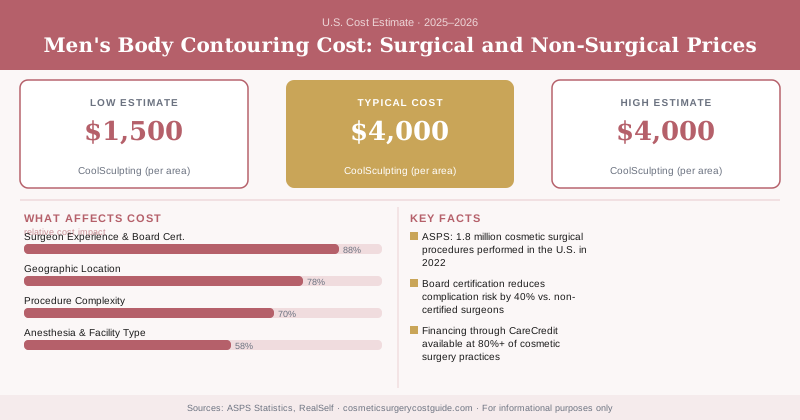
“Body contouring” isn’t one procedure — it’s a menu. And for men, that menu runs anywhere from $1,500 for a non-surgical fat-freezing session to $20,000 for surgery after major weight loss. Knowing which lane you’re in is the first step to a realistic budget.
Body contouring covers everything that reshapes your torso, abdomen, flanks, and chest. For men, the most common goals are flattening the lower belly, etching abdominal definition, removing love handles, and tightening loose skin after weight loss. Some of it is surgical, some isn’t, and the price gap between the two is enormous.
The full price menu
Here’s what the common male contouring options cost.
| Procedure | Cost Range |
|---|---|
| CoolSculpting (per area) | $1,500 – $4,000 |
| Liposuction (1–2 areas) | $3,500 – $7,500 |
| Abdominal etching | $5,000 – $9,000 |
| Tummy tuck (post-weight-loss) | $8,500 – $14,000 |
| Full lower body lift | $12,000 – $20,000+ |
Men are a fast-growing contouring market. The American Society of Plastic Surgeons reported men received over 1.4 million cosmetic procedures in 2023, and minimally invasive fat reduction plus liposuction lead the way for male patients. The Aesthetic Society has tracked the same upward trend in male body work over recent years.
Non-surgical fat reduction starts around $1,500 to $4,000 per area but only works on modest fat pockets. Surgical contouring (liposuction, tummy tuck) costs more but removes more and tightens skin. Match the procedure to the problem — paying for CoolSculpting when you need a tummy tuck just wastes money.
Surgical or non-surgical — how to choose
Simple rule: non-surgical treatments like CoolSculpting reduce small, pinchable fat pockets in patients with good skin tone. They won’t tighten loose skin and won’t touch fat behind the muscle. If you’ve got real volume to remove or sagging skin after weight loss, surgery is the only thing that delivers. Spending $3,000 on fat-freezing when you actually need a tummy tuck is the classic male contouring mistake.
Watch out for “abdominal etching” being sold to men with significant belly fat. Etching sculpts a six-pack into men who are already lean — it’s not a weight-loss tool. Done on the wrong candidate, results look strange and the money’s wasted. A reputable surgeon turns away poor candidates.
What drives your total
Three things: how many areas you treat, whether skin removal is needed, and the surgeon’s skill. Each additional liposuction area adds a few thousand. Skin removal (tummy tuck, body lift) is a bigger operation with a bigger fee. And combining procedures in one session saves on anesthesia and facility costs versus staging them separately.
Recovery varies wildly
A CoolSculpting session has essentially no downtime — back to work the same day. Liposuction means a compression garment and a week off. A tummy tuck or body lift means two to six weeks of recovery and drains. Plan your time off according to what you’re actually getting. Our cosmetic surgery recovery guide breaks down recovery by procedure type.
Why combining procedures saves money
Here’s a budgeting insight a lot of men miss. If you’re getting liposuction of the flanks plus abdominal etching, doing both in a single surgical session is far cheaper than two separate operations. The reason: anesthesia and facility fees are charged per session, not per area, and they’re a big chunk of any surgical bill. Bundling lets you pay those fixed costs once. The same logic applies to a tummy tuck combined with flank liposuction. The flip side is that bigger combined surgeries mean longer anesthesia time and a tougher recovery, so there’s a safety ceiling — your surgeon won’t bundle endlessly. But a smart, staged plan can shave thousands off your total versus piecemeal procedures.
Paying for it
Body contouring is cosmetic, so insurance won’t cover it (rare exception: panniculectomy after documented medical issues). Most men finance larger procedures — our cosmetic surgery financing guide covers your options. And whatever you choose, verify your provider is a board-certified plastic surgeon, especially for surgical work.
The smartest move is matching the procedure to your actual body. Get a consult, be honest about your goals, and don’t pay surgical prices for non-surgical problems — or vice versa.
Frequently Asked Questions
Male liposuction typically costs between $3,000 and $8,000 depending on the treatment area and volume of fat removed. Liposuction on the abdomen, flanks, or chest falls in the mid-range of body contouring procedures, while smaller areas like the neck or chin run closer to $2,500 to $4,000.
Most insurance plans classify body contouring as cosmetic and do not cover it, leaving patients responsible for the full cost out-of-pocket. However, if body contouring is medically necessary after massive weight loss and causes skin infections or functional problems, some insurers may cover a portion of the procedure—you should verify with your specific plan before scheduling.
Surgical body contouring typically requires 2 to 4 weeks off work and 6 to 8 weeks before resuming intense exercise or heavy lifting. Non-surgical options like CoolSculpting or radiofrequency treatments require no downtime, though results take 8 to 12 weeks to fully appear.