5 things to know before booking microneedling with PRP — because the “vampire facial” is one of the most popular treatments at med spas right now, and a lot of the pricing and promise around it is murkier than providers let on.
1. What you’re actually paying for
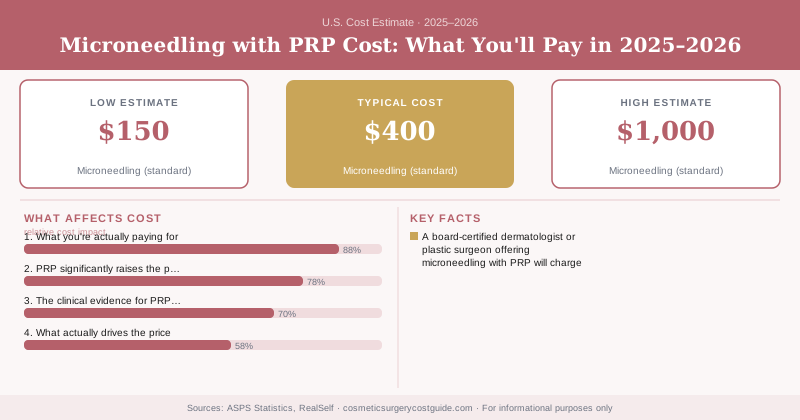
Microneedling with PRP combines two separate treatments, each with its own cost. Standard microneedling ($150–$400 per session) creates controlled micro-injuries in the skin to stimulate collagen production. PRP (platelet-rich plasma) adds your own growth factor-rich plasma — drawn from your blood, spun in a centrifuge, and applied topically or injected — to theoretically accelerate healing and amplify results. When you pay for the combination, you’re paying for both the microneedling session and the blood draw, centrifuge processing, and application of the PRP.
2. PRP significantly raises the price
| Treatment Option | Per Session | 3-Session Package |
|---|---|---|
| Microneedling (standard) | $150–$400 | $400–$1,000 |
| Microneedling + PRP (topical) | $400–$800 | $1,000–$2,200 |
| Microneedling + PRP (injected) | $600–$1,200 | $1,500–$3,200 |
| RF Microneedling + PRP | $800–$1,500 | $2,000–$4,000 |
The PRP component alone typically adds $150–$600 to the cost of microneedling, depending on whether it’s applied topically or injected into the skin. Topical application (spreading PRP across the skin post-treatment) is cheaper; intradermal injection into the deeper dermis is more expensive and more time-intensive.
3. The clinical evidence for PRP is real but limited
The American Academy of Dermatology acknowledges that PRP therapy has shown promising results in published studies for hair loss (androgenetic alopecia) and wound healing. For facial rejuvenation specifically, the evidence base is growing: a 2022 systematic review in the Journal of Cosmetic Dermatology found that microneedling combined with PRP produced statistically significant improvements in skin texture, fine lines, and acne scarring compared to microneedling alone — but most studies were small and without long-term follow-up.
Translation: the combination probably does more than either treatment alone, but “probably” is doing a lot of work there. The effects are real; the magnitude of improvement varies significantly by patient.
4. What actually drives the price
The centrifuge matters. High-quality PRP preparation requires specific centrifuge protocols to separate plasma with a high platelet concentration — lower-quality setups produce weaker PRP. You can’t see this difference on a price sheet, which is why provider reputation matters more than a cheap package price.
Provider credential and experience also matter. A board-certified dermatologist or plastic surgeon offering microneedling with PRP will charge $800–$1,200+ per session. A licensed medical esthetician at a medical spa may charge $400–$700. The needle depth, settings, and post-care protocol vary significantly between these providers, and it shows in results.
Geographic market: NYC and LA practices charge 40–60% more than mid-market cities for comparable equipment and experience.
5. What to realistically expect
A single session of microneedling with PRP produces visible results for most patients — skin looks brighter and feels smoother within 2–4 weeks. But durable improvement in lines, scars, or texture requires 3–4 sessions, spaced 4–6 weeks apart. After the initial series, maintenance sessions every 6–12 months help sustain results.
Most patients have 24–48 hours of redness and mild swelling after treatment, similar to a moderate sunburn. The PRP doesn’t meaningfully increase downtime over microneedling alone.
For most patients, the answer is yes — especially if you’re targeting:
- Acne scarring (where PRP seems to accelerate scar remodeling most notably)
- Dull skin and uneven texture (the growth factors improve overall tone)
- Early signs of aging (fine lines around eyes and mouth respond well)
If you’re primarily targeting large pores or sunspots, standard microneedling or a chemical peel may deliver comparable results at lower cost. Don’t pay the PRP premium for goals that don’t benefit from the added growth factor component.
How It Compares to Other Options
Microneedling with PRP sits in an interesting middle ground. It costs more than standard microneedling or chemical peels, but less than laser resurfacing or RF microneedling (Morpheus8, Vivace). Here’s a quick comparison:
- Chemical peel (VI Peel, TCA): $150–$400. Less downtime, good for pigmentation, less collagen stimulation.
- Standard microneedling: $150–$400/session. Similar mechanism without the PRP boost.
- RF microneedling (Morpheus8): $700–$1,500/session. More collagen stimulation, more downtime, stronger results for skin laxity.
- Fraxel laser: $1,000–$2,000/session. Strongest results for texture and tone, more aggressive downtime.
- Microneedling with PRP: $400–$1,200/session. Good middle-ground option with minimal downtime and a natural mechanism.
What to Ask Your Provider
Before booking, ask these specific questions:
- What centrifuge and protocol do you use for PRP preparation?
- What needle depth and device do you use for microneedling?
- Will PRP be applied topically or injected? (Injected is generally considered more effective for facial rejuvenation.)
- How many sessions do you recommend for my specific concerns?
- What should I avoid before and after treatment? (Retinol, NSAIDs, blood thinners, sun exposure — these all matter.)
If you’re taking blood thinners, have a clotting disorder, active skin infection, or history of herpes simplex (cold sores), microneedling with PRP may not be appropriate for you. Always disclose your full medical history. And avoid this treatment within 2–4 weeks of any chemical peel, laser, or other resurfacing procedure — the combination can cause significant irritation.
Finding the Right Price Point
You don’t need to book at the most expensive dermatologist in your city, but you do need to be careful about budget shopping. The sweet spot for most markets is a medically supervised med spa or dermatology practice charging $500–$900 per session — not the rock-bottom Groupon deal, but not the premium-priced boutique practice either. Ask to see before-and-after photos of real patients treated with the provider’s specific protocol, not stock imagery. That’s how you evaluate whether the technique and equipment actually deliver results.
Frequently Asked Questions
Microneedling with PRP typically costs $400–$1,200 per session in 2025–2026, depending on your geographic location, provider credentials, and the extent of treatment area. Most patients in major metropolitan areas pay $800–$1,000 per session, while smaller markets or less experienced providers may charge $400–$600. Most people need 3–4 sessions spaced 4–6 weeks apart for optimal results, bringing total treatment costs to $1,200–$4,800.
No, microneedling with PRP is considered a cosmetic procedure and is not covered by any major health insurance plans, including Medicare and Medicaid. You will pay 100% out-of-pocket for the entire cost of treatment, though some med spas and dermatology offices offer payment plans or financing options (like CareCredit) to spread costs over 6–12 months.
Most dermatologists recommend 3–4 sessions scheduled 4–6 weeks apart for visible improvement in skin texture, fine lines, and scars. Results continue to improve for several months after your final session as collagen remodeling continues, and many patients maintain results with 1–2 touch-up sessions per year at $400–$1,200 each.