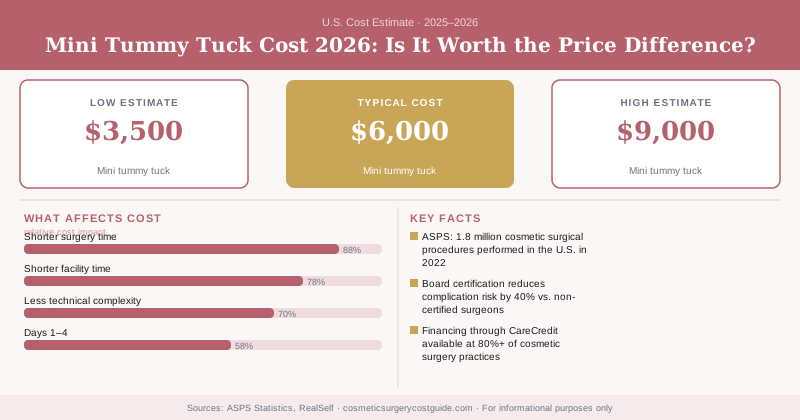
The mini tummy tuck is one of the most misunderstood procedures in plastic surgery. Patients love the idea of it — shorter scar, faster recovery, lower cost — but the number who actually qualify for one is smaller than most surgeons see walking through the door. The ASPS reported abdominoplasty as one of the top five most common cosmetic surgical procedures in the US, with over 97,000 tummy tucks performed in 2023. The majority are full procedures. Here’s why — and what a mini actually costs.
Mini vs. Full Tummy Tuck Cost Comparison
| Procedure | Surgeon Fee | All-In Cost | Recovery |
|---|---|---|---|
| Mini tummy tuck | $3,500–$6,000 | $5,500–$9,000 | 1–2 weeks |
| Full tummy tuck (SMAS) | $5,500–$10,000 | $8,000–$15,000 | 3–4 weeks |
| Extended tummy tuck | $7,000–$12,000 | $10,000–$17,000 | 4–6 weeks |
| Mini tummy tuck + liposuction | $5,000–$9,000 | $7,500–$13,000 | 2–3 weeks |
| Full tummy tuck + liposuction | $7,500–$13,000 | $11,000–$18,000 | 3–5 weeks |
What Makes a Mini Different
In a mini tummy tuck, the surgeon makes a shorter incision (typically hip-to-hip width is not required), removes excess skin only below the navel, does not reposition the belly button, and addresses muscle separation only in the lower abdomen if present. The procedure takes roughly 1–2 hours versus 3–4 for a full tummy tuck.
In a full tummy tuck, the incision runs hip to hip, the belly button is repositioned (umbilicoplasty), the entire abdominal wall is addressed from ribs to pubic bone, and significant amounts of skin are removed from both above and below the navel.
The key distinction: a mini tummy tuck can’t address skin laxity above the belly button. It simply isn’t designed to. If you have loose skin above the navel — which most post-pregnancy patients do — a mini tuck won’t correct it, and trying to get a result that requires a full tuck with a mini procedure leads to disappointing outcomes.
Who Actually Qualifies for a Mini Tummy Tuck
Good mini tummy tuck candidates are specific. You likely qualify if:
- Your excess skin and laxity is limited to below the navel
- Your belly button position is good and doesn’t need to be raised
- You have minimal or no rectus diastasis (muscle separation) above the navel
- You’ve had one pregnancy or are otherwise close to your pre-pregnancy anatomy above the waist
- You’ve never had significant weight gain in the upper abdomen
If you’ve had multiple pregnancies, had significant weight fluctuation, or carry loose skin above and below the navel, you almost certainly need a full tummy tuck. A surgeon who tells you a mini will work in that situation either isn’t being honest with you or isn’t assessing you carefully.
One quick indicator of whether you might need a mini or full tummy tuck: look at your belly button position. If your belly button has descended significantly from where it was before pregnancy or weight changes — or if there’s significant excess skin above it — you’re almost certainly a full tummy tuck candidate. The mini tummy tuck leaves the belly button in place because no significant skin is removed above it. If your plastic surgeon isn’t discussing belly button repositioning, ask specifically whether your result would look natural without it.
The All-In Cost Breakdown
The cost difference between a mini and full tummy tuck comes from several factors:
- Shorter surgery time: 1–2 hours vs. 3–4 hours reduces anesthesia cost ($400–$1,200 savings)
- Shorter facility time: Reduces OR fees ($300–$800 savings)
- Less technical complexity: The surgeon’s fee reflects both skill level and operative time
Typical all-in cost components for a mini tummy tuck:
- Surgeon fee: $3,500–$6,000
- Anesthesia (IV sedation or light general): $800–$1,800
- Facility fee: $600–$1,500
- Compression garment: $100–$200
- Pre-op labs: $150–$350
The $5,500–$9,000 all-in range is typical. Be skeptical of prices below $4,500 — at that level, something in the cost structure (surgeon experience, facility accreditation, anesthesia qualifications) is likely being cut.
Recovery: What’s Different from a Full Tummy Tuck
Recovery from a mini tummy tuck is meaningfully shorter:
- Days 1–4: Some soreness, swelling, bruising. Compression garment worn continuously.
- Day 7: Follow-up visit; most patients are moving around comfortably
- Days 10–14: Return to desk work. No heavy lifting.
- Weeks 3–4: Light activity resumes. Final scar placement and swelling resolution continue.
Compare this to a full tummy tuck where most patients need 3–4 weeks before returning to an office job and 6–8 weeks before resuming exercise. The faster mini recovery is real and significant for patients with demanding work schedules or limited caregiver support.
Adding Liposuction to a Mini Tummy Tuck
Many patients combine a mini tummy tuck with liposuction of the flanks, hips, or upper abdomen to address areas the tuck itself won’t touch. This adds $1,500–$3,500 to the total cost depending on the volume and number of areas treated, but it often produces a more comprehensive contour improvement than either procedure alone.
Don’t choose a mini tummy tuck purely to save money if your anatomy requires a full procedure. A mini tuck on the wrong candidate doesn’t produce a good result — and revision surgery to convert to a full tummy tuck later is more expensive and technically more difficult than doing it right the first time. Let the surgeon’s honest anatomical assessment guide the decision, not the price difference.
Is the Mini Tummy Tuck Worth It?
For patients who genuinely qualify — limited lower abdominal laxity, good belly button position, no significant upper abdominal skin excess — the mini tummy tuck is an excellent procedure. Shorter surgery, faster recovery, lower cost, and a shorter scar all add up to a compelling case. The question to resolve at your consultation isn’t “can I afford the mini” but “am I actually a mini candidate.” Those are very different questions, and the answer to the second one determines whether the first matters at all.
Frequently Asked Questions
A mini tummy tuck typically costs $5,500–$9,000 all-in, which is significantly less than a full abdominoplasty at $8,000–$15,000. The lower cost reflects the smaller incision, less tissue removal, and shorter operative time required for the mini procedure.
No, mini tummy tucks are considered cosmetic procedures and are not covered by health insurance, meaning you'll pay the full amount out-of-pocket. Some surgeons offer payment plans or financing options to help manage the $5,500–$9,000 cost.
You typically qualify for a mini tummy tuck if you have loose skin and excess fat only below the belly button, good skin elasticity, and minimal muscle laxity—making you a candidate for the less invasive approach. Most patients who walk into a surgeon's office actually don't meet these strict criteria, which is why fewer people qualify for the mini procedure than expect to.