In 2010, a facelift was practically a one-size-fits-all operation. Today there’s a whole spectrum, and the “mini” facelift has become one of the most-requested versions for patients in their 40s and early 50s. The question every consult comes down to: do you need the lighter, cheaper version, or the full deal? Get it wrong and you either overpay or under-treat.
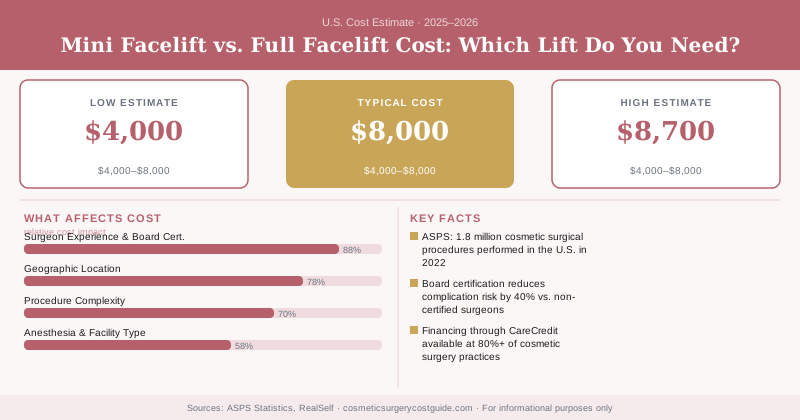
The Aesthetic Society reported the average surgeon fee for a facelift at roughly $8,700 in 2023. A mini facelift typically runs lower, around $4,000 to $8,000, because it’s a smaller operation.
| Mini Facelift | Full Facelift |
|---|---|
| $4,000–$8,000 | ~$8,700 surgeon fee and up |
| Targets lower face/jowls | Lifts face, jowls, and neck |
| Shorter incisions | Longer incisions |
| Often twilight anesthesia | Often general anesthesia |
| 1–2 week recovery | 2–3 week recovery |
What “mini” really means
A mini facelift focuses on the lower third of the face: early jowls and the jawline. The incisions are shorter, usually tucked around the ear, and the surgeon tightens the underlying tissue over a smaller area. Less surgery means less time under anesthesia, faster healing, and a lower price.
The trade-off is scope. A mini lift doesn’t do much for a sagging neck or the mid-face. If your concerns stop at the jowls and you’re catching things early, that’s exactly what it’s designed for.
What the full facelift covers
A full facelift addresses the lower face, jowls, and the neck, repositioning deeper tissue across a larger area. It’s the right call when sagging is more advanced or when the neck is part of the problem, which it usually is past a certain age. The full facelift cost guide breaks down how anesthesia and facility fees stack on top of the surgeon fee.
You’re paying more because you’re getting more surgery and a longer-lasting, more comprehensive result.
Early jowling and a jawline that’s just starting to soften? A mini facelift saves you money and downtime. Sagging neck, deeper folds, or more advanced laxity? Spend on the full facelift, because a mini lift won’t reach the areas that bother you most and you’ll end up paying twice.
The age guideline
There’s no hard rule, but patterns exist. Patients in their 40s to early 50s with isolated lower-face laxity are classic mini candidates. Once the neck is clearly involved or laxity is moderate-to-severe, surgeons usually recommend the full procedure.
If you’re not even sure surgery is the answer yet, a less invasive option like a thread lift cost comparison can help you decide whether you’re ready for surgery at all.
Don’t choose a mini facelift purely to save money if your surgeon flags neck sagging. Treating only the jowls while ignoring a loose neck creates an unbalanced result, and a revision to add neck work later costs far more than doing it right the first time.
Recovery differences
A mini facelift’s smaller incisions mean less bruising and swelling. Many patients are presentable in about a week to ten days.
The full facelift involves more tissue and a longer incision, so expect two to three weeks before you’re comfortable in public. Both are real surgery, so plan time off and a support person for the first few days.
How long does each last?
A full facelift typically lasts ten years or more. A mini lift, because it does less, may give you closer to five to eight years before you’d consider a touch-up. That longevity gap is part of the value equation. Sometimes the full lift’s higher price buys more years.
Anesthesia and the hidden costs
Part of the price gap comes from how each is done. A mini facelift can often be performed under local anesthesia with light sedation, which trims the anesthesia bill and sometimes the facility fee. A full facelift more often calls for general anesthesia and a longer time in an accredited surgical facility, both of which push the total up. When you compare quotes, make sure you’re comparing all-in numbers, surgeon, anesthesia, and facility, not just the surgeon’s fee, because the anesthesia difference alone can swing the total by more than a thousand dollars.
Bottom line
Match the procedure to your anatomy, not your budget. A mini facelift is a genuine money-saver for early, isolated jowling. A full facelift is the right investment when the neck and deeper folds are involved. A board-certified plastic surgeon should examine your neck and mid-face before quoting either one. To plan the payment, our cosmetic surgery financing guide covers monthly options.
Frequently Asked Questions
A mini facelift typically costs between $4,000 and $8,000, while a full facelift averages $8,700 and up depending on surgeon experience and geographic location. The price difference reflects the mini facelift's shorter incisions, reduced operative time, and more limited scope of tissue repositioning.
No, facelifts are considered cosmetic procedures and are not covered by health insurance plans, meaning you will pay the full surgeon fee and facility costs out-of-pocket. However, if sagging skin causes functional problems like impaired vision, some insurance may cover a portion, though this is rare and requires pre-authorization.
A mini facelift works best for patients in their 40s and early 50s with mild to moderate sagging primarily in the lower face and jowls, while a full facelift is recommended for those with significant sagging across the entire face, neck, and jawline. Your surgeon will assess skin elasticity, degree of descent, and facial structure during a consultation to determine which option will deliver your desired results.