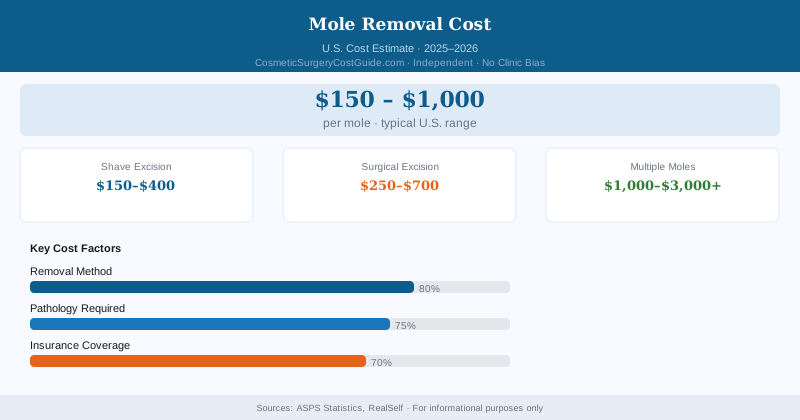
42% of Americans have at least one mole they’ve considered removing. Only a fraction of them know that the method used — and who does it — can be the difference between a $200 office visit and a missed melanoma diagnosis.
That’s not an exaggeration. The single most important fact about mole removal is this: if a mole is suspicious, it must be removed in a way that preserves tissue for pathology. Laser and certain cosmetic methods destroy the tissue. For a benign mole already evaluated by a dermatologist, those methods are fine. For anything uncertain, they’re dangerous.
Here’s how to understand the cost, the methods, and exactly when each one is appropriate.
Mole Removal Cost by Method
| Method | Cost Per Mole | Best For | Tissue Preserved? |
|---|---|---|---|
| Shave excision | $150–$400 | Raised, benign moles | Yes |
| Surgical excision (with sutures) | $200–$500 | Deep or suspicious moles | Yes |
| Laser (CO2 or Nd:YAG) | $200–$600 | Flat, confirmed-benign moles | No |
| Electrocautery | $150–$300 | Small raised benign tags/moles | No |
| Pathology lab fee (if biopsy sent) | $50–$200 additional | Any suspicious lesion | — |
Face vs. Body Pricing
Location on the body affects cost — not just because of difficulty, but because of scar expectations. Moles on the face, especially near the eyes, nose, or lips, require more precision. Most dermatologists charge $50–$150 more per mole for facial removal than for body locations. Specialists like oculoplastic surgeons or facial plastic surgeons charge even more for periorbital moles.
When Insurance Covers It
Insurance covers mole removal when there’s documented medical necessity. That means:
- The mole has features suspicious for melanoma (asymmetry, irregular border, multiple colors, diameter over 6mm, or recent change)
- Your dermatologist has identified it as a dysplastic or atypical nevus warranting removal
- The mole causes functional problems (bleeds repeatedly, interferes with clothing, causes irritation)
The American Academy of Dermatology estimates that approximately 100,000 new melanoma diagnoses are made in the US each year — and early detection through biopsy remains the standard of care. Any mole with suspicious features that your dermatologist flags should be removed and biopsied; the removal code (11300–11313 series) typically falls under your plan’s skin lesion benefit once documented as medically necessary.
Purely cosmetic removal — a benign mole you simply don’t like the look of — is not covered. You’ll pay out of pocket.
Know these before any removal decision:
- Asymmetry: One half doesn’t match the other
- Border: Irregular, ragged, or notched edges
- Color: Multiple shades of brown, black, red, white, or blue in one lesion
- Diameter: Larger than 6mm (the size of a pencil eraser)
- Evolving: Any change in size, shape, color, or a mole that starts itching or bleeding
One or more of these criteria? See a dermatologist before removal, not after. A mole removed by laser or cauterization before examination cannot be biopsied — and that window to catch melanoma early is gone.
Shave Excision: The Workhorse Method
For raised, soft moles that your dermatologist has visually confirmed as benign, shave excision is the standard. A scalpel shaves the mole flush with (or slightly below) the skin surface. No sutures. Heals in 1–2 weeks with a small, flat scar that typically becomes barely visible over time.
The removed tissue goes to pathology — which matters. Even visually benign-looking moles occasionally come back with atypical cells. The pathology report closes that loop for about $50–$200 extra, and it’s worth paying.
Surgical Excision: For Deeper and Uncertain Moles
Surgical excision removes the mole plus a margin of surrounding tissue and closes with sutures. It’s required when:
- The mole extends deep into the dermis
- There’s any suspicion warranting clear margins
- The mole is large and can’t be adequately shaved
The scar is a thin line rather than a circular mark — it fades significantly over 12 months with good scar care. This method costs more because it takes longer and requires suture removal at a follow-up visit.
Laser Removal: The Right Tool, Wrong Situation
Laser (typically CO2 or Nd:YAG) vaporizes pigmented tissue. It’s fast, often scarless, and works well for flat pigmented spots — seborrheic keratoses, lentigines, cosmetic pigmentation. For moles, laser is only appropriate if a dermatologist has already evaluated the mole, confirmed it’s benign, and recommended laser as the removal method.
The critical limitation: laser destroys tissue. No specimen remains for pathology. That’s why laser removal of an unevaluated mole is genuinely dangerous — it eliminates the ability to detect melanoma after the fact.
DIY mole removal products — creams, pastes, derma pens, and at-home cryotherapy applicators — should never be used on moles. These products cause chemical or thermal burns, not controlled removal. They can scar, leave pigmentation abnormalities, and most importantly, destroy tissue that should have been biopsied. If you remove a melanoma with a $30 online product and it scars over, you’ve potentially missed a treatable early-stage cancer. The cost difference between a dermatologist appointment and a stage III melanoma workup is not a comparison worth making. Book the appointment.
Multiple Moles at One Visit
Removing several moles in one appointment is more cost-efficient than multiple visits. Most dermatologists apply a tiered pricing structure:
- First mole: $200–$400
- Each additional mole: $75–$150
Removing 4–5 moles in a single 20-minute appointment typically costs $500–$800 total — significantly less than 5 separate visits.
Bottom Line
Budget $150–$400 per mole for cosmetic shave excision at a dermatologist, plus $50–$200 for pathology if the tissue is sent. Facial removal runs slightly higher. Insurance covers removal of any mole your dermatologist documents as medically suspicious — so if you have a mole with any ABCDE features, have it evaluated before assuming you’ll pay out of pocket. Never remove an unevaluated mole by laser, cauterization, or any DIY method — the pathology window you’d lose is too important to sacrifice for convenience or cost savings.
Frequently Asked Questions
Shave excision — the most common method for raised, benign moles — costs $150–$400 per mole. Surgical excision with sutures runs $200–$500 per mole. If the removed tissue is sent to a pathology lab (standard for any mole with uncertain features), expect an additional $50–$200 lab fee. Multiple moles removed in one visit typically cost less per mole than separate appointments.
Insurance covers mole removal when there's documented medical necessity — specifically when a mole is suspicious for melanoma, is a confirmed atypical nevus, or causes functional problems. Purely cosmetic removal is not covered, and you pay out of pocket. If your dermatologist flags a mole as suspicious and removes it during a medically coded visit, the removal itself is usually covered under your plan's skin lesion removal benefit.
Shave excision uses a scalpel to shave a raised mole flush with the skin — no sutures needed, heals in 1–2 weeks. It's ideal for soft, raised, clearly benign moles. Surgical excision removes the full mole plus a margin of surrounding tissue and closes with sutures, leaving a thin line scar. It's required for deep moles, suspicious lesions, or any case where clear margins matter for pathology. Your dermatologist will recommend the right method after examining the mole — don't choose based on cost alone.