Most patients who come in asking about monsplasty feel like they’re describing a problem nobody talks about. They’re right — it’s one of the more common post-weight-loss and post-pregnancy concerns that doesn’t get much public airtime. A prominent or ptotic (drooping) mons pubis can cause physical discomfort, create visible protrusion through clothing, and cause hygiene issues. The ASPS has documented consistent year-over-year growth in body contouring procedures post-weight-loss, with monsplasty increasingly included in combined post-bariatric surgery packages.
Monsplasty Cost Breakdown
| Procedure Type | Surgeon Fee | All-In Cost |
|---|---|---|
| Mons liposuction only | $1,800–$4,000 | $3,000–$5,500 |
| Mons lift (skin excision only) | $2,500–$4,500 | $4,000–$7,000 |
| Full monsplasty (lipo + skin excision) | $3,000–$5,500 | $4,500–$8,500 |
| Monsplasty combined with tummy tuck | $1,500–$3,000 add-on | (see tummy tuck pricing) |
| Monsplasty combined with labiaplasty | $1,500–$2,500 add-on | $5,500–$10,000 combined |
When monsplasty is combined with a tummy tuck, the cost is substantially lower than doing it as a standalone procedure — the anesthesia and OR setup costs are already covered by the primary surgery. This is the most cost-effective way to address both concerns.
What Monsplasty Actually Involves
The mons pubis is the fatty tissue over the pubic bone. It can become enlarged from weight gain, appear ptotic (sagging) after weight loss or pregnancy, or develop excess skin after a C-section where scarring changes the tissue structure.
Monsplasty addresses this with one or a combination of approaches:
Liposuction: Removes excess fat from the mons. Works well when volume is the primary issue and skin elasticity is good. A small cannula through a 2–3mm incision. Quick recovery (1–2 weeks). Doesn’t address excess skin.
Skin excision (pubic lift): Removes a horizontal ellipse of excess skin, typically just above the pubic hairline. The scar is positioned to fall inside underwear or swimwear. Required when skin laxity is the primary issue, which is common after significant weight loss (50+ lbs) or multiple pregnancies.
Combined approach: Most patients with moderate-to-significant changes need both — fat removal and skin tightening. This is the “full monsplasty” and produces the most comprehensive result.
Rarely for cosmetic concerns, but there are two scenarios where it may:
Post-mastectomy: Some insurers cover mons tissue for reconstruction purposes — rare but documented.
Functional impairment with documentation: When excess mons tissue causes documented intertrigo (skin infection), difficulty with hygiene, or urinary stream interference, a physician can document medical necessity. Insurance may cover the functional correction portion.
The far more common scenario: it’s self-pay. If you’re pursuing it after bariatric surgery, ask your bariatric surgeon whether your program has relationships with plastic surgeons who specialize in post-weight-loss body contouring — some programs include or subsidize these procedures.
Post-Weight-Loss Patients: The Most Common Scenario
Dramatic weight loss — whether from bariatric surgery, GLP-1 medications, or lifestyle change — frequently leaves the mons pubis with significantly more skin and tissue than the reduced body can support. The area droops forward and downward, creating folds that trap moisture and cause friction. Many patients describe it as one of the most bothersome residual concerns after significant weight loss.
If you’ve lost 80+ lbs, the combination of tummy tuck + monsplasty addresses both the abdominal and pubic concerns in one surgical session. This is cost-effective (the add-on pricing for monsplasty during a tummy tuck is significantly lower than standalone surgery) and minimizes total recovery time.
Recovery
Liposuction alone: 1–2 weeks restricted activity, back to desk work in 3–5 days. A compression garment is worn for 4–6 weeks.
Skin excision or combined: 2–3 weeks for most activities, 4–6 weeks for strenuous exercise. The scar goes through an initial thickening phase over 6–12 weeks, then gradually softens. Silicone scar sheets starting at week 3 significantly improve scar outcome.
What Drives the Price
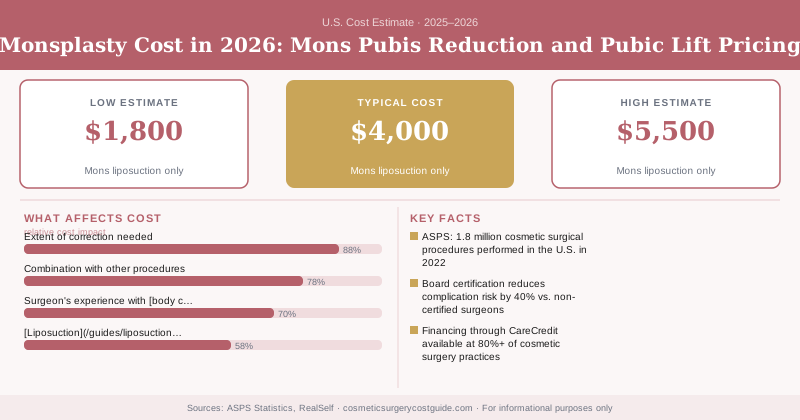
Extent of correction needed: A patient needing liposuction only requires a much simpler procedure than someone needing combined lipo and skin excision with careful scar placement.
Combination with other procedures: When done with a tummy tuck or labiaplasty, monsplasty is one of the best-value add-ons in body contouring — the incremental cost is $1,500–$3,000 versus $4,500–$8,500 standalone.
Surgeon’s experience with body contouring: Plastic surgeons who focus on post-weight-loss body contouring (and see this anatomy frequently) tend to produce better results than generalists. The pubic lift scar placement and the balance between adequate correction and conservative tissue preservation requires judgment from experience.
Monsplasty is a surgical procedure requiring a board-certified plastic surgeon, not a med spa or aesthetic clinic. The proximity to critical structures and the specific wound healing challenges in this area require genuine surgical expertise. Verify board certification at abplsurg.org and look for surgeons who specifically list body contouring or post-bariatric surgery in their focus areas.
Planning Your Consultation
Come with photos of your concern if you feel comfortable doing so — this is one procedure where surgeons genuinely appreciate seeing the specific anatomy before the in-person exam. Be specific about your goals: is it primarily about how it looks in clothing? Physical discomfort? Hygiene? Your surgeon needs to understand what you’re trying to solve to recommend the right approach.
Most practices offer financing. A $6,000 standalone monsplasty on a 18-month 0% plan runs about $333/month. If you’re also considering a tummy tuck, discuss both simultaneously — the combined quote is nearly always more favorable than two separate procedures.
Frequently Asked Questions
Monsplasty typically costs between $3,000 and $8,500 all-in, with the final price varying based on surgeon experience, geographic location, and whether additional procedures like liposuction are combined. Most patients in major metropolitan areas pay $5,000–$7,000 for the procedure alone. This price usually includes surgeon fees, facility costs, and anesthesia.
Monsplasty is almost always considered cosmetic and is not covered by major insurance plans including Medicare, Medicaid, or private insurers. However, if the procedure is performed to address documented physical discomfort, hygiene issues, or skin breakdown related to a prominent mons pubis, some insurers may cover a portion; you should submit documentation from your surgeon to your insurance company for pre-authorization review. Most patients should expect to pay the full cost out-of-pocket.
Most patients can return to light activities and desk work within 1–2 weeks, though full recovery typically takes 4–6 weeks before resuming exercise, heavy lifting, and sexual activity. Swelling and bruising peak around days 3–5 and gradually improve over 2–3 weeks, with final results visible after 2–3 months as all edema resolves.