Q: What’s the difference between nano needling and microneedling — and which one is actually worth the money?
A: They sound similar, work differently, and suit different skin concerns. If you’re trying to decide between them (or wondering if nano needling is just a lower-tech version being upsold at a med spa), this breakdown is exactly what you need.
Q: What is nano needling?
Nano needling uses a cartridge with nano-tips — silicone or nano-crystal cones much smaller than traditional microneedles — that oscillate at high speed against the skin surface. Unlike microneedling, which punctures into the dermis (0.25–2.5mm depth), nano needling creates micro-channels only in the epidermis (the outermost skin layer). It’s a surface-level treatment that primarily works by enhancing product penetration, not by triggering the deeper collagen response that microneedling is known for.
The American Academy of Dermatology recognizes microneedling as a proven treatment for acne scarring, wrinkle reduction, and skin texture improvement based on clinical evidence. Nano needling, while widely offered, has a much smaller published evidence base — most claims about its benefits come from manufacturer data and practitioner experience rather than peer-reviewed trials.
Q: Who is nano needling actually best for?
Nano needling is genuinely well-suited for:
- Sensitive skin that doesn’t tolerate microneedling well
- Very early signs of aging (surface dullness, mild texture, no significant wrinkles)
- Women who want a “glow treatment” with no downtime
- Pre-event skin prep (you can be social-ready the same day)
- Enhancing absorption of a specific serum (vitamin C, hyaluronic acid, peptides)
It’s not the right choice for:
- Moderate to deep acne scarring
- Significant fine lines or wrinkles
- Skin laxity
- Enlarged pores
- Sun damage or hyperpigmentation (other treatments work better)
Cost Breakdown
| Service | Low | Typical | High |
|---|---|---|---|
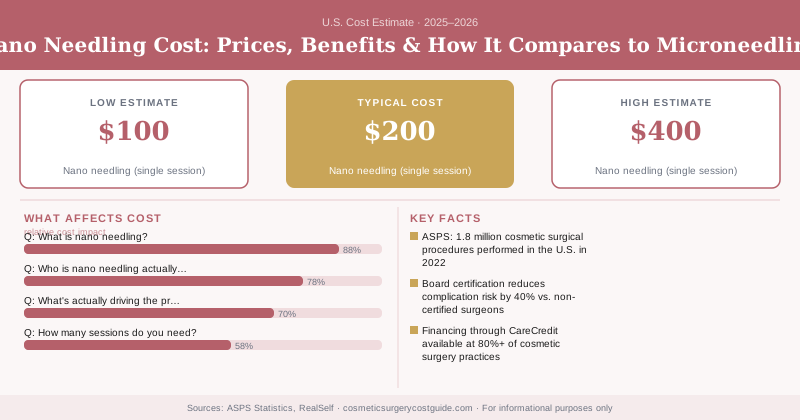
| Nano needling (single session) | $100 | $200 | $400 |
| Package of 4 sessions | $350 | $700 | $1,400 |
| Package of 6 sessions | $500 | $1,000 | $2,000 |
| Add-on serum (vitamin C, peptides, PRP) | $50 | $100 | $300 |
| Standard microneedling (comparison) | $150 | $300 | $500 |
Nano needling is slightly cheaper than microneedling on a per-session basis, though the gap has narrowed as both treatments have become more common. At many med spas, nano needling is priced similarly to microneedling but positioned as a “gentler” alternative.
Q: What’s actually driving the price?
Provider type matters most. At a medical esthetics practice or dermatologist’s office, nano needling runs $250–$400/session. At a franchise med spa, $150–$250 is common. Some beauty salons offer nano needling at $100–$150, but the device quality and technique vary enormously at this price point.
The serum used during the treatment is often the biggest differentiator. Nano needling with a basic hyaluronic acid serum is very different from nano needling with a prescription-grade growth factor serum or PRP. Add-on serums can double the treatment cost but also significantly affect the result.
Q: How many sessions do you need?
For texture and glow improvement, most providers recommend a series of 4–6 sessions spaced 2–4 weeks apart. Unlike microneedling, where results build from the collagen stimulation and continue improving for months, nano needling results are more immediate and shorter-lived. You’ll notice brighter, smoother skin after one session, but it won’t last unless you maintain regular treatments.
| Factor | Nano Needling | Microneedling |
|---|---|---|
| Depth | Epidermis only | 0.25–2.5mm into dermis |
| Downtime | None | 24–48 hrs redness |
| Primary mechanism | Product penetration | Collagen stimulation |
| Best for | Glow, texture, sensitivity | Scars, wrinkles, laxity |
| Results durability | Weeks | Months |
| Cost per session | $100–$400 | $150–$500 |
| Evidence base | Limited | Robust clinical data |
Q: Is nano needling safe for all skin tones?
Yes — this is one area where nano needling has a genuine advantage. Because it doesn’t penetrate into the dermis, it carries minimal risk of post-inflammatory hyperpigmentation (PIH), which is a concern with deeper microneedling in Fitzpatrick skin types IV–VI. For darker skin tones wanting a surface-level treatment with no downtime risk, nano needling is a reasonable option.
Q: Can you do nano needling at home?
There are consumer nano needling devices marketed for home use ($50–$300), but they’re not the same technology as professional-grade cartridges. Professional systems oscillate at 100–150 times per second with precise tip geometry; home devices are slower, less precise, and use different materials. The results aren’t comparable. More importantly, improper technique at home can cause irritation or introduce bacteria into micro-channels.
Avoid nano needling over active acne breakouts, open wounds, rosacea flares, or sunburned skin. Even though the treatment is superficial, disrupting the skin barrier over inflamed or compromised areas can worsen conditions. Always disclose active skin conditions to your provider before treatment.
Q: Is it worth the money compared to a good facial?
It depends on what you’re trying to achieve. A well-formulated facial with professional actives costs $80–$200 and delivers surface hydration and exfoliation. Nano needling’s advantage is enhanced penetration — ingredients driven past the stratum corneum reach the viable epidermis at higher concentrations than topical application alone achieves. If the serum being used contains ingredients that benefit from deeper penetration (vitamin C, growth factors, peptides), nano needling earns its premium.
If the practice is using mediocre serums, though, you’re essentially paying extra for a facial with a different delivery mechanism. Ask specifically what’s being applied during your nano needling treatment and why those ingredients were chosen for your skin concerns.
The bottom line: nano needling is a legitimate treatment for the right patient — primarily women with sensitive or reactive skin who want a no-downtime option for glow and early texture concerns. It’s not a substitute for microneedling when real collagen stimulation is needed.
Frequently Asked Questions
Nano needling typically costs $150–$400 per session, depending on the treatment area size, provider experience, and geographic location. Most patients need 4–6 sessions spaced 2–4 weeks apart for optimal results, bringing total treatment costs to $600–$2,400 for a complete course.
Nano needling is considered a cosmetic procedure and is not covered by health insurance plans. You'll pay the full out-of-pocket cost at the time of service, though some med spas and dermatology offices offer package discounts (typically 10–20% off) when you prepay for multiple sessions.
A single nano needling session takes 30–60 minutes depending on treatment area, with minimal downtime—most patients experience only mild redness that subsides within a few hours. Visible improvements in skin texture and fine lines typically appear after 2–3 sessions, with full results developing over 8–12 weeks as collagen production increases.