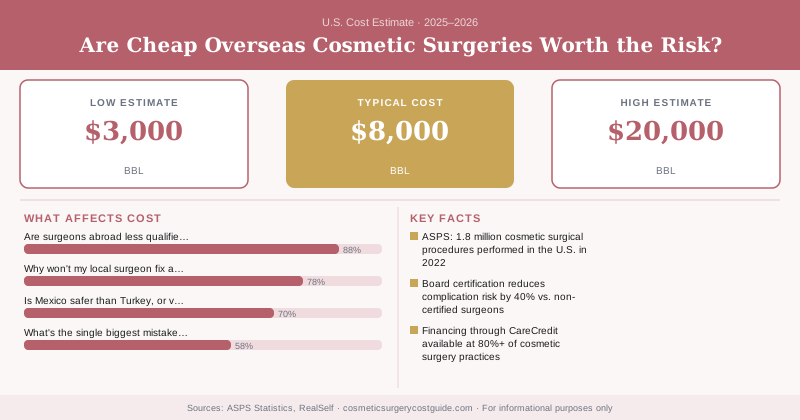
Sarah saw the quote and almost booked on the spot: $4,200 for a BBL in another country, versus the $13,000 her local surgeon wanted. Nearly nine thousand dollars saved. It’s the exact math that sends tens of thousands of Americans abroad every year — and it’s also where a lot of them get burned. The savings are real. So are the risks. The honest question isn’t “is it cheaper?” (it always is) but “what happens if it goes wrong?”
The Savings Are Real — And So Is the Fine Print
Cosmetic surgery abroad typically runs 40–70% less than US pricing. That gap isn’t fake; it reflects genuinely lower labor, facility, and malpractice-insurance costs in countries like Mexico, Colombia, and Turkey. Plenty of skilled, board-certified surgeons practice there.
The problem is what the quote leaves out. The advertised price rarely includes airfare, a week or two of lodging, aftercare, or — the big one — what happens if you need a revision. When you factor those in, the gap narrows fast. And if a complication sends you home for corrective surgery, the savings can vanish entirely.
The Real Cost Comparison
| Procedure | US Cost | Abroad (typical) | If Revision Needed |
|---|---|---|---|
| BBL | $8,000–$15,000 | $3,000–$6,000 | +$8,000–$20,000 at home |
| Tummy tuck | $8,000–$15,000 | $3,500–$6,500 | +$6,000–$15,000 |
| Breast augmentation | $5,000–$12,000 | $2,500–$5,000 | +$5,000–$12,000 |
| Mommy makeover | $12,000–$25,000 | $5,000–$9,000 | +$10,000–$25,000 |
Look at that last column. A revision to fix a botched result routinely costs more than you saved — sometimes more than the whole procedure would have cost at home. US surgeons are often reluctant to take on someone else’s complication, which can leave you paying a premium for the few who will. Our revision cost guide shows just how steep that path gets.
The CDC has investigated multiple serious infection outbreaks tied to cosmetic surgery performed abroad, including drug-resistant bacterial infections requiring months of treatment. BBLs carry the highest mortality rate of any cosmetic procedure — fat injected too deep can cause a fatal embolism — and that danger rises wherever surgical oversight is weaker. Flying within days of surgery also sharply increases blood-clot risk. These aren’t rare horror stories; they’re documented, recurring patterns.
Where the Risk Really Lives
Three things drive overseas risk, and price doesn’t tell you about any of them:
- Inconsistent accreditation. A clinic can look polished and still lack the surgical oversight standards a US accredited facility requires. Verify international accreditation (JCI), not just photos.
- No safety net for follow-up. Recovery from major surgery takes weeks. Catching a complication early matters — and that’s hard when your surgeon is 2,000 miles away.
- Limited recourse. If something goes wrong, malpractice protections and legal options differ dramatically by country. You may have little practical ability to hold anyone accountable.
ASPS and other professional bodies have repeatedly warned patients about “package deal” tourism that bundles multiple major procedures to maximize savings — exactly the combination that maximizes risk.
You can lower the odds dramatically:
- Verify the surgeon with the destination country’s medical board
- Confirm the facility holds JCI international accreditation
- Don’t fly for at least 7–10 days post-op (clot risk)
- Budget a real complication fund — assume you might need it
- Line up follow-up care at home before you travel
- Avoid bundled multi-surgery packages
- Never pick a surgeon on price alone — especially for a BBL
The patients who do best treat it like surgery with a plane ticket, not a discount vacation.
Common Questions, Answered
Are surgeons abroad less qualified? Not necessarily — many are excellent. But the variance is much wider, and you have fewer easy ways to verify credentials and outcomes from afar.
Why won’t my local surgeon fix a botched overseas job? Liability and unfamiliarity. They didn’t perform the original surgery, can’t vouch for what was done, and take on the risk of a complicated revision. The ones who will often charge a premium.
Is Mexico safer than Turkey, or vice versa? It depends entirely on the specific surgeon and facility, not the country. Compare your options carefully — our Mexico cost guide and abroad vs. USA comparison walk through what to vet.
What’s the single biggest mistake people make? Booking the cheapest option for a BBL. It’s the procedure where cutting corners can be fatal.
Bottom Line
Cheap overseas cosmetic surgery delivers real upfront savings of 40–70% — but the price tag hides travel, aftercare, and the very real chance of a revision that costs more than you saved. For low-risk procedures with thorough surgeon vetting and a complication fund, some patients do fine. For high-risk surgeries like BBLs, the math rarely favors chasing the lowest price. Decide on safety and follow-up, not just the headline number.
Frequently Asked Questions
Sometimes — but the headline savings are misleading. A procedure that's $12,000 in the US might be $4,000–$6,000 abroad, yet that price often excludes travel, lodging, complications, and revisions. If anything goes wrong, fixing it back home can cost more than you saved, and follow-up care is hard to coordinate across borders.
Typically 40–70% less than US pricing. A BBL that runs $8,000–$15,000 in the US is often $3,000–$6,000 in Mexico, Colombia, or Turkey. The gap reflects lower labor and facility costs — not necessarily lower quality, but quality and safety vary far more than the price.
Inconsistent facility accreditation, limited recourse if something goes wrong, infection risk from travel and unfamiliar bacteria, blood-clot danger from flying soon after surgery, and no easy follow-up. The CDC has documented serious infection outbreaks tied to cosmetic surgery abroad, and BBLs in particular carry one of the highest mortality rates of any cosmetic procedure.
You're largely on your own. The original surgeon may be unreachable, and US surgeons are often reluctant to take on someone else's complication. Revision surgery to correct a botched result frequently costs $8,000–$20,000+ — more than the original savings, and sometimes more than the original surgery would have cost at home.
Yes, BBLs are uniquely risky anywhere, and that risk climbs when oversight is weaker. Fat injected too deep can enter a vein and cause a fatal embolism. The procedure has the highest death rate of any cosmetic surgery, so cutting corners on surgeon vetting to save money is especially dangerous here.
Verify the surgeon's credentials with the country's medical board, confirm the facility is internationally accredited (JCI), avoid flying for at least 7–10 days post-op to reduce clot risk, budget for a complication fund, and arrange follow-up care at home before you travel. Never book a 'package deal' that bundles multiple major surgeries to save money.