Bench pressing for years builds real muscle. It doesn’t fix a congenital chest wall depression, and it doesn’t create the sharp lower-pec definition some men want regardless of body fat percentage. That gap between what training can achieve and what some men are actually looking for is exactly what pec implants address.
What pec implants cost
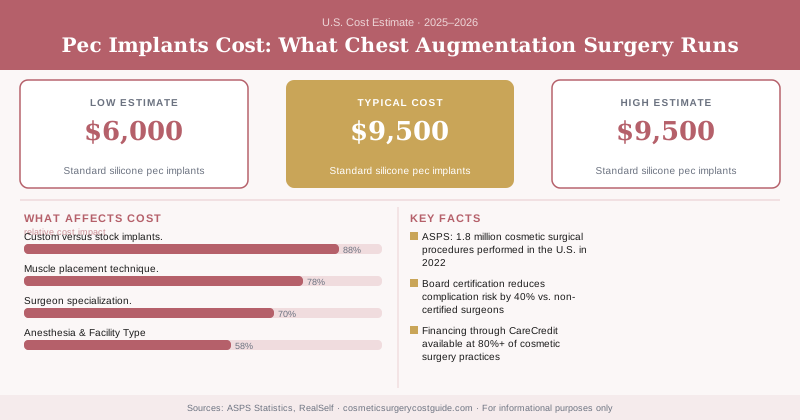
| Component | Typical Cost |
|---|---|
| Standard silicone pec implants | $6,000–$9,500 |
| Custom-sculpted implants | $9,000–$12,000 |
| Revision surgery | $5,000–$9,000 |
Who actually seeks this procedure out
Pectus excavatum, a congenital condition where the sternum is depressed inward creating a sunken chest appearance, affects a meaningful portion of the population and, when mild, is often not corrected in childhood since it’s primarily cosmetic rather than functionally impairing breathing or heart function. Adults with this condition are one of the largest groups seeking pec implants, since the implants can camouflage the depression effectively without the more invasive bar-based surgical correction typically used for severe cases in childhood.
Bodybuilders and dedicated fitness enthusiasts with naturally underdeveloped pec muscles — often due to muscle insertion points and fiber composition that don’t respond proportionally to training, similar to the genetic factors affecting calf development — are the other major patient group, seeking implants to achieve the sharp, defined chest contour that training alone hasn’t produced despite years of consistent effort.
How the implants themselves work
Silicone pec implants are solid, custom-shaped devices placed either above or beneath the pectoralis major muscle through a small incision, typically in the armpit crease to minimize visible scarring. Implants are available in a range of stock sizes and shapes, and some surgeons offer custom-sculpted options matched to a specific patient’s existing chest shape and desired definition pattern — particularly useful for patients with asymmetric conditions like pectus excavatum where a standard implant shape wouldn’t address the specific depression pattern.
Implants placed beneath the pectoralis major muscle tend to look more natural during muscle flexion, since the muscle moves independently over the implant, while implants placed above the muscle (subcutaneously) are technically a shorter procedure but can look less natural during activity or flexing. Discuss which placement your surgeon recommends and why, based on your specific goals and existing muscle mass.
What determines your specific price
Custom versus stock implants. As noted, custom-sculpted implants for asymmetric correction cost meaningfully more than standard stock shapes but produce better results for congenital chest wall irregularities.
Muscle placement technique. Submuscular placement is a slightly more involved technique than subcutaneous placement and may be priced somewhat higher by some surgeons.
Surgeon specialization. Pec implants are a less commonly performed procedure than breast augmentation or many other body contouring surgeries — surgeons with specific, demonstrated experience may charge a premium, which is generally worth prioritizing over the lowest available quote.
Recovery timeline
Expect 1–2 weeks away from work and all strenuous activity, with upper body exercise specifically restricted for 6–8 weeks to allow the implants to settle into their final position and the surrounding tissue to fully heal around them. Some firmness and swelling in the chest is normal during the first month and gradually resolves as healing progresses.
Pec implants, like any implant, carry a lifetime risk of complications including implant shifting, capsular contracture (tissue tightening around the implant), or infection requiring removal. Choose a surgeon with specific pec implant experience, follow all post-operative activity restrictions closely, and understand that implant-based results, while often permanent, aren’t entirely maintenance-free over decades.
Bottom line
Pec implants cost $6,000–$9,500 for standard options or $9,000–$12,000 for custom-sculpted implants, offering a surgical solution for congenital chest wall asymmetries or naturally underdeveloped chest muscles that haven’t responded to years of dedicated training. Recovery requires a meaningful break from upper body exercise, but results are generally permanent once fully healed.
Frequently Asked Questions
Pec implant surgery typically costs $6,000–$12,000, covering the implants themselves, surgeon fee, anesthesia, and facility costs. Custom-sculpted silicone implants matched to a patient's specific chest shape generally cost more than standard stock options.
Pec implants are most commonly sought by men with congenital chest wall asymmetries like pectus excavatum, bodybuilders and fitness enthusiasts with naturally underdeveloped chest muscles despite years of training, and some patients undergoing gender-affirming facial and body masculinization procedures wanting a more defined masculine chest contour.
Most patients need 1–2 weeks off work and strenuous activity, with upper body exercise restricted for 6–8 weeks to allow the implants to settle properly and incisions to fully heal. Swelling and some firmness in the chest area is normal for the first month and gradually softens as healing progresses.