After Mia, 42, lost most of her eyebrows to chemotherapy, she researched every option. Microblading, powder brows, ombre brows — the terminology alone felt overwhelming. The cost was a secondary concern once she realized how much the right technician mattered. But for women without a medical reason, budget planning still starts with understanding the price range — and the permanent makeup market varies more than almost any other cosmetic category.
What Permanent Makeup Actually Includes
“Permanent makeup” is an umbrella term for cosmetic tattooing procedures that deposit pigment into the skin to simulate makeup or enhance features. The major procedures are:
- Microblading — Hair-stroke brow technique using a hand tool with micro-blades; semi-permanent (12–18 months)
- Powder brows / ombre brows — Machine-based shading technique; softer, more makeup-like effect; lasts 2–3 years
- Combination brows — Microblading strokes + machine shading; most popular technique
- Lip blush tattoo — Soft pigment deposit across the lips to add color and definition; lasts 2–5 years
- Eyeliner tattoo — Pigment along the lash line (top, bottom, or both); lasts 3–5+ years
- Scalp micropigmentation — Simulates hair follicles on the scalp for hair loss; covered separately
The American Academy of Micropigmentation and the Society of Permanent Cosmetic Professionals are the main credentialing bodies in the US, though the industry is largely regulated at the state level, which creates wide variation in licensing requirements.
Cost by Procedure
| Procedure | Low | Typical | High |
|---|---|---|---|
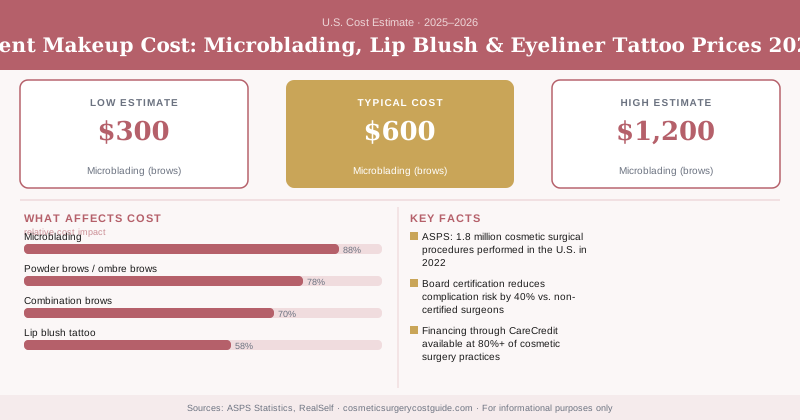
| Microblading (brows) | $300 | $600 | $1,200 |
| Powder/ombre brows | $300 | $550 | $1,100 |
| Combination brows | $350 | $700 | $1,400 |
| Lip blush tattoo | $400 | $700 | $1,500 |
| Eyeliner tattoo (top only) | $250 | $450 | $900 |
| Eyeliner tattoo (top + bottom) | $400 | $650 | $1,200 |
| Touch-up / color boost | $100 | $200 | $400 |
These prices typically include an initial session plus one touch-up visit 6–8 weeks later. The touch-up is essential — permanent makeup always requires a second pass once the skin heals and the initial pigment settles, which it does unevenly.
What’s Actually Driving the Price Gap?
The difference between a $300 microblading appointment and a $1,200 one isn’t just overhead costs. Here’s what actually separates the price tiers:
Training and certification. The best artists have 200–500+ hours of hands-on training, have taken apprenticeships, and invest in continuing education. A weekend course produces very different technicians than a structured apprenticeship.
Portfolio depth. Established artists with thousands of completed brow procedures and extensive before-and-after documentation justify higher prices. You’re paying for consistent results across a range of skin types, not just the cheapest option.
Pigments and equipment. High-quality, organic-based pigments cost significantly more than cheap alternatives and behave more predictably as they fade. Machine handpieces from reputable brands (Cheyenne, FK Irons) cost more and produce better results than budget imports.
Geographic market. Artists in New York, LA, Miami, and Chicago charge 30–60% more than those in smaller markets. This reflects overhead, not necessarily quality — but the density of high-skill artists in major markets is also genuinely higher.
- Look at healed results, not fresh ones. Fresh work looks dramatically different from healed work. Ask to see photos taken 6–8 weeks post-procedure.
- Look at your skin type. If you have oily skin, your brows will heal differently than on dry skin. Find an artist with examples of your skin type.
- Ask about pigment brands. Reputable artists use named pigments from established suppliers and can tell you what’s in them.
- Verify licensing. Look up your state’s requirements. In most states, permanent makeup requires either a cosmetology, esthetics, or tattooing license. Ask to see theirs.
- Red flags: No portfolio of healed results. Prices dramatically below market. No patch test offered for lip blush (color reactions can occur).
Longevity: How Long Does Each Last?
This is the most misunderstood part of permanent makeup pricing. None of it is truly permanent — the pigments are designed to fade, and that’s actually a feature, not a bug. It allows for adjustments as your face changes and preferences evolve.
- Microblading: 12–18 months before significant fading; touch-up recommended at 12 months ($100–$250)
- Powder/ombre brows: 2–3 years before noticeable fading; annual touch-up recommended
- Lip blush: 2–5 years depending on skin type and sun exposure; color boost every 2–3 years
- Eyeliner tattoo: 3–5+ years, sometimes longer; fades to softer look rather than disappearing
Oily skin, sun exposure, certain skincare ingredients (retinol, AHA/BHA), and some medications accelerate fading. Iron-deficiency anemia can also affect how well lip pigment holds.
Lip Blush: Is It Worth the Cost?
Lip blush is having a moment — it’s one of the fastest-growing permanent makeup procedures, according to industry data. It deposits a soft, diffused color across the lips to enhance natural lip color, improve symmetry, and add the illusion of fullness. It doesn’t add volume (only filler does that), but it does create a defined border and a “your lips but better” color effect.
For women who apply lip liner and tinted balm daily, lip blush can replace that routine entirely. At $400–$700 with a 2–5 year lifespan, it often costs less than two years of comparable lip products.
The healing process is less straightforward than brows. Lips go through a dramatic “chapped and flaking” phase around days 3–7 where the color appears patchy and alarming. This is normal — the final healed result emerges around week 4–6 and looks much softer than the initial work.
If you have a history of cold sores (oral herpes simplex), lip blush can trigger an outbreak. Your artist should advise you to take antiviral prophylaxis (Valtrex or acyclovir, prescribed by your doctor) starting 3 days before the procedure. Do not skip this step — an outbreak during healing can damage results and cause significant discomfort.
Insurance and Tax Considerations
Permanent makeup is cosmetic and not covered by health insurance in almost all cases. The exception is reconstruction after cancer treatment (mastectomy-related areola tattooing is often covered; brow tattooing after alopecia from chemotherapy may qualify in some plans — check with your insurer).
FSA and HSA funds generally cannot be used for cosmetic tattooing. However, if you’re undergoing permanent makeup as part of medical reconstruction, documentation from your treating physician may make it eligible.
The Bottom Line on Budget
For brows, plan to spend $500–$800 for initial work from a skilled artist, plus $150–$250 for a 12-month touch-up. Over 3 years, that’s $650–$1,050 — or roughly the same as 2–3 years of professional brow tinting and threading. The math favors permanent makeup at the 2-year mark for most regular brow maintenance routines.
Don’t cut corners on the initial appointment. A correction or removal costs $200–$600+ and multiple sessions — far more than the difference between a budget artist and a skilled one.
Frequently Asked Questions
Microblading typically costs $400–$800 for the initial appointment, while powder brows and ombre brows range from $500–$1,200, and eyeliner or lip blush procedures cost $300–$1,000 depending on the technician's experience and your location. Most technicians recommend a touch-up appointment 4–6 weeks after the initial procedure, which adds $100–$300 to the total cost.
Most health insurance plans do not cover permanent makeup because it is classified as an elective cosmetic procedure, even if you have a medical reason like alopecia or chemotherapy-related hair loss. However, if permanent makeup is medically necessary due to a condition like vitiligo or severe scarring, some insurance companies may cover it with proper documentation—contact your insurer directly to discuss your specific situation.
Permanent makeup typically lasts 1–3 years before fading noticeably, with most people needing a touch-up every 12–18 months to maintain color and definition. Touch-up appointments cost $100–$300 and take 1–2 hours, compared to the 2–3 hour initial appointment that costs $300–$1,500 depending on the procedure type.