Would you buy a car after talking to only one dealer? Most people wouldn’t. Yet a surprising number of patients book a $12,000 surgery after a single consultation — and skip the second opinion that costs a fraction of that to get.
A second opinion consultation with another plastic surgeon is one of the cheapest forms of insurance you can buy before a major elective surgery. Here’s what it actually costs and when it earns its price many times over.
What a second opinion costs
| Type of Second Opinion | Cost |
|---|---|
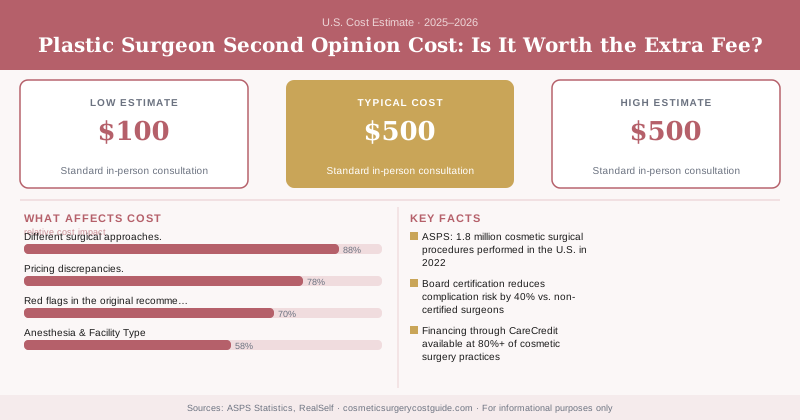
| Standard in-person consultation | $100–$500 |
| Virtual/telehealth consultation | $75–$300 |
| Complex case with imaging review | $500–$1,000 |
| Revision surgery evaluation | $200–$600 |
| Fee waived if you book surgery there | $0 (fee applied to procedure) |
Many practices apply the consultation fee toward your total procedure cost if you ultimately book surgery with them — effectively making the second opinion free if you switch surgeons, and a modest, worthwhile expense if you don’t.
Why so few patients actually get one
Plastic surgery consultations can feel emotionally exhausting — you’ve already worked up the courage to discuss your body with one stranger, and doing it again with someone else feels like starting over. There’s also a subtle social pressure: many patients worry that seeking a second opinion feels like distrust of the first surgeon, or that scheduling delays cost momentum they’ve built up to actually go through with the procedure.
None of that reasoning holds up against the actual financial and safety stakes. A $100-$500 fee is a rounding error against a $10,000+ procedure — and the information a second opinion surfaces can be worth far more than its price.
What a second opinion can actually reveal
Different surgical approaches. Two board-certified surgeons can recommend genuinely different techniques for the same concern — one might suggest a smaller, less invasive procedure where another recommends more extensive surgery. Seeing both perspectives helps you make a more informed choice, not just a faster one.
Pricing discrepancies. It’s common for quotes for the same procedure to vary by 30-50% or more between practices in the same city. A second opinion often reveals whether your original quote was reasonable or notably high.
Red flags in the original recommendation. Occasionally a second surgeon will flag that the first surgeon’s recommended procedure seems more extensive than necessary, or that a specific technique isn’t well-suited to your anatomy — information genuinely worth knowing before committing to surgery.
Strongly consider a second opinion in these situations: the recommended procedure or price feels significantly larger than you expected going in, you’re evaluating revision surgery after an unsatisfactory first result, the surgeon pressures same-day booking or offers a “limited time” discount for immediate commitment, or you simply have any lingering doubt after the first consultation. None of these situations are reasons to feel rushed — a confident, ethical surgeon will never discourage a second opinion.
How to make the most of a second consultation
Bring the same photos, medical history, and specific questions to both consultations so you’re comparing apples to apples. Ask the second surgeon directly: “Would you recommend the same procedure the first surgeon suggested, or something different — and why?” Take notes during both visits since it’s easy to conflate details from two separate conversations days apart.
For general guidance on what a typical first consultation costs and includes, see our plastic surgery consultation fee guide.
When you probably don’t need one
For lower-risk, well-established procedures with a board-certified surgeon you’ve thoroughly vetted (verified credentials, reviewed extensive before/after photos, read genuine patient reviews), and a price that aligns with typical regional averages, a second opinion is a nice-to-have rather than a necessity. The bar for “definitely get one” rises with the invasiveness, cost, and risk of the specific procedure.
Be cautious of any surgeon who reacts negatively or defensively when you mention seeking a second opinion. Reputable, board-certified surgeons routinely expect and support this practice — it’s a basic part of informed consent for elective surgery. A surgeon who discourages it, rushes you to book, or offers pressured incentives to skip further consultations is a legitimate warning sign, regardless of how good their portfolio looks.
Bottom line
A second opinion consultation costs $100-$500 — a small fraction of the total procedure cost — and can reveal pricing discrepancies, alternative surgical approaches, or red flags that are worth far more than the fee itself. For any major, expensive, or revision procedure, treat the second opinion as a standard part of your due diligence, not an optional extra step.
Frequently Asked Questions
A second opinion consultation with a plastic surgeon typically costs $100–$500, similar to a standard consultation fee, though some surgeons waive this fee if you proceed with surgery at their practice. Complex cases requiring imaging review or additional testing may cost more, sometimes $500–$1,000 total.
Yes, for most patients — a second opinion can reveal different surgical approaches, more accurate pricing, or red flags about the first surgeon's recommendation, often saving far more than the consultation fee itself if it changes your treatment plan or surgeon choice. This is especially valuable for major procedures like facelifts, revision surgeries, or any case where the first surgeon recommended significantly more extensive work than you expected.
You should strongly consider a second opinion when the recommended procedure feels significantly more extensive or expensive than you anticipated, when you're considering revision surgery after a prior unsatisfactory result, or when the first surgeon pressures you to book quickly without time to research. A confident, board-certified surgeon should never discourage you from seeking a second opinion — it's a red flag if they do.