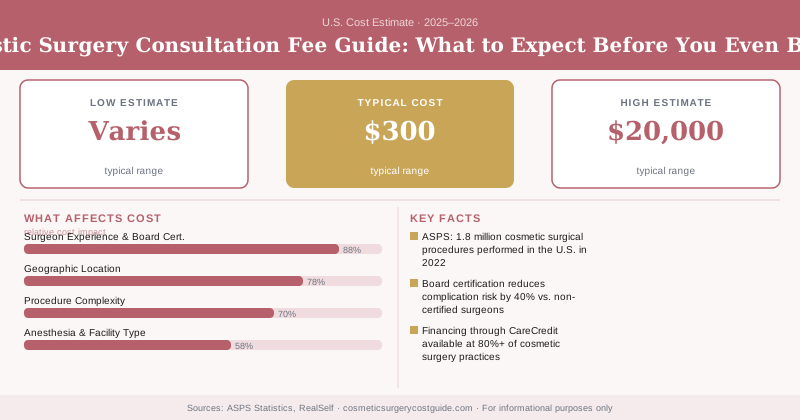
What does it actually mean when a consultation is “free”? And why does the surgeon down the street charge $350 for the exact same 45-minute appointment? Both practices are legitimate — they’ve just made different business decisions about how to price the first step of your surgical journey.
Understanding the consultation fee landscape helps you budget accurately and know what you’re entitled to ask for once you’re in the room.
Typical consultation fee structure
| Practice Type | Typical Consultation Fee |
|---|---|
| High-volume, competitive market practice | $0 (free) |
| Established/high-demand surgeon | $100–$300 |
| Highly sought-after specialist | $300–$500 |
| Virtual/telehealth initial consult | $0–$150 |
| Complex/revision case consult | $200–$600 |
| Fee applied toward procedure cost | Common practice |
Why fees vary so much between practices
A free consultation isn’t necessarily a sign of a lower-quality practice, and a $400 consultation fee isn’t automatically evidence of superior skill. Fee structures largely reflect business strategy: practices competing hard for new patients in saturated metro markets often waive the fee entirely as a customer-acquisition tool. Highly established or in-demand surgeons — often those with long waitlists — charge a meaningful fee partly to filter for patients who are seriously committed, and partly because their time genuinely is in high demand.
What a thorough consultation should actually include
Regardless of whether you’re paying, a quality plastic surgery consultation should cover: a hands-on physical examination of the area you’re consulting about (not just a photo review), a discussion of your specific goals and relevant medical history, the surgeon’s honest recommended approach (including alternatives you may not have considered), an initial cost estimate broken into surgeon fee, anesthesia, and facility fee, and time for you to ask questions without feeling rushed.
Many practices also offer computer imaging or morphing software to show a simulated “after” result — useful for setting expectations, though it’s worth remembering these are estimates, not guarantees of your actual surgical outcome.
Ask directly: “Is this fee applied toward my procedure cost if I book with you?” Also ask for an itemized cost estimate rather than a single bundled number, so you can compare apples to apples against other consultations. Request to see before-and-after photos of patients with a body type or facial structure similar to yours, not just the surgeon’s best overall cases. And ask how many times this specific procedure has been performed by this surgeon in the last year — volume is a reasonable (though imperfect) proxy for current expertise.
Should you pay for multiple consultations?
Yes, generally. Comparing consultations across two or three board-certified surgeons — even if it means paying two or three separate fees totaling $200-$1,000 — is a small cost relative to a procedure that might run $6,000-$20,000. See our full breakdown on second opinion consultations for more on how to weigh this specifically for revision or complex cases.
Virtual consultations: a lower-cost first step
Many practices now offer virtual or telehealth initial consultations, often at a lower fee (or free) compared to in-person visits. These work well as a first screening step — confirming general candidacy and getting a rough cost range — before committing to an in-person visit, which is still necessary before finalizing any surgical plan since photos and video can’t fully substitute for a physical exam.
What a low or waived fee doesn’t tell you
Don’t use consultation fee alone as a proxy for surgeon quality in either direction. Board certification (verifiable through the American Board of Plastic Surgery’s public database), years of specific experience with your procedure, and a substantial portfolio of consistent, natural-looking results matter far more than whether the initial visit cost you $0 or $400.
Be wary of practices that use a “free consultation” purely as a high-pressure sales opportunity — offering steep same-day discounts to book immediately, or pushing you toward add-on procedures you didn’t come in asking about. A quality consultation, free or paid, should feel informative and unhurried, not like a sales pitch with a countdown timer.
Bottom line
Plastic surgery consultation fees range from free to $500, and the fee itself says little about surgeon quality — it’s largely a business decision reflecting demand and market competition. Budget for at least two or three consultations when comparing surgeons for any significant procedure, and use the visit to get a genuinely itemized quote and honest recommendation, not just a number to compare against other clinics.
Frequently Asked Questions
No — many plastic surgeons offer free initial consultations, especially for common, high-volume cosmetic procedures, while others charge $100–$500, particularly for highly sought-after surgeons or complex cases requiring more of their time. Fees, when charged, are often applied toward your total procedure cost if you proceed with surgery at that practice.
A typical consultation includes a physical examination of the treatment area, discussion of your goals and medical history, the surgeon's recommended approach, an initial cost estimate, and often computer imaging or photo simulations of potential results. Higher-fee consultations with in-demand surgeons sometimes include more extensive imaging or a longer, more detailed appointment.
Surgeons in high demand or with extensive experience often charge consultation fees to filter for serious, committed patients and to compensate for the significant time investment of a thorough evaluation, while surgeons building their practice or in more competitive markets frequently offer free consultations to attract new patients. Neither approach directly indicates surgical skill — the fee reflects business strategy and demand as much as anything else.