“Turkey neck” is the blunt term patients use. Surgeons call it platysmal banding — the vertical cords that appear along the front of the neck as the platysma muscle separates with age. It’s one of the most noticeable signs of facial aging, and it’s also one of the most misunderstood from a treatment standpoint. According to ASPS data, neck lifts are among the top 10 most performed cosmetic surgical procedures in the US, with over 160,000 performed in 2023. But a neck lift and a platysmaplasty aren’t the same thing — and knowing the difference affects both the outcome and the cost.
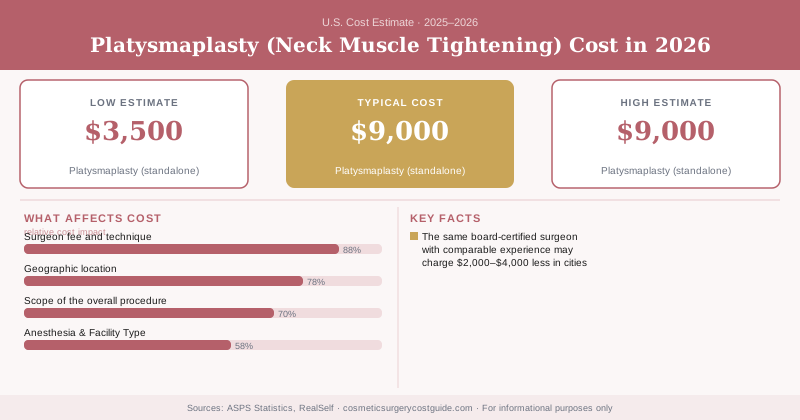
Platysmaplasty / Neck Tightening Cost
| Procedure | All-In Cost Range |
|---|---|
| Platysmaplasty (standalone) | $3,500–$9,000 |
| Platysmaplasty added to neck lift | $1,500–$3,500 (add-on) |
| Platysmaplasty added to facelift | $1,500–$3,000 (add-on) |
| Full neck lift (includes platysmaplasty) | $7,000–$18,000 |
| Kybella or liposuction for submental fat | $1,500–$4,500 |
Platysmaplasty is almost never performed as a true standalone — it’s most commonly incorporated into a neck lift or facelift as an internal step. When quoted as an add-on, it typically represents the additional surgeon’s fee for the extra technique time. When it’s bundled into a neck lift, you’re buying the whole package.
What Is the Platysma and Why Does It Matter?
The platysma is a flat muscle that runs from the chest/collarbone area up through the neck and into the lower face. In youth, the paired left and right sections of the platysma stay together in the midline, creating a smooth neck contour. With age — and it’s heavily genetic — the muscle separates and the edges become visible as vertical bands running from the chin down the neck.
Platysmaplasty tightens and rejoins these bands in the midline using permanent sutures or by actually removing a small strip of the medial muscle edges. The result is a smooth, defined neck contour. Skin-only neck lifts without platysmaplasty leave the bands intact and tend to produce results that look tight at first but allow the banding to reappear relatively quickly.
A neck lift typically includes multiple components: liposuction of submental fat, skin removal and tightening, and often platysmaplasty. Platysmaplasty is the specific internal muscle repair step. You can have a neck lift without platysmaplasty (usually a mistake for patients with visible banding), but platysmaplasty alone without skin tightening doesn’t address loose skin. For most patients with platysmal banding and skin laxity, a full neck lift incorporating platysmaplasty is the appropriate procedure.
Why It’s Usually Done with a Facelift
The platysma doesn’t exist in isolation — it connects to the lower facial tissues that lose support with age. This is why many plastic surgeons argue strongly that a neck lift done without addressing the lower face (or combined with a facelift) produces results that look disconnected. Tightening the neck while the jowls remain untouched creates an odd visual contrast. Most patients who pursue platysmaplasty are also candidates for lower face work, and surgeons will discuss this at consultation.
Combining procedures in one session saves on anesthesia and facility fees — typically 15–25% compared to scheduling separately.
What Drives the Cost
Surgeon fee and technique: Platysmaplasty requires accessing the deep neck structures, which demands a surgeon with specific expertise in neck anatomy. Surgeons who’ve performed hundreds of neck procedures and who have documentation of long-lasting results charge more — and produce better outcomes. This isn’t a procedure to discount.
Geographic location: Beverly Hills and Manhattan practices charge significantly more than equivalent surgeons in mid-market cities. The same board-certified surgeon with comparable experience may charge $2,000–$4,000 less in cities like Nashville, Phoenix, or Minneapolis.
Scope of the overall procedure: Platysmaplasty as part of a facelift adds relatively little additional cost because the neck is already being accessed. Doing it as a standalone requires its own incisions, facility time, and recovery — hence the higher standalone price.
Non-surgical treatments marketed for “neck banding” — including Botox neck bands (Nefertiti lift), RF devices, and ultrasound treatments — can soften early banding but cannot address the muscle-level separation that causes true platysmal banding. If you have visible, prominent vertical cords in your neck at rest, you’re looking at a surgical correction. Trying to address this non-surgically for years and then pursuing surgery later doesn’t improve outcomes and adds significant cost in the interim.
Recovery Timeline
Platysmaplasty is part of a larger neck/facial surgery recovery. Generally:
- Days 1–3: Significant swelling, bruising, tightness, small drain may be placed
- Week 1–2: Compression garment worn continuously; most patients stay home
- Week 2–3: Presentable with concealer; most patients return to desk work
- Weeks 3–6: Residual swelling, avoidance of vigorous activity
- 3–6 months: Full result visible as all swelling resolves
Additional recovery costs:
- Prescription medications: $100–$250
- Compression neck garment (if not provided): $40–$80
- Lymphatic drainage massage: $75–$150/session, 4–6 sessions
- Time off work: 10–21 days
Bottom Line
Platysmaplasty as part of a neck lift runs $7,000–$15,000 all-in in most US markets when bundled with a complete neck lift. As a standalone, budget $4,000–$8,000. It’s almost always worth combining with facelift work if the lower face also shows laxity — the combined result is dramatically more cohesive. Seek a board-certified plastic surgeon or facial plastic surgeon with specific neck expertise, look at before/after photos at 12+ months post-op, and ask directly whether they include platysmaplasty in their standard neck lift technique or charge it separately.
Frequently Asked Questions
Platysmaplasty ranges from $3,500–$9,000 depending on whether it's performed as a standalone procedure or combined with other facial surgeries like a facelift or neck lift. Standalone procedures typically fall in the lower to mid-range ($3,500–$5,500), while add-on procedures to larger surgeries may cost $4,000–$9,000. These figures reflect surgeon experience, geographic location, and facility fees but exclude anesthesia and facility costs.
Platysmaplasty is considered a cosmetic procedure and is not covered by health insurance plans, including Medicare and private insurers, since it's elective and not medically necessary. You should expect to pay the full out-of-pocket cost, though some surgeons offer financing options or payment plans to help manage expenses. Always confirm with your surgeon's office about available payment arrangements before your consultation.
Most patients return to light activities within 1–2 weeks, though full recovery and final results take 4–6 weeks as swelling and bruising subside. If platysmaplasty is combined with a facelift or other procedures, recovery may extend to 6–8 weeks depending on the extent of surgery. Your surgeon will provide specific activity restrictions and timeline based on your individual procedure.