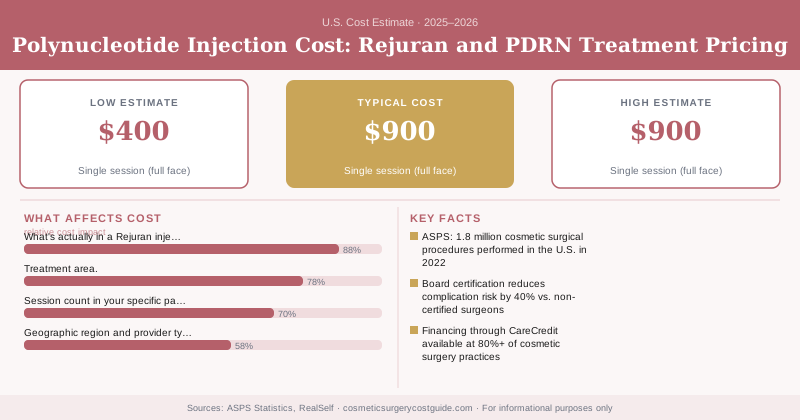
What’s actually in a Rejuran injection, and why does it cost what it does? Purified DNA fragments — derived from salmon or trout sperm, of all things — extracted and processed specifically to stimulate your skin’s own repair mechanisms. That specific sourcing and purification process is a meaningful part of what you’re paying for.
Polynucleotide injection costs
| Package | Typical Cost |
|---|---|
| Single session (full face) | $400–$900 |
| Full treatment package (3–4 sessions) | $1,500–$3,000 |
| Under-eye specific treatment (per session) | $350–$700 |
| Maintenance session (every 6–12 months) | $400–$800 |
Where polynucleotides actually come from
Polydeoxyribonucleotide, or PDRN, is derived from the DNA of salmon or trout sperm, which is purified and processed to remove any immunogenic proteins, leaving behind fragmented DNA strands used for their tissue-repair signaling properties. This might sound unusual, but purified salmon-derived compounds have a track record in regenerative medicine dating back to wound-healing research conducted primarily in South Korea and Italy through the 2000s and 2010s, well before cosmetic applications became popular.
Once injected into the skin, these DNA fragments are believed to stimulate fibroblast activity — the cells responsible for producing collagen and elastin — while also having documented anti-inflammatory properties that support overall tissue repair and skin quality improvement.
Why you need a package, not a single treatment
Similar to skin boosters, polynucleotide treatments work partly through cumulative biostimulation, meaning meaningful improvement in skin texture, elasticity, and under-eye hollowing typically requires a series of 3–4 sessions spaced 2–4 weeks apart rather than a single treatment. Many patients specifically seeking under-eye improvement — a particularly popular use case, since traditional filler can look puffy or unnatural in thin under-eye skin — see gradual improvement in texture and reduced dark circles across the full series rather than immediately after one session.
Traditional hyaluronic acid filler under the eyes carries real risk of looking puffy, developing a blue-tinged discoloration (the Tyndall effect), or migrating over time in this especially thin and delicate skin area. Polynucleotides don’t add volume the way filler does — instead, they improve skin quality and thickness in the area directly, making them a popular alternative or complement for patients with thin, crepey under-eye skin who aren’t good candidates for traditional filler.
How it compares to PRP (platelet-rich plasma)
PRP uses growth factors concentrated from a sample of your own blood, requiring a blood draw and centrifuge processing before injection, and typically costs $500–$1,200 per session. Polynucleotides use an off-the-shelf purified product with no blood draw required, generally at a similar or slightly lower per-session cost. Both fall into the broader category of regenerative, biostimulatory skin treatments, and some providers combine both in a single treatment plan targeting different aspects of skin repair and quality.
What changes your specific price
Treatment area. Under-eye-specific formulations, often lower concentration and requiring more careful injection technique in this delicate area, are sometimes priced differently than full-face treatment.
Session count in your specific package. More significant skin concerns may warrant a longer series than the standard 3–4 sessions, extending total cost.
Geographic region and provider type. As with most injectables, board-certified dermatology and plastic surgery practices in major metro areas charge at the higher end of the typical range.
Confirm any polynucleotide product used is FDA-cleared or being administered under appropriate regulatory pathways — some products marketed for cosmetic use in other countries haven’t completed the same regulatory review in the U.S., and sourcing matters for a product derived from biological material. Ask your provider directly which specific product they use and its regulatory status.
Bottom line
Polynucleotide injections cost $400–$900 per session, with a complete treatment package of 3–4 sessions running $1,500–$3,000. They work through a genuinely different mechanism than hyaluronic acid fillers or PRP — DNA-fragment-driven tissue repair rather than volume or growth-factor stimulation — making them a particularly useful option for delicate areas like under-eyes where traditional filler often falls short.
Frequently Asked Questions
Polynucleotide injections, commonly known by the brand name Rejuran, typically cost $400–$900 per session, with a full treatment package of 3–4 sessions running $1,500–$3,000. Under-eye specific treatment, using a specialized lower-dose formulation, is often priced separately from full-face treatment.
Polynucleotides, sometimes abbreviated PDRN (polydeoxyribonucleotide), are fragments of DNA typically derived from purified salmon or trout sperm, processed and purified for medical use. They're injected into the skin to stimulate fibroblast activity, tissue repair, and collagen production, with research on PDRN's wound-healing properties dating back to studies in South Korea and Italy in the 2000s and 2010s.
Skin boosters use hyaluronic acid to hydrate and add subtle volume to the skin, PRP (platelet-rich plasma) uses growth factors derived from your own blood, and polynucleotides use DNA fragments specifically to stimulate tissue repair and regeneration processes, including reducing localized inflammation. Each mechanism is distinct, though all three fall under the broader category of regenerative, biostimulatory skin treatments.