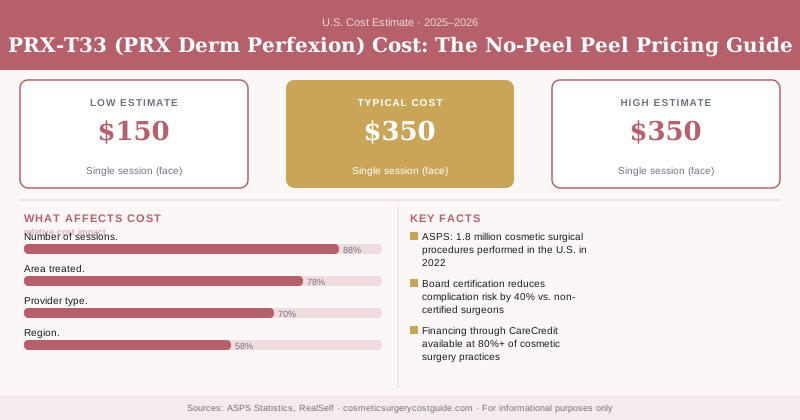
A peel that doesn’t peel, with no downtime, for $150–$350 a session? That’s the pitch behind PRX Derm Perfexion — and the price is one of the friendliest in the in-office treatment world.
PRX-T33, marketed as PRX Derm Perfexion, is a topical “biorevitalizing” treatment that combines TCA (trichloroacetic acid), hydrogen peroxide, and kojic acid. The twist: it’s massaged into the skin to stimulate collagen and brighten tone without the frosting, flaking, and recovery of a traditional deep peel. That “all the glow, none of the downtime” promise — at a low per-session price — is exactly why it spread through medspas as a lunchtime treatment.
PRX Derm Perfexion pricing breakdown
| Treatment | Cost |
|---|---|
| Single session (face) | $150–$350 |
| Series of 4 sessions | $600–$1,200 |
| Series of 6 sessions | $900–$1,800 |
| Face + neck add-on (per session) | $75–$200 |
| PRX + microneedling combo | $300–$600 |
Why it’s sold as a series
PRX works gradually, building collagen and improving tone over a course of treatments rather than dramatically resurfacing in one go. Most providers recommend a series of four to six sessions spaced about a week or two apart, then maintenance every few months.
So the headline per-session price of $150–$350 is appealing, but the realistic first-course cost is $600–$1,800. The upside is no downtime — you walk out glowing, not peeling. Chemical exfoliation as a category is enormous; the Aesthetic Society has reported chemical peels among the most-performed non-surgical procedures in the US, with hundreds of thousands done each year, and PRX positions itself as the no-recovery option within that space.
PRX Derm Perfexion costs $150–$350 per session, with a full series of 4–6 at $600–$1,800. Its big draw is zero downtime — a TCA-based treatment that brightens and firms without the peeling of a traditional peel. Budget for the series, not the single session, to see the real glow build.
What affects the price
Number of sessions. The course size drives your total. Confirm how many your provider recommends.
Area treated. Face-only is cheapest; adding neck, chest, or hands raises the total.
Provider type. Medspas typically price below dermatology offices, and PRX is often offered as a quick add-on or membership perk.
Region. Coastal metros add 30–40% over the national midpoint.
How PRX compares
PRX sits in interesting company. Against a traditional chemical peel, it’s gentler with no downtime but generally needs more sessions for comparable results. It’s frequently paired with microneedling — the PRX is applied to brighten and the needling drives collagen, a popular combo. If you want stronger resurfacing in fewer sessions and can tolerate recovery, laser skin resurfacing does more but costs more.
“No downtime” can tempt people to over-treat. PRX is gentle, but it still contains TCA, and stacking it too aggressively or doing it too often won’t speed results — it can irritate skin. Follow the recommended spacing, and don’t let the low per-session price push you into more sessions than your skin actually needs.
Common questions
Does it actually peel? Usually not in a visible flaking way — that’s the selling point. You may get mild dryness, but not classic peeling.
Is it safe for darker skin tones? It’s generally considered gentler than aggressive peels, but settings and frequency still matter. Choose an experienced provider familiar with your skin type.
Does insurance cover it? No — it’s cosmetic. Some clinics offer financing for longer series.
Bottom line
PRX Derm Perfexion costs $150–$350 per session and $600–$1,800 for a full series. It’s an affordable, no-downtime brightening and firming treatment that builds results over a course. Budget for the series, pair it smartly with microneedling if you want more, and you’ve got one of the gentler, cheaper glow boosters available.
Frequently Asked Questions
A single PRX Derm Perfexion session typically costs $150–$350, depending on the provider's location, experience level, and treatment area size. Most patients see optimal results with a series of 4–6 sessions, bringing the total investment to $600–$1,800.
No, PRX Derm Perfexion is considered a cosmetic procedure and is not covered by standard health insurance plans. You should expect to pay the full out-of-pocket cost, though some dermatology offices offer payment plans or package discounts for multiple sessions.
Most patients require a series of 4–6 sessions spaced 2–4 weeks apart for best results, making the full treatment course 2–6 months. Since PRX Derm Perfexion has no downtime, you can return to normal activities immediately and stack treatments more frequently than traditional peels.