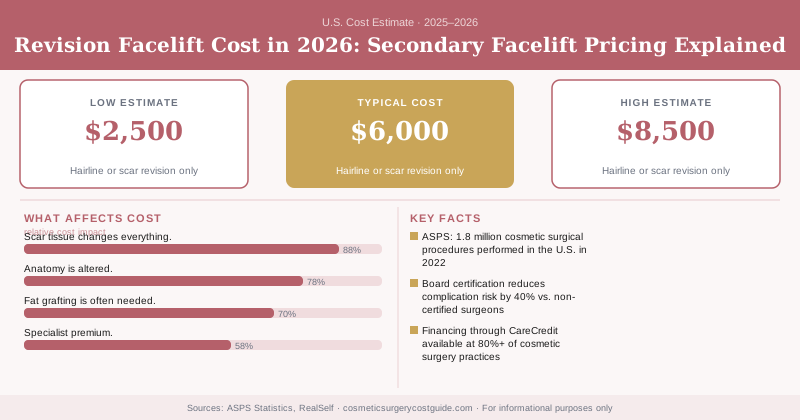
You’ve had a facelift. Something isn’t right — maybe it looks overdone, maybe one side healed differently, maybe results faded faster than expected, or maybe years have passed and it’s simply time. Now you’re looking at revision surgery, and you’re quickly discovering that “redo” surgery comes with a significantly higher price tag than the original. That’s not arbitrary. A secondary facelift is genuinely more complex than a primary one. The ASPS reports that revision procedures account for a growing percentage of facelift consultations, particularly as the pool of prior facelift patients has grown substantially over the past two decades.
Revision Facelift Cost Breakdown
| Revision Scenario | Surgeon Fee | All-In Cost |
|---|---|---|
| Hairline or scar revision only | $2,500–$6,000 | $3,500–$8,500 |
| Minor asymmetry/touch-up | $4,000–$8,000 | $6,000–$11,000 |
| Secondary facelift (general redo) | $9,000–$18,000 | $14,000–$25,000 |
| Deep plane revision or complex redo | $14,000–$22,000 | $20,000–$32,000 |
| Combined with neck revision | $12,000–$25,000 | $18,000–$35,000 |
Compare that to a primary facelift at $12,000–$22,000 all-in for most patients. The premium on revision work is real and stems from documented complexity factors, not surgeon opportunism.
Why Revision Facelifts Cost More
Scar tissue changes everything. After a primary facelift, scar tissue forms throughout the dissection plane. Revision surgery requires the surgeon to work through that scarring to safely reposition structures. This takes significantly longer and increases the risk of injury to facial nerves, vessels, and skin. More OR time means higher facility and anesthesia costs.
Anatomy is altered. Skin, fat, and deeper structures have been repositioned once already. Normal anatomical landmarks are shifted. Even experienced surgeons need more time to plan and execute revision work safely.
Fat grafting is often needed. Many revision facelift patients need fat grafting to restore volume that was lost or shifted during the primary procedure. Fat grafting adds $2,500–$5,000 to the total and lengthens the procedure.
Specialist premium. Few surgeons specialize in facelift revision. Those who do — and who see it regularly — charge accordingly. You don’t want a generalist for this surgery.
Timing matters enormously in revision facelift surgery:
- Minimum 6–12 months post-primary surgery before any revision for non-emergency concerns. Scar tissue needs to fully mature before it can be effectively addressed.
- 12–18 months for major revisions — the longer you wait (within reason), the softer and more workable the scar tissue becomes.
- Exception: Active wound healing problems, infection, nerve issues, or a hematoma require prompt evaluation, not waiting.
Surgeons who push for early revision (3–4 months after the initial procedure) may be more interested in another surgical fee than your best outcome. Most honest revision specialists won’t operate until you’ve waited long enough.
Common Reasons Patients Seek Revision
“Wind-tunnel” or pulled appearance: Usually from skin-only lifts without adequate SMAS work, or from excessive tension. Revision requires releasing and repositioning tissues — complex work.
Asymmetry: One side healed differently. Small asymmetries often improve with time (12–18 months). Significant asymmetry that persists warrants surgical consultation.
Results faded too quickly: Some surgical techniques — particularly skin-only or mini-lift approaches — produce results that fade in 2–4 years rather than 8–12. These patients often need a more comprehensive technique the second time.
Hairline or scar issues: Visible incisions behind the ear, hairline distortion at the temple, or hair loss along the incision line. These can often be corrected with more limited procedures focused specifically on the scar.
Natural aging after 10+ years: The most common — time has simply passed, and another procedure is appropriate. This is the most straightforward of revision scenarios.
Finding the Right Surgeon for Revision Work
Not every facelift surgeon should do facelift revisions. The skills overlap significantly but aren’t identical. Look for:
- High-volume facelift practice (200+ procedures per year) — surgeons who see complications regularly know how to manage them
- Specific revision experience — ask directly: “What percentage of your facelift cases are revisions?”
- Willingness to show before/after photos of revision cases specifically, not just primary surgery
- No rush to operate — a thorough revision surgeon wants time for your tissues to mature and does extensive pre-operative planning
Get at least two consultations. Revision surgery is worth the time investment to find the right surgeon.
Will the Original Surgeon Do the Revision?
Sometimes, yes — and this can be the right choice if your primary surgeon is experienced, honest about what went wrong, and proposes a clear correction plan. If they performed the primary surgery well but an unpredictable complication arose, working with them again is reasonable.
If you’re unhappy because of poor technique, an aggressive result, or a surgeon who dismissed your concerns, seek a different surgeon. Don’t feel obligated to return to someone whose work you’re unhappy with.
Revision facelift surgery has higher complication rates than primary surgery — particularly regarding facial nerve injury and skin healing problems. This is not a procedure to shop based on price. The surgeon’s specific experience with revision cases, their complication management protocols, and their honesty about what realistically can and can’t be corrected matter far more than whether they’re the cheapest option. Verify ABPS certification and ask for revision-specific case examples before committing.
Insurance and Financing
Revision facelift surgery is almost never covered by insurance, including cases where the original surgery caused complications — elective cosmetic surgery complications are generally not covered medical claims.
Most practices offer financing. A $20,000 revision facelift on a 24-month 0% plan runs about $833/month. Budget additionally for extended recovery — revision procedures often have longer swelling resolution (4–6 months vs. 2–3 for primary) and may require more time off work.
Frequently Asked Questions
Revision facelift surgery typically costs $10,000–$30,000, which is 25–50% higher than primary facelift costs ($8,000–$20,000). The higher price reflects increased surgical complexity, longer operative time, and the need for specialized techniques to correct or improve previous results.
Revision facelifts are considered cosmetic procedures and are not covered by health insurance plans like Medicare or private insurers. You can expect to pay the full cost out-of-pocket, though some surgeons offer financing options or payment plans to help manage the $10,000–$30,000 expense.
Most surgeons recommend waiting at least 12–18 months after your primary facelift before pursuing revision surgery to allow full healing and final results to stabilize. If complications like infection or significant asymmetry occur, revision may be performed sooner (3–6 months), though this depends on the specific issue and your surgeon's assessment.