It was barely a whisper a decade ago — something rumored about celebrities, dismissed as urban legend. Then social media happened. Now aesthetic rib removal is a documented, offered, and increasingly requested procedure, with a small but growing number of U.S. plastic surgeons willing to perform it. It’s also one of the most expensive, most controversial, and highest-risk elective procedures in cosmetic surgery.
If you’re researching rib removal for cosmetic waist narrowing, here’s what it actually involves, what it costs, and what you need to weigh before proceeding.
What Is Aesthetic Rib Removal?
The procedure removes the floating ribs — ribs 11 and 12, which aren’t connected to the sternum — to narrow the waistline. These ribs are the most anatomically accessible and their removal has the lowest structural impact on thoracic function compared to true ribs.
Removal creates 1–4 inches of potential waist narrowing, depending on your natural rib cage structure. The effect is most pronounced in patients with prominent floating ribs that protrude visibly at the waistline.
Rib Removal Surgery Cost
| Component | Cost Range |
|---|---|
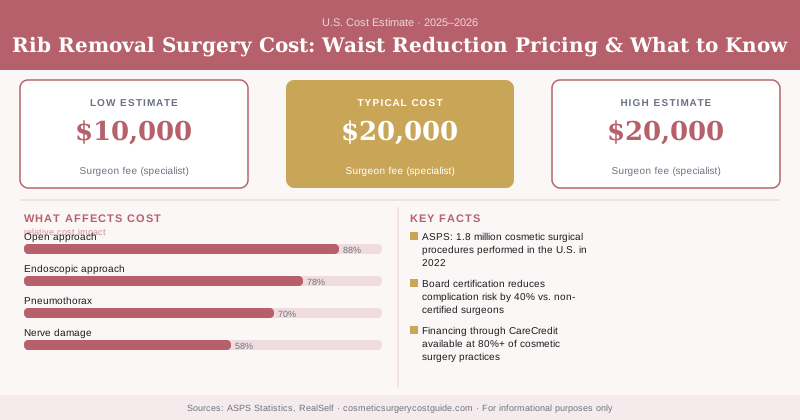
| Surgeon fee (specialist) | $10,000–$20,000 |
| Facility/hospital fee | $3,000–$8,000 |
| Anesthesia fee | $1,500–$4,000 |
| Post-op compression garments | $200–$400 |
| Total (all-in estimate) | $15,000–$35,000 |
| Medical travel (many patients go abroad) | $8,000–$18,000 (total package) |
The wide cost range reflects the extremely limited pool of surgeons who perform this procedure in the U.S. legitimately. Providers in high-demand markets (Los Angeles, Miami, New York) with documented experience command the highest fees. Patients seeking lower prices increasingly travel to Colombia, Mexico, or South Korea, where the procedure is more routinely offered.
The American Society of Plastic Surgeons (ASPS) does not endorse or publish statistics on aesthetic rib removal, and it is not tracked in standard cosmetic surgery data. No major professional society has issued formal guidance endorsing the procedure for purely cosmetic purposes. The procedure is entirely legal and performed by licensed surgeons, but its absence from professional society statistics reflects its niche and controversial status. A 2023 analysis in Plastic and Reconstructive Surgery Global Open noted that social media platforms have significantly increased patient awareness and requests for the procedure, with a corresponding increase in inquiries at practices that perform it.
How the Procedure Works
Rib removal is typically performed under general anesthesia in an accredited operating room or surgical center. The approach varies:
Open approach: Small incisions along the back or sides, direct access to the floating ribs. The cartilage and bone are removed. Hospital stay: 1–3 days.
Endoscopic approach: Smaller incisions, camera-assisted. Not universally available and appropriate only for certain anatomical cases.
Recovery involves 4–6 weeks of activity restriction, pain management, and compression garment wear. Full recovery, including unrestricted physical activity, typically takes 3–4 months. The narrowing results are permanent once swelling fully resolves (3–6 months post-surgery).
Risks: More Than Most Cosmetic Procedures
This is a thoracic procedure, not a soft-tissue one. The risk profile is materially different from abdominoplasty, liposuction, or other body contouring surgery.
Documented risks include:
- Pneumothorax (collapsed lung): A serious but uncommon complication if the pleura is accidentally entered
- Nerve damage: The intercostal nerves run adjacent to each rib; damage causes numbness, tingling, or chronic pain along the rib line
- Infection: Deeper tissue infection in thoracic surgery requires aggressive treatment
- Limited waist change: Patients with well-defined natural waist lines or significant adipose tissue may see minimal visible change
- Psychological dissatisfaction: The procedure addresses rib structure, not overall body composition — patients with unrealistic expectations frequently regret it
Most board-certified plastic surgeons in the U.S. decline to perform aesthetic rib removal. If you’re seeking this procedure, verify that your prospective surgeon is board-certified (ABPS), has performed the procedure multiple times (request documented case history), operates in an accredited surgical facility, and provides a thorough psychological screening consultation. Surgeons who advertise heavily on social media and promise dramatic results without extensive consultation are concerning. The irreversibility and complication risk of this procedure demand a conservative, thorough provider.
Medical Alternatives for Waist Narrowing
Before considering surgery, it’s worth understanding what non-surgical options exist for the same goal:
High-definition liposuction (Lipo 360): $6,000–$15,000. Removes fat from flanks, abdomen, and back to create the appearance of a narrower waist. No structural change to ribs, but significant visual effect for patients with flank fat.
Abdominal etching: $5,000–$10,000. Sculpts abdominal fat to define the waist and core musculature. Dramatic results for appropriate candidates.
Body contouring + BBL: $8,000–$20,000. Removes waist fat and transfers it to hips/buttocks, enhancing the hourglass silhouette without touching ribs.
For the vast majority of patients seeking a narrower waist, these fat-based approaches produce meaningful results with substantially lower risk profiles than rib removal.
Who Chooses Rib Removal?
The profile of patients seeking this procedure is typically:
- Individuals who have achieved a healthy weight and are in good physical condition
- Patients with prominent floating ribs that noticeably interrupt the waist curve
- Those for whom fat removal alone would not significantly alter the waist shape due to underlying rib structure
- Patients who have thoroughly researched the procedure and understand the risks
Patients acting on impulse, using the procedure to compensate for body image concerns rooted in other issues, or seeking dramatic results with minimal understanding of recovery are poor candidates.
Medical Travel Considerations
Many patients travel to Colombia (Bogotá, Medellín), Mexico, or South Korea where the procedure is more commonly performed and typically costs $8,000–$18,000 all-in including travel and recovery accommodation.
If considering medical travel:
- Verify the surgeon’s credentials in their home country and international recognition
- Understand the complication management protocol if something goes wrong abroad
- Plan for at minimum 3 weeks abroad for adequate initial recovery
- Know that your U.S. physicians may have limited ability to advise on complications related to a procedure not commonly performed domestically
The Bottom Line
Aesthetic rib removal is a real procedure with real results — and real risks and real costs. It’s not for impulsive decision-making. The $15,000–$35,000 domestic price tag reflects both the complexity and the small pool of qualified providers. Most patients seeking a narrower waist will be better served by high-definition liposuction or body contouring procedures that achieve comparable aesthetic results with substantially less surgical risk.
If you’ve exhausted those options and are committed to exploring rib removal, allow 6+ months of research, multiple consultations, and honest psychological self-assessment before proceeding.
Frequently Asked Questions
Rib removal surgery typically costs between $15,000 and $35,000 in the United States, with most procedures falling in the $20,000–$30,000 range. Final costs vary based on surgeon experience, geographic location, facility fees, and whether one or both sides are treated.
No, rib removal for aesthetic waist narrowing is considered cosmetic surgery and is not covered by any major U.S. insurance plans, including Medicare and Medicaid. Patients pay the entire cost out-of-pocket, though some surgeons offer financing plans to spread payments over 12–24 months.
Most patients require 4–6 weeks of restricted activity before returning to light duties, with full recovery and strenuous exercise clearance typically occurring at 8–12 weeks post-op. Pain management and drainage tube care are critical during the first 1–2 weeks following the procedure.