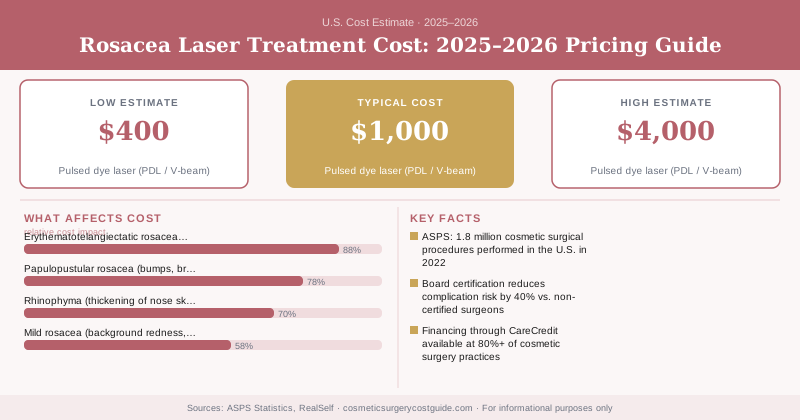
If you’ve been managing rosacea with prescription creams for years with limited success, laser treatment might be the conversation you haven’t had yet with your dermatologist. For redness, flushing, and visible blood vessels — the vascular component of rosacea — laser and light-based treatments are often more effective than any topical medication. The National Rosacea Society estimates that rosacea affects more than 16 million Americans, and laser/light therapy is now a standard treatment option for certain subtypes.
Here’s what it costs, which technologies work, and how to set realistic expectations.
Rosacea laser treatment cost by type
| Treatment Type | Per Session Cost | Typical Sessions Needed | Total First-Year Cost |
|---|---|---|---|
| Pulsed dye laser (PDL / V-beam) | $400–$1,000 | 2–4 | $800–$4,000 |
| IPL / intense pulsed light | $300–$800 | 3–5 | $900–$4,000 |
| Nd:YAG laser (1064nm) | $400–$900 | 2–4 | $800–$3,600 |
| Excel V / KTP laser | $400–$900 | 2–4 | $800–$3,600 |
| Diode laser (595nm) | $350–$800 | 3–5 | $1,000–$4,000 |
| Annual maintenance (after initial series) | $300–$800 | 1–2 | $300–$1,600 |
Prices vary substantially by market and by whether the treatment is performed by a dermatologist vs. a med spa.
Which laser/light technology works best for rosacea?
Rosacea has subtypes, and the right technology depends on what you’re treating:
Erythematotelangiectatic rosacea (flushing + redness + visible vessels): Pulsed dye laser (PDL, V-beam) is the gold standard. The 585nm or 595nm wavelength targets oxyhemoglobin in blood vessels specifically. IPL is a close second and often more affordable.
Papulopustular rosacea (bumps, breakouts): Laser is less central here — this subtype responds better to oral antibiotics and topical medications. Light therapy may help reduce baseline redness, but it doesn’t address the inflammatory component.
Rhinophyma (thickening of nose skin): CO2 laser resurfacing is the treatment of choice — it can reshape thickened skin and reduce the bulbous nose appearance associated with severe, long-standing rosacea. This is the most expensive subtype to treat with laser.
Pulsed dye laser (V-beam) is more precise — it specifically targets hemoglobin in blood vessels. Better for isolated telangiectasias (visible spider vessels) and more dramatic flushing. IPL (intense pulsed light) is a broader spectrum technology that addresses redness, background pigmentation, and overall skin tone simultaneously, at typically lower cost. Many dermatologists start with IPL and escalate to PDL for persistent vessels. For most patients with diffuse redness, IPL is the appropriate starting point.
How many treatments will you need?
Initial series: Most patients complete 3–5 treatments spaced 4–6 weeks apart. The NRS (National Rosacea Society) recommends starting conservatively and adjusting based on response.
Mild rosacea (background redness, minimal vessels): 2–3 IPL treatments typically produce significant improvement.
Moderate rosacea (diffuse redness, some visible vessels, flushing): 3–5 treatments; may need both IPL and targeted PDL.
Severe or chronic rosacea: Multiple treatment series over 12–18 months; ongoing maintenance 1–2 times per year indefinitely to prevent recurrence.
The important thing to understand: laser doesn’t cure rosacea. It controls the vascular component. The underlying triggers (sun, heat, alcohol, spicy food, certain skincare ingredients) will continue to cause flushing and new vessel development if not managed.
Does insurance cover rosacea laser treatment?
Sometimes — and this is worth investigating. Rosacea is a medical diagnosis, not purely a cosmetic concern. Some insurance plans, particularly PPO plans, cover laser treatment for rosacea when prescribed and administered by a board-certified dermatologist. The key is documentation: your dermatologist needs to note the diagnosis, failed response to topical/oral treatments, and medical necessity for laser.
In practice, coverage is inconsistent. Many insurers classify all laser skin treatments as cosmetic. But if your dermatologist bills it appropriately and your plan covers dermatologic laser procedures, partial reimbursement is possible. Always call your insurance before assuming it’s out-of-pocket.
Rosacea lasers should ONLY be performed on patients whose skin is not actively flushed or inflamed at the time of treatment. Treating active flare-ups increases risk of prolonged redness and complications. Stop prescription retinoids and exfoliating acids 1–2 weeks before laser. Avoid sun exposure for 4 weeks before and after treatment — rosacea-prone skin is already photosensitive, and UV exposure between sessions will counteract your results.
What to expect: before, during, and after
Before: No sun exposure, no self-tanner, stop Accutane (if applicable) at least 6 months prior, patch test for IPL on Fitzpatrick skin types IV–VI.
During: Cool air or chilled tip reduces discomfort. PDL feels like a rubber band snap; IPL is a warm, bright flash. Sessions are 20–45 minutes.
Immediately after: Redness, mild swelling. Some patients see temporary purpura (bruising) with PDL — this is normal and fades in 7–10 days.
Results: Visible improvement in redness begins after 2–3 weeks. Full assessment after 4–6 weeks. A 2021 review in the Journal of Clinical and Aesthetic Dermatology found that IPL achieved clinically significant reduction in erythema in 70–85% of rosacea patients across multiple studies.
Skincare during a treatment series
- Daily SPF 30+: Non-negotiable. Mineral (zinc oxide) sunscreen is less irritating for rosacea-prone skin.
- Gentle cleanser only: Avoid physical exfoliants, alcohol-based toners, fragrance.
- Niacinamide: Reduces redness and strengthens barrier; safe during laser series.
- Continue any prescribed topicals (metronidazole, azelaic acid) unless your dermatologist says otherwise.
Finding the right provider
Rosacea laser treatment should be performed by or under the direct supervision of a board-certified dermatologist (AAD certification). The expertise to select the right wavelength, fluence, and pulse duration for your skin type and rosacea subtype is what separates good outcomes from complications. Med spas can perform IPL appropriately when properly supervised, but PDL (V-beam) specifically should typically be done in a dermatology or plastic surgery setting.
Frequently Asked Questions
Rosacea laser treatment typically costs $300 to $2,500 per session, depending on the laser type, treatment area size, and geographic location. Most patients require 3-6 sessions spaced 4-6 weeks apart, bringing total treatment costs to $900-$15,000 for a complete course.
Most insurance plans classify rosacea laser treatment as cosmetic and do not cover it, leaving patients responsible for the full out-of-pocket cost. However, some plans may cover treatment if it is deemed medically necessary to treat severe symptoms or complications, so checking with your insurance provider and dermatologist about prior authorization is recommended.
Most patients require 3-6 laser sessions scheduled 4-6 weeks apart to see significant improvement in redness and visible blood vessels. Recovery is typically minimal, with mild redness and swelling lasting 24-48 hours after each session, allowing most patients to return to normal activities immediately.