What does a root cause analysis of a bad tummy tuck scar usually find? Too much tension, a scar placed too high, or healing gone sideways. The good news is that an unhappy abdominoplasty scar is one of the more fixable revision problems — and it’s often cheaper than people expect.
The tummy tuck is among the most-performed body procedures in the U.S., with the Aesthetic Society counting well over a hundred thousand a year recently. That volume means scar revisions are common. Here’s what they cost.
Why Tummy Tuck Scars Go Wrong
The abdominoplasty scar sits under tension — your skin is being pulled tight, which is the whole point. That tension can widen a scar, raise it, or pull it into a visible position above the bikini line. Genetics, smoking, and early activity all make it worse. None of that means your surgeon failed; some of it is just how skin heals.
Scar Revision After Tummy Tuck Cost
| Revision Type | Cost Range | What It Involves |
|---|---|---|
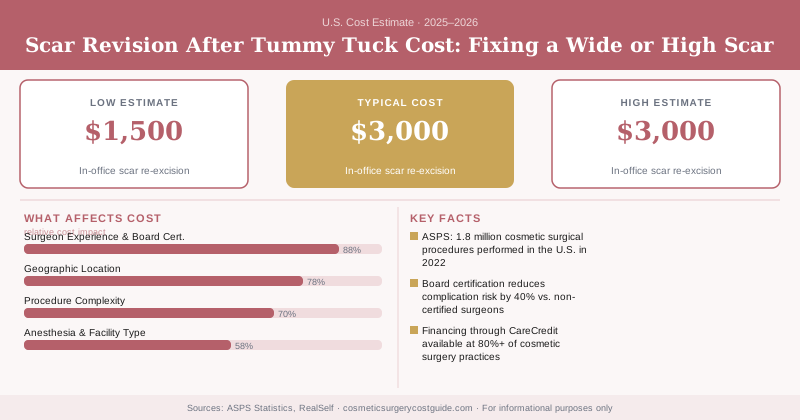
| In-office scar re-excision | $1,500–$3,000 | Cutting out and re-closing the scar |
| Scar repositioning (lowering) | $2,500–$5,000 | Moving a high scar down |
| Dog ear correction | $1,500–$3,500 | Fixing puckered scar ends |
| Laser scar treatment | $200–$600 per session | Softening color/texture |
| Combined surgical revision | $4,000–$6,000 | Re-excision plus contouring |
In-office re-excision under local anesthesia sits at the low end. A full repositioning that involves re-tightening lands higher.
Wait Before You Revise
This is the single most important rule. Scars remodel for 12 to 18 months. A red, raised, angry-looking scar at month three frequently flattens and fades on its own by month twelve. Revising too early means paying to fix a scar that would have improved for free — and the new scar has to mature all over again.
Don’t revise a tummy tuck scar before it’s fully mature — usually at least a year. Operating on an immature scar restarts the entire 12-to-18-month healing clock and can produce a result no better than waiting would have. Patience is genuinely the cheapest treatment here.
Laser and Topical First
Before surgical revision, many surgeons try lasers, silicone sheeting, or steroid injections for raised or discolored scars. These are far cheaper and sometimes enough. Surgical re-excision is reserved for scars that are genuinely wide, displaced, or stuck high.
Scar revision after a tummy tuck runs $1,500–$6,000, with in-office re-excision at the low end and full repositioning at the top. Wait at least a year for the scar to mature first — many “bad” scars improve enough on their own that revision becomes unnecessary.
When the Scar Is Too High
A scar placed too high to hide under underwear is the most frustrating issue and the hardest to fix cheaply. Lowering it usually requires re-excising skin and may overlap with a tummy tuck re-tightening. This is also where a broader cosmetic surgery revision plan may make sense if other issues exist.
Paying and Choosing
Scar revision is out of pocket — insurance won’t cover cosmetic scar improvement. Cosmetic surgery financing can spread the cost. And pick a surgeon experienced in revision scar work specifically; our board-certified plastic surgeon guide explains how to vet that.
What Makes a Scar Heal Badly
It’s not always the surgeon. Your genetics play a huge role — some people simply scar wider or thicker, and those prone to keloids or hypertrophic scars face higher odds regardless of technique. Tension on the closure, early activity that stresses the incision, sun exposure on a fresh scar, and smoking all make it worse. Understanding which factors were in play helps set realistic expectations for how much a revision can actually improve things.
The Cheaper-First Ladder
Smart surgeons climb a cost ladder before reaching for the scalpel. Silicone sheets or gel are the cheapest starting point and genuinely help flatten and fade scars over months. Steroid injections calm raised, thick scars for a few hundred dollars. Lasers improve color and texture. Only when those plateau does surgical re-excision make sense. Jumping straight to surgery skips options that might have been enough — and that’s wasted money.
Will Insurance or the Surgeon Cover It?
Almost never on the insurance side, since improving a cosmetic scar isn’t medically necessary. On the surgeon’s side, some practices offer scar revisions at a reduced rate as part of patient care, especially for dog ears. It never hurts to ask your original surgeon before assuming full price. If you’ve moved on to a new provider, expect to pay out of pocket.
Bottom Line
A bad tummy tuck scar is usually fixable and often affordable, but timing is everything. Wait a year, try lasers first, and reserve surgical re-excision for scars that truly stay wide, raised, or too high.
Frequently Asked Questions
Scar revision after a tummy tuck typically costs $1,500 to $6,000, depending on the complexity of the procedure. Simple re-excision of a thin scar runs toward the lower end ($1,500–$2,500), while full scar repositioning or more extensive revision can reach $4,000–$6,000.
Insurance rarely covers scar revision after a tummy tuck because the original procedure is cosmetic and elective. You should expect to pay the full revision cost out-of-pocket, though some surgeons offer payment plans to help manage the $1,500–$6,000 expense.
Most surgeons recommend waiting 12–18 months after your original tummy tuck before pursuing scar revision, allowing the scar to fully mature and fade naturally. If the scar is still problematic after this timeframe, revision typically takes 30–60 minutes and requires 1–2 weeks of downtime.