The $4,800 bill arrived three weeks after Rachel’s Mohs surgery on her nose. She’d assumed the procedure would be covered — and most of it was — but the reconstructive flap to close the defect fell into a different insurance category, and nobody had warned her. Understanding where the cosmetic-reconstructive line sits before your procedure can save you thousands of dollars in surprises.
Understanding the Two Parts of Skin Cancer Treatment
Removing skin cancer is one procedure. Closing the wound afterward — especially on the face — is often a second, distinct procedure with its own costs and its own insurance logic.
Removal methods include:
- Surgical excision (cutting out the lesion with a margin)
- Mohs micrographic surgery (layer-by-layer removal, mapped in real time — gold standard for facial cancers)
- Curettage and electrodesiccation (scraping and burning — for superficial lesions)
- Cryotherapy (freezing — for very early lesions)
- Radiation therapy (for cases where surgery isn’t ideal)
Reconstruction methods after removal include:
- Primary closure (simple stitching)
- Skin grafts (tissue from another area of your body)
- Local flap repairs (tissue rearrangement from adjacent skin)
- Complex reconstructive flap surgery (larger defects, often near eyes, nose, lips, ears)
The American Academy of Dermatology reports that more than 9,500 people are diagnosed with skin cancer in the United States every day — making it the most common cancer in the country. Reconstruction after excision on cosmetically sensitive areas is an extremely common need.
Cost Breakdown
| Procedure | Low | Typical | High |
|---|---|---|---|
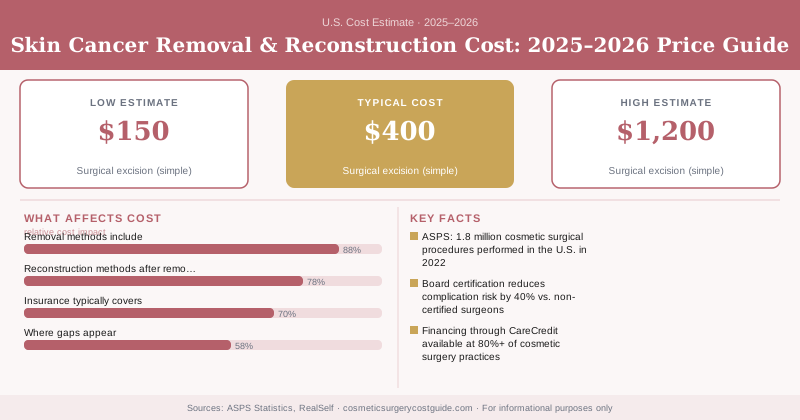
| Surgical excision (simple) | $150 | $400 | $1,200 |
| Mohs surgery (1–2 stages) | $800 | $2,000 | $5,000 |
| Mohs surgery (3+ stages, facial) | $2,500 | $5,000 | $10,000+ |
| Simple primary closure | $200 | $500 | $1,500 |
| Skin graft reconstruction | $1,500 | $4,000 | $8,000 |
| Local flap repair | $1,200 | $3,500 | $8,000 |
| Complex reconstructive surgery | $4,000 | $10,000 | $20,000+ |
These figures represent the total cost before insurance. With insurance, your out-of-pocket costs depend heavily on your deductible, whether the provider is in-network, and how reconstruction is coded.
What Insurance Covers — and What It Doesn’t
Here’s where things get complicated. Skin cancer removal is medically necessary and covered by insurance (Medicare, Medicaid, and most private plans). Mohs surgery is also covered when indicated. The issue arises with reconstruction.
Insurance typically covers:
- Reconstruction necessary to restore function (e.g., closing a wound near the eye to restore normal eyelid function)
- Grafts and flaps needed to achieve wound closure
- Surgeon fees and facility costs for medically necessary reconstruction
Where gaps appear:
- If reconstruction is considered “cosmetically motivated” rather than functionally necessary, your insurer may deny or downgrade it
- Out-of-network surgeons, especially plastic surgeons doing reconstruction, can trigger balance billing
- Multiple procedures on the same day may face bundling rules that reduce reimbursement
- Facility fees can add $1,000–$5,000 that patients don’t anticipate
Reconstruction after skin cancer removal on the face is almost always considered medically necessary — but the specific technique matters. A plastic surgeon who uses a more sophisticated (and more expensive) flap technique when simple closure would suffice may find the upgraded portion of the procedure not covered. Always get a pre-authorization letter from your insurer before reconstruction surgery on cosmetically sensitive areas, and ask your surgeon to document the functional necessity of the closure method chosen.
Mohs Surgery: Why It’s Worth the Cost
Mohs surgery costs more than standard excision, but it has a significantly lower recurrence rate — 99% cure rate for primary basal cell carcinoma compared to approximately 95% with standard excision, according to published data. On the face, where maximizing tissue preservation is critical, Mohs is the standard of care for most skin cancers.
The staged nature of Mohs (each layer is examined under a microscope before the next is removed) means more operating time and higher facility costs, but it removes only cancerous tissue rather than taking a large margin of healthy skin. That makes reconstruction smaller and less complex.
A 2023 analysis published in JAMA Dermatology found that Mohs surgery followed by reconstruction costs, on average, $3,200–$6,800 total (including reconstruction), while standard excision with reconstruction costs $1,800–$4,500 — a smaller gap than most patients expect when you account for lower recurrence and revision rates with Mohs.
What a Plastic Surgeon Adds to Reconstruction
For small, clean excisions with straightforward closures, a dermatologist can often handle both removal and repair. For larger defects — especially those near the nose, lips, eyelids, or ears — many dermatologists refer to a plastic surgeon or facial plastic surgeon for reconstruction.
Plastic surgeon involvement typically adds $1,500–$5,000+ to the total cost, but it often means a better cosmetic outcome and lower risk of functional complications (like eyelid ectropion or nasal valve collapse after nose reconstruction). If your surgeon recommends plastic surgery consultation for reconstruction, take it seriously — especially for facial skin cancers.
If you’re told a reconstruction procedure is “cosmetic” and therefore not covered by your insurance, get a second opinion. Reconstruction after skin cancer removal is almost universally medically necessary. Document everything in writing and appeal insurance denials — skin cancer reconstruction appeals are frequently successful when properly documented.
Questions to Ask Before Your Procedure
- Is this considered medically necessary by my insurance? Can you pre-authorize it?
- Who will do the reconstruction — you, or a plastic surgeon?
- Will this be done in your office, a surgical center, or a hospital?
- What technique do you recommend for closure, and why?
- What will my reconstruction look like immediately after, and what does healing look like over 6–12 months?
- Is there a scar revision option if I’m not happy with the cosmetic result?
After Removal: Scar Care and Follow-Up Costs
Even with excellent surgical technique, scars from skin cancer removal — particularly after Mohs and flap repair — can take 12–18 months to fully mature. Many patients invest in:
- Silicone gel sheets or scar treatments ($15–$60/month)
- Laser scar revision ($300–$1,500 per session, 1–3 sessions)
- Dermabrasion or microneedling for surface texture
These are typically cosmetic costs not covered by insurance, but they’re meaningful for patients who’ve had significant facial reconstruction. Budget $500–$3,000 over the first two years for optimal scar management if your cancer was on a cosmetically visible area.
The bottom line: skin cancer treatment itself won’t break you financially if you’re insured. The surprises come from reconstruction, out-of-network providers, and cosmetic scar care. Know those variables going in.
Frequently Asked Questions
Skin cancer removal ranges from $150–$3,000 for simple excision, while Mohs micrographic surgery costs $1,500–$6,000. Reconstructive procedures like flaps or grafts add $1,500–$10,000+, bringing total costs to $150–$15,000+ depending on location, size, and complexity.
Most insurance plans cover medically necessary skin cancer removal as 80–100% after deductible, but reconstruction is often classified as cosmetic and may require separate authorization or leave you with significant out-of-pocket costs. Always verify with your insurer before surgery whether reconstruction will be covered, as Rachel's experience shows this distinction can cost thousands in unexpected bills.
Simple excision typically heals in 1–2 weeks with minimal downtime, while Mohs surgery with reconstructive flaps requires 2–4 weeks of wound care and activity restrictions. Most patients can return to normal activities within 3–6 weeks, though complete scar maturation takes 12–18 months.