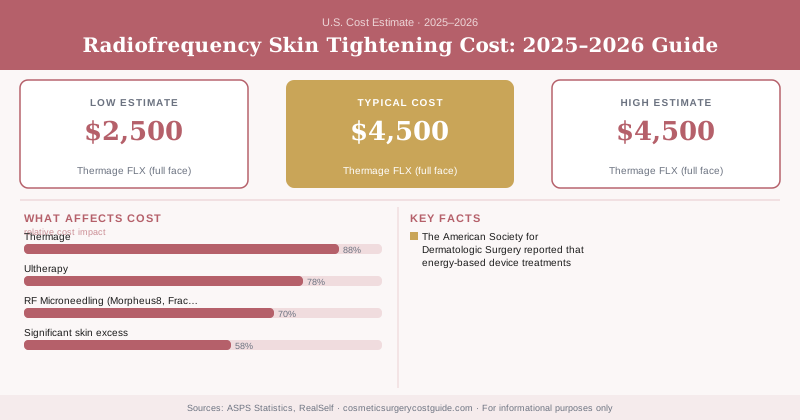
In 2010, the only option for loose facial skin was surgery. Today there are eight FDA-cleared energy-based devices that promise collagen stimulation and skin tightening without a single incision. The American Society for Dermatologic Surgery reported that energy-based device treatments jumped 62% between 2018 and 2022, with radiofrequency treatments leading the category. But the pricing is all over the map — and so are the results.
Radiofrequency (RF) skin tightening isn’t one technology. It’s a category. Thermage uses monopolar RF. Sofwave uses synchronous ultrasound. ThermiSmooth uses thermistor-controlled RF. Profound uses microneedle RF. Each targets different tissue depths, works through different mechanisms, and carries a different price tag. Knowing which one you’re being quoted matters.
RF skin tightening cost by device and area
| Device / Technology | Treatment Area | Typical Cost |
|---|---|---|
| Thermage FLX (full face) | Face + neck | $2,500–$4,500 |
| Thermage FLX (eyes or area) | Eyelids or spot | $1,000–$2,000 |
| Sofwave (full face) | Face + neck | $2,000–$3,500 |
| ThermiSmooth Face | Face maintenance | $800–$1,500/session |
| Profound RF (face) | Lower face + neck | $3,000–$5,000 |
| Fractora/Forma (face) | Full face RF | $1,200–$2,500 |
| Exilis Ultra (face or body) | Per area | $800–$1,500/session |
Most non-ablative RF devices require a single session with results building over 3–6 months. Exceptions include ThermiSmooth and Exilis, which are typically priced per session with 3–6 sessions in a protocol.
How radiofrequency skin tightening actually works
RF energy heats the dermis and subcutaneous tissue to temperatures of 50–75°C. This causes two effects: immediate collagen fiber contraction (slight instant tightening) and stimulation of new collagen production over the following months. The collagen remodeling process takes 3–6 months to fully manifest, which is why before/after photos taken immediately after treatment don’t show the full result.
The key variable is tissue depth. Devices that deliver heat to deeper layers (3–4mm) produce more structural tightening. Superficial RF devices improve skin texture and fine lines more than true laxity.
These are frequently confused because all three are “non-surgical tightening” technologies:
Thermage: Monopolar RF, heats dermis and subdermal tissue. Best for skin laxity, mild jowling, and body areas. One session, results at 3–6 months.
Ultherapy: Focused ultrasound, targets SMAS layer (same layer surgeons tighten). Better for structural lift in the lower face and neck. One session, results at 3–6 months.
RF Microneedling (Morpheus8, Fractora): Combines microneedles with RF delivery. Targets both surface texture and deeper tightening. Typically 1–3 sessions. More versatile for scars, pores, and texture alongside tightening.
A board-certified provider should help you choose based on your specific anatomy, not just what device they own.
Realistic expectations: what RF can and can’t do
RF skin tightening works for mild to moderate skin laxity. Think: early jowling, slightly loose neck skin, subtle facial sagging, or crepey texture on the décolletage. Results are real but subtle compared to surgical outcomes.
What RF won’t fix:
- Significant skin excess — loose neck skin with visible bands, heavy jowling that hangs
- Fat deposits — RF tightens skin but doesn’t remove fat
- Deep nasolabial folds — structural descent that needs filler or surgical correction
- Upper eyelid hooding — requires surgical blepharoplasty for meaningful correction
If you have significant laxity and are hoping RF will replace a facelift, the honest answer from most experienced providers is: it won’t. RF is a maintenance tool and an early-intervention tool.
How many sessions do you need?
Device-dependent:
- Thermage, Sofwave, Ultherapy: One session. Results build over 3–6 months. Repeat annually or every 18 months.
- ThermiSmooth, Exilis: Typically 4–6 sessions for initial results, then maintenance sessions.
- RF Microneedling: 1–3 sessions initial series, then annual maintenance.
The single-session devices cost more per appointment but often less total than multi-session protocols. A 6-session Exilis series at $1,000/session = $6,000. One Thermage full-face treatment = $2,500–$4,500.
Where you get it matters
This is a technology-dependent treatment — results vary based on which device is used, the energy settings selected, and the operator’s skill. Higher-end providers with calibrated, well-maintained devices consistently outperform discount med-spas with older equipment or undertrained staff.
Watch out for:
- “RF facial” or “radio frequency facial” at day spas — these use low-energy devices with minimal clinical evidence
- Discounted packages on multi-session RF that use consumer-grade equipment
- Providers who can’t explain exactly which device and energy settings they’re using
Radiofrequency treatments are contraindicated for several conditions: pregnancy, active implants (pacemakers, cochlear implants, defibrillators), metal implants in the treatment area, and active skin infections or wounds. If you have any implanted device, verify compatibility with the specific RF device before treatment — device types vary in their electromagnetic fields.
Body RF skin tightening
The same technology applies to body areas — abdomen, inner arms, inner thighs — where skin laxity develops after weight loss or pregnancy. Pricing differs:
- Full abdomen treatment: $1,500–$3,000
- Inner arms (both sides): $800–$2,000
- Thighs (bilateral): $1,500–$3,500
- Buttocks: $1,200–$2,500
Body treatments often require more sessions to achieve visible results due to thicker skin and larger surface area.
Is RF skin tightening worth the cost?
For mild-to-moderate laxity in a patient who isn’t ready for surgery: yes, with appropriate expectations. The ASDS Patient Satisfaction Study found 76% of energy-based device patients reported satisfaction with their results. The key word is “appropriate” — patients who understood the realistic outcome (subtle improvement, not surgical transformation) rated their results significantly higher than patients who expected dramatic change.
Budget $2,000–$4,500 for a quality single-session treatment, plan to repeat every 12–18 months, and choose a provider with direct experience on the device they’re recommending. That’s the formula for a satisfying outcome.
Frequently Asked Questions
RF skin tightening typically costs $1,000 to $4,000 per session in the US, depending on the device used (Thermage, Sofwave, etc.), treatment area size, and provider location. Most patients require 1–3 sessions spaced 4–12 weeks apart, bringing total treatment costs to $1,000–$12,000.
No, radiofrequency skin tightening is considered a cosmetic procedure and is not covered by health insurance plans, including Medicare and Medicaid. Patients pay 100% out-of-pocket, though some providers offer payment plans or financing options to spread costs over several months.
Most patients see visible results after 1–2 sessions, with continued improvement over 3–6 months as collagen remodels. A full treatment course typically consists of 1–3 sessions spaced 4–12 weeks apart, and results can last 1–2 years before maintenance treatments are needed.