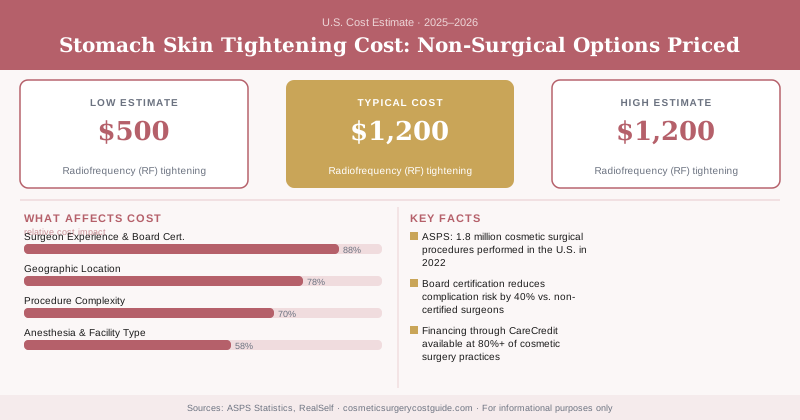
You lost the weight. You did the work. And now there’s loose skin on your stomach that no amount of crunches will fix. It’s one of the most common and frustrating problems people bring to a cosmetic clinic — and the question is always the same: can I tighten it without surgery, and what’ll it cost? The honest answer: sometimes yes, and you’re looking at $1,000 to $5,000 depending on how loose the skin is and which device you choose.
What stomach skin tightening costs
Non-surgical tightening works by heating the deeper layers of skin to trigger collagen and contraction. Different devices reach different depths, which drives the price.
| Treatment | Average Per Session | Sessions Needed |
|---|---|---|
| Radiofrequency (RF) tightening | $500–$1,200 | 3–6 |
| Morpheus8 (RF microneedling) | $700–$1,500 | 3–4 |
| Ultrasound (HIFU) | $1,000–$2,500 | 1–2 |
| Renuvion / J-Plasma | $3,000–$6,000 | 1 |
| Tummy tuck (surgical) | $6,000–$12,000 | 1 |
The American Society of Plastic Surgeons reported over 2.5 million minimally-invasive skin tightening and energy-based procedures in 2023, with abdominal treatment growing fastest among post-weight-loss and post-pregnancy patients. Still, the ASPS is clear that non-surgical tightening works best on mild to moderate laxity — not significant excess skin.
The realistic expectation
This is the part clinics sometimes skip. Energy-based tightening can improve mild crepiness and modest looseness impressively. But if you have a large skin apron after major weight loss, no device will match what a tummy tuck removes. Spending $4,000 on RF sessions when you need surgery just delays the real fix and wastes money.
For mild laxity, though, the math favors non-surgical. Radiofrequency skin tightening and Morpheus8 can firm the area over a series of sessions for a fraction of surgery’s price and downtime.
Non-surgical stomach skin tightening runs $1,000–$5,000 total and works best on mild to moderate looseness. RF and Morpheus8 series are the most popular mid-range options; Renuvion costs more but does more in one session. If you have significant excess skin, a tummy tuck delivers better value than repeated non-surgical sessions that can’t match it.
Device by device
Surface RF devices are the entry point — affordable, comfortable, and good for crepey texture, but they need several sessions. Morpheus8 combines microneedling with RF to reach deeper, tightening and improving texture at once; it’s the sweet spot for many people. HIFU uses focused ultrasound for deeper contraction in fewer sessions. Renuvion (J-Plasma) is a minimally-invasive procedure using helium plasma under the skin — pricier and more aggressive, closer to a one-time fix.
How it compares to surgery
If you’re torn between routes, our non-surgical vs surgical cost breakdown lays out the trade-offs. The short version: non-surgical is cheaper per session and has little downtime, but it can’t remove skin. Surgery is more expensive and involves recovery, but for significant laxity it’s the only thing that truly works.
Don’t fall for “one session and you’re done” marketing for surface RF on loose abdominal skin. Most of these devices require 3–6 sessions to show real results, and clinics that quote a single low session price may not mention you’ll need five more. Always ask for the full-course total before you compare prices.
How to spend wisely
Get assessed honestly first — a good provider will tell you if you’re a non-surgical candidate or if you’d be wasting money. Buy by results, not by package: pay per session where possible so you can stop once you’ve hit your goal. And if you’re financing a larger plan, our cosmetic surgery financing guide covers the options worth considering.
The bottom line
Non-surgical stomach skin tightening costs $1,000–$5,000 and shines on mild to moderate laxity. RF and Morpheus8 are the practical mid-range picks, with Renuvion for a stronger one-time approach. The single biggest money-saver is matching the treatment to your actual skin looseness — and recognizing when surgery is the smarter spend.
Frequently Asked Questions
Non-surgical stomach skin tightening typically costs $1,000 to $5,000 depending on the technology used and the extent of loose skin. Radiofrequency devices and Morpheus8 fall within this range, with most patients paying $2,000–$4,000 per treatment session.
No, non-surgical skin tightening is considered cosmetic and is not covered by standard health insurance plans. You should expect to pay the full cost out-of-pocket, though some clinics offer financing plans or payment packages to spread the cost over several months.
Most patients require 3–6 treatment sessions spaced 4–6 weeks apart to see optimal results, meaning the total timeline is typically 4–6 months. Non-surgical treatments have minimal downtime—you can return to normal activities immediately, though you may experience mild redness or swelling for a few hours.