What if you could skip the ultrasound gel, the intense pain, and the three-hour treatment session — and still get solid skin-tightening results? Sofwave launched with exactly that proposition, and it’s been turning heads in the non-surgical aesthetics world since FDA clearance in 2019. It’s not Ultherapy. It’s not Thermage. It’s faster, more comfortable — and the results data is building.
Sofwave uses synchronous ultrasound parallel beam (SUPERB) technology, a proprietary delivery system that targets the mid-dermis at 1.5mm depth using 7 MHz ultrasound energy. Unlike Ultherapy, which hits the deep SMAS layer (surgical facelift territory), Sofwave targets the collagen-rich mid-dermis — producing meaningful wrinkle reduction and brow lifting with significantly less discomfort and treatment time.
Sofwave Cost by Treatment Area
| Treatment Zone | Cost Range |
|---|---|
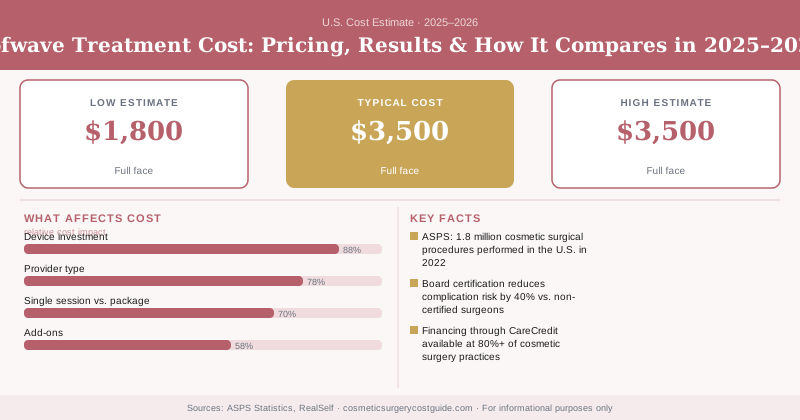
| Full face | $1,800–$3,500 |
| Face + neck | $2,500–$4,500 |
| Neck only | $1,200–$2,000 |
| Brow lift only | $800–$1,500 |
| Décolletage (chest) | $1,000–$2,000 |
| Maintenance session (12–18 months post-initial) | $1,500–$2,500 |
A standard full-face Sofwave treatment takes 45–60 minutes. Compare that to Ultherapy’s 60–90 minutes (often longer for full face + neck). Most patients need just one session per year, making annual cost comparable to a multi-session injectable maintenance schedule.
What Drives the Price
Device investment: Sofwave systems cost providers $120,000–$160,000. High capital cost is passed through to treatment pricing.
Provider type: Medical spas and dermatology clinics with Sofwave typically charge $2,000–$3,500 for a full face. Plastic surgery practices price at the higher end. Pricing in major coastal cities runs 25–40% higher than secondary markets.
Single session vs. package: Sofwave is typically a single-session treatment (unlike the 4-session Emface protocol or multi-session microneedling). Some providers offer a reduced-rate second-year maintenance package.
Add-ons: Combining Sofwave with injectables (Botox, filler) on the same day is common and often yields bundled pricing. Ask if they offer a combo discount.
Sofwave’s pivotal FDA clearance study showed a 4.8-point improvement on a 10-point wrinkle scale at 3 months post-treatment, along with significant brow lifting in treated patients. A 2024 independent clinical analysis published in the Journal of Cosmetic and Laser Therapy confirmed the FDA findings with real-world outcomes, noting 78% of subjects reported visible improvement at 6 months and 71% maintained improvement at 12 months — results consistent with once-yearly maintenance sessions. The ASPS included Sofwave in its 2024 emerging technologies report as a top-tier non-surgical skin tightening option.
Sofwave vs. Ultherapy vs. Thermage: Which Is Right for You?
These three devices are the most frequently compared non-surgical tightening options. They’re not interchangeable.
| Device | Depth | Mechanism | Treatment Time | Discomfort | Duration | Cost (Full Face) |
|---|---|---|---|---|---|---|
| Sofwave | 1.5 mm (mid-dermis) | 7 MHz ultrasound | 45–60 min | Mild–moderate | 12–18 months | $1,800–$3,500 |
| Ultherapy | 1.5–4.5 mm (SMAS) | Micro-focused ultrasound | 60–90 min | Moderate–intense | 12–24 months | $2,500–$4,500 |
| Thermage FLX | Epidermis + dermis | Radiofrequency | 60–90 min | Moderate | 12–18 months | $2,500–$4,500 |
Choose Sofwave if: You want effective wrinkle reduction with the most comfortable experience and shorter treatment time. Excellent for fine lines, brow lift, and early skin laxity.
Choose Ultherapy if: You have more significant laxity, particularly in the lower face or jowl area. Ultherapy’s deeper SMAS penetration can produce more dramatic structural lifting for the right candidate.
Choose Thermage FLX if: Skin texture and crepiness is a primary concern alongside laxity — RF energy addresses both surface and deeper layers simultaneously.
What to Expect: Treatment Experience
Unlike Ultherapy, which many patients describe as genuinely painful (particularly over bony prominences), Sofwave is consistently rated as “warm” to “mildly uncomfortable” with topical numbing cream. No anesthetic injection is required. You can drive yourself home and return to normal activity immediately — including makeup the same day.
Redness resolves within 1–4 hours. There’s no peeling, bruising, or swelling to manage.
Results: Initial improvement may be visible within a few weeks, but the full collagen remodeling effect builds over 3–6 months.
Who’s an Ideal Candidate
Best fit:
- Ages 35–55 with early to moderate skin laxity
- Patients who’ve tried injectables and want structural improvement beyond what Botox and filler deliver
- Those who want non-surgical results without the pain and downtime of Ultherapy
- Maintenance patients post-facelift (Sofwave helps preserve surgical results)
Less ideal:
- Patients with significant jowling or heavy nasolabial folds (surgical facelift territory)
- Patients with active skin infections, open wounds, or metal implants in treatment areas
- Patients expecting facelift-equivalent results from a single session
Sofwave is safe across all skin tones, including Fitzpatrick V and VI. This is a meaningful advantage over laser-based treatments, which carry post-inflammatory hyperpigmentation risk in darker skin. If you have a darker skin tone and are evaluating skin-tightening options, Sofwave and Thermage FLX are generally preferred over ablative lasers. Always disclose your full skin and medical history at consultation.
Financing Sofwave
Sofwave is a cosmetic procedure and not covered by insurance. Most practices accept CareCredit. At $2,800 on a 12-month 0% promotional plan, you’re looking at $233/month — roughly equivalent to a quarterly Botox maintenance budget.
The Bottom Line
Sofwave sits in a compelling middle ground: better tolerated than Ultherapy, more targeted than Thermage, with solid 12–18 month longevity from a single session. Budget $1,800–$3,500 for a full-face treatment in most U.S. markets. It’s not cheap — but for patients who want meaningful non-surgical improvement without significant discomfort or recovery, it’s one of the better-value options in the market today.
Consult with a board-certified dermatologist or plastic surgeon who has experience with multiple device platforms. The right device depends on your anatomy, skin tone, and treatment goals — not which device happens to sit in your local medspa’s treatment room.
Frequently Asked Questions
A single Sofwave session typically costs between $1,800 and $4,500, depending on the treatment area size, provider location, and clinic expertise. Most patients see the best results with a series of 3 treatments spaced 4–6 weeks apart, bringing the total investment to $5,400–$13,500 for a complete treatment plan.
No, Sofwave is considered a cosmetic procedure and is not covered by any major insurance plans, including Medicare, Medicaid, or private insurers. Patients pay the full cost out-of-pocket, though many clinics offer financing options or payment plans to make the procedure more affordable.
A typical Sofwave session takes 30–45 minutes with minimal downtime, allowing you to return to normal activities immediately. Most patients notice visible skin tightening and texture improvement within 4–8 weeks, with continued collagen remodeling and optimal results appearing over 3–6 months following the final treatment.