Why settle for one mechanism when brow position is actually influenced by muscle tension, tissue volume, and structural support all at once? That question is exactly what drove the development of the tribrow lift — a combination approach that treats all three factors in a single visit rather than choosing just one.
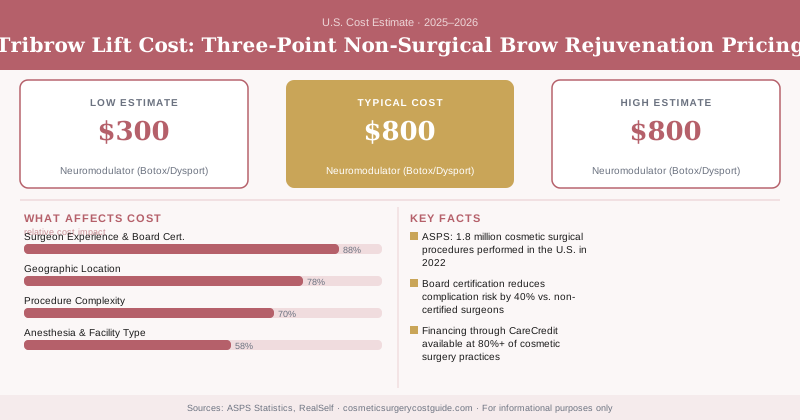
Tribrow lift cost breakdown
| Component | Individual Cost | Combined Session Cost |
|---|---|---|
| Neuromodulator (Botox/Dysport) | $300–$800 | included |
| Dermal filler (brow/temple) | $600–$1,200 | included |
| PDO thread lift | $1,000–$2,500 | included |
| Full tribrow lift (all three) | $1,900–$4,500 separately | $1,200–$3,000 combined |
How the three components work together
A tribrow lift targets brow position from three distinct angles simultaneously. Neuromodulator injections relax the muscles that pull the brow downward, providing a subtle lift by removing that downward tension. Dermal filler adds volume at the brow tail and temple, providing structural support and lift from beneath. PDO threads mechanically anchor and pull the brow tissue upward, providing the most direct physical lift of the three components.
Individually, each addresses only part of what contributes to brow position — muscle tension, volume loss, or tissue laxity. Combined, they address all three simultaneously, which is why providers who offer the combination approach report more comprehensive, longer-lasting results than any single technique alone.
Why the combined price is lower than the sum of parts
Providers who offer tribrow lift as a designated combination service typically price it at a meaningful discount compared to booking neuromodulator, filler, and thread treatments as three fully separate appointments — often 15–25% less in total, since a single coordinated visit saves on separate consultation time and allows the injector to plan all three treatments together for the most complementary, well-balanced result rather than three independently timed treatments that might not interact optimally.
Experienced injectors typically perform the PDO thread placement first, then add filler for volume support around the newly placed threads, and finish with neuromodulator injection last. This sequencing allows the provider to assess the lift achieved by threads and filler before finalizing muscle relaxation with neurotoxin, avoiding overcorrection. Ask your provider whether they have a specific sequencing protocol for combination treatments — it’s a meaningful marker of real experience with this specific combined approach.
Staggered maintenance after the initial treatment
Because neuromodulator, filler, and thread effects fade at different rates, ongoing maintenance isn’t a simple “repeat everything every X months” — neuromodulator typically needs refreshing every 3–4 months, while filler lasts 6–12 months and threads last 12–18 months. Most patients return for a partial touch-up focused just on the neuromodulator component in between full combination sessions, keeping ongoing costs lower than repeating the entire tribrow lift on the same short interval.
Who’s the best candidate
Patients with mild to moderate brow descent affecting multiple factors — some muscle-driven heaviness, some volume loss at the temple, and some tissue laxity — tend to see the most complete improvement from the combination approach, since a single-mechanism treatment would likely leave one or more contributing factors unaddressed. Patients whose brow concern is driven predominantly by just one factor may not need the full three-part approach and could achieve satisfactory results with a single treatment at lower cost.
A combination treatment requires an injector experienced in all three individual techniques, not just one or two — ask specifically about their experience with PDO threads in particular, since this is the least commonly offered of the three components and the one most dependent on precise technique for a natural-looking result. An injector who’s excellent at Botox and filler but new to threads is not necessarily the right choice for the full combination.
Bottom line
A tribrow lift costs $1,200–$3,000 for a combined session addressing brow position through neuromodulator, filler, and PDO threads together, typically 15–25% less than booking the three treatments separately. It’s best suited to patients with multiple contributing factors to their brow descent, and ongoing maintenance is staggered based on each component’s individual duration rather than a single repeat schedule.
Frequently Asked Questions
A tribrow lift is a combination non-surgical brow rejuvenation approach using three techniques together — neuromodulator injection, dermal filler, and PDO thread lifting — targeting different aspects of brow position and shape simultaneously. It typically costs $1,200–$3,000 per session, reflecting the combined cost of all three individual components.
Combining all three treatments in one visit typically costs 15–25% less than booking each as an entirely separate appointment, since providers often bundle combination treatments at a discount and you save on any separate consultation fees. It also means a single, coordinated treatment plan rather than three separately timed appointments that may not be optimally sequenced.
Because the three components have different individual durations, results fade in stages: neuromodulator effects typically last 3–4 months, filler lasts 6–12 months depending on the product used, and PDO threads last 12–18 months. Most patients return for a partial touch-up (usually just the neuromodulator component) every 3–4 months while filler and thread effects remain in place longer.