Most patients discover umbilicoplasty exists after their tummy tuck consultation. Their surgeon mentions it almost as a footnote — “we’ll reshape the belly button while we’re in there” — and suddenly a procedure they’d never heard of becomes the detail they care about most. Because a tummy tuck that leaves an unnatural-looking navel is immediately noticeable, and a well-crafted one isn’t.
Umbilicoplasty is the surgical reshaping of the navel. It’s performed as a standalone procedure or, far more commonly, as part of a tummy tuck (abdominoplasty). On its own, it’s a minor outpatient surgery. Combined with abdominal work, it adds complexity and cost — but proportionally less than you might expect.
How Much Does Umbilicoplasty Cost?
| Procedure Type | Cost Range |
|---|---|
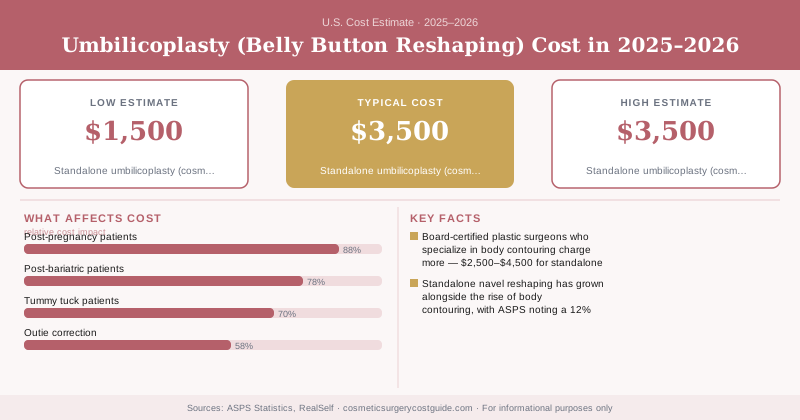
| Standalone umbilicoplasty (cosmetic) | $1,500–$3,500 |
| Combined with tummy tuck (additional fee) | $500–$1,500 added to tummy tuck cost |
| Umbilicoplasty after hernia repair (functional) | $1,000–$2,500 |
| Outie-to-innie correction | $1,500–$3,000 |
| Post-pregnancy/post-weight-loss reshaping | $1,800–$4,000 |
Standalone umbilicoplasty fees typically cover surgeon time, facility use, and anesthesia (usually local with light sedation for isolated cases). When bundled with a tummy tuck, only the surgeon’s incremental time is added — you’ve already paid for the OR and anesthesia.
What Affects the Price
Standalone vs. Combined
A standalone umbilicoplasty on a single procedure day requires its own OR booking, anesthesiologist, and recovery room fees. Those facility and anesthesia costs ($500–$1,200) drive standalone prices higher relative to the complexity of the actual surgical work.
When done alongside a tummy tuck, mommy makeover, or liposuction, the incremental cost drops significantly. Many surgeons add $500–$1,000 to their tummy tuck fee for navel reshaping that’s specifically customized.
Functional vs. Cosmetic
Umbilical hernias — where abdominal tissue protrudes through the navel — sometimes require surgical correction. If the repair is medically necessary and your surgeon performs functional and cosmetic correction simultaneously, insurance may cover the hernia component. The cosmetic reshaping portion remains out-of-pocket.
Surgeon Skill and Location
Navel aesthetics are unforgiving. The scar sits at the base of the navel and must be hidden within its folds. Board-certified plastic surgeons who specialize in body contouring charge more — $2,500–$4,500 for standalone work — but their results look natural. Discount providers who deliver obvious, poorly-positioned scars create a problem that requires revision.
Los Angeles and New York surgeons charge 40–60% more than equivalently skilled surgeons in mid-size markets.
The American Society of Plastic Surgeons (ASPS) reported over 197,000 tummy tuck procedures performed in the U.S. in 2023, making it one of the top five body contouring procedures. The vast majority included some degree of umbilicoplasty. Standalone navel reshaping has grown alongside the rise of body contouring, with ASPS noting a 12% increase in body contouring procedures from 2019 to 2023.
Who Gets Umbilicoplasty?
Post-pregnancy patients: Pregnancy stretches the navel, often permanently. The combination of skin laxity and navel distortion is one of the primary drivers of standalone umbilicoplasty consultations.
Post-bariatric patients: Significant weight loss (100+ lbs) frequently leaves excess abdominal skin and a distorted navel. Umbilicoplasty is standard in post-bariatric body contouring.
Tummy tuck patients: During abdominoplasty, the skin is lifted and repositioned. The navel is literally repositioned on the abdominal wall — umbilicoplasty shapes how it looks in its new home.
Outie correction: Some patients have a protruding navel (outie) from birth or as a remnant of umbilical hernia repair. Correction is straightforward and commonly requested.
What’s Included in the Quote
Get clarity on what your surgeon’s fee covers:
- Surgeon fee: $1,000–$2,500 (standalone)
- Anesthesia fee: $400–$800
- Facility/OR fee: $500–$1,200
- Pre-op labs and garments: $100–$300
- Post-op follow-up visits: usually included for 3–6 months
Total all-in for standalone umbilicoplasty: $1,500–$4,500 in most U.S. markets.
Recovery
Standalone umbilicoplasty has a gentle recovery curve. Most patients take 2–3 days off work. You’ll wear a light dressing for 5–7 days. Full activity, including core exercise, resumes at 4–6 weeks.
Combined with a tummy tuck, recovery is dictated by the larger procedure — typically 2 weeks limited activity, 6 weeks before returning to full exercise.
Infection at the navel is the primary complication risk with umbilicoplasty — the navel is a naturally warm, occluded space. Follow wound care instructions precisely, keep the area dry during the first week, and report any unusual discharge or odor immediately. Infection caught early is easily treated; delayed treatment can compromise the final aesthetic result.
Does Insurance Cover Umbilicoplasty?
Purely cosmetic umbilicoplasty is not covered. However:
- Umbilical hernia repair is typically covered when medically necessary (obstruction, pain, enlarging hernia)
- If your surgeon corrects a hernia AND reshapes for aesthetics simultaneously, the hernia repair may be separately billed to insurance while the cosmetic component remains self-pay
- Always get a pre-authorization from your insurer before surgery if there’s a functional component
Financing Options
- CareCredit and Alphaeon Credit are widely accepted for cosmetic procedures
- Many plastic surgery practices offer 12–24 month payment plans
- HSA/FSA funds can be used if there’s a documented functional component (hernia)
The Bottom Line
Standalone umbilicoplasty ranges from $1,500 to $4,500 all-in. Combined with a tummy tuck, you’re looking at $500–$1,500 added to your abdominoplasty quote. The procedure is low-risk when performed by an experienced board-certified plastic surgeon, and results are permanent.
Don’t choose your provider on price alone. The navel is a central focal point of the abdomen. Request to see before/after photos of navel work specifically — not just tummy tuck results overall. A beautifully sculpted abdomen with an awkward navel is immediately obvious.
Frequently Asked Questions
Umbilicoplasty costs between $1,500 and $5,000 as a standalone procedure, though the price varies based on surgical complexity and your surgeon's experience level. When combined with a tummy tuck, the additional cost for umbilicoplasty typically ranges from $500 to $1,500 since the surgeon is already working in that area. Most patients pay out-of-pocket since this is considered a cosmetic procedure.
Insurance rarely covers umbilicoplasty because it is classified as an elective cosmetic procedure, even when performed alongside medically necessary surgeries like abdominoplasty. If your tummy tuck is covered due to medical reasons (such as post-massive weight loss skin removal), the umbilicoplasty portion will still be your responsibility as an out-of-pocket cost. Contact your specific insurance provider to confirm their policy, as coverage rules vary by plan.
Yes, umbilicoplasty can be performed as a standalone procedure for patients who want to reshape their belly button without abdominal skin removal, typically costing $1,500 to $3,000. However, most surgeons recommend combining it with a tummy tuck since reshaping the navel during abdominoplasty creates more natural-looking results and requires less additional surgical time. Recovery for standalone umbilicoplasty is typically 1 to 2 weeks, with minimal scarring hidden within the belly button itself.