42% of women say the under-eye area is their primary aging concern — more than wrinkles, more than sagging skin, more than anything else. That’s backed by consumer survey data from RealSelf, and it explains why tear trough filler has become one of the most requested non-surgical treatments in plastic surgery and dermatology offices nationwide.
But it’s also one of the most technique-sensitive filler placements in the face. The cost is relatively modest compared to other procedures. The risk, however, is real — and worth understanding before you book.
Tear Trough Filler Cost in 2025–2026
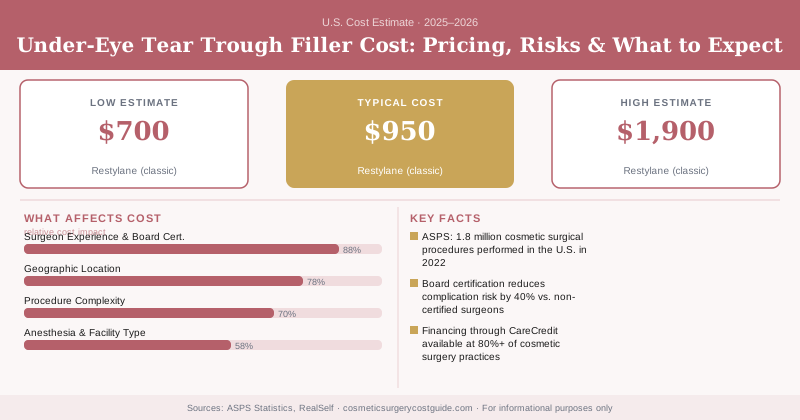
| Product | Cost Per Syringe | Syringes Needed | Total Cost | Duration |
|---|---|---|---|---|
| Restylane (classic) | $700–$950 | 1–2 | $700–$1,900 | 9–12 months |
| Juvederm Ultra | $750–$1,000 | 1–2 | $750–$2,000 | 9–12 months |
| Belotero Balance | $700–$950 | 1–2 | $700–$1,900 | 6–12 months |
| Restylane Eyelight | $800–$1,100 | 1 | $800–$1,100 | 12–18 months |
| Sculptra (off-label) | $800–$1,100 | 2–3 | $1,600–$3,300 | 18–24 months |
Why One Syringe Is Often Enough
The tear trough is a small, confined area. Unlike the cheeks or jawline where multiple syringes make sense, most tear trough treatments use 0.5–1 syringe total — split between both sides. Over-filling the under-eye causes a puffy, unnatural appearance that’s worse than the hollow it was meant to fix.
Expect to pay $800–$1,200 for a conservative tear trough treatment at a reputable practice. That’s one syringe or less. Anyone quoting you significantly under $700 is probably using a less experienced injector or a cheaper product — both of which matter more here than almost anywhere else on the face.
Restylane vs. Juvederm: Which Is Better for Under Eyes?
Most experienced injectors prefer Restylane (or Restylane Eyelight, which has FDA clearance specifically for the tear trough) over Juvederm for this area. The reason is water absorption: Juvederm tends to absorb more water and swell, which in the delicate under-eye area can create visible puffiness — especially in the morning when you’re slightly dehydrated and retain fluid.
Restylane has a more cohesive gel structure that holds its shape better and is less prone to the Tyndall effect (a bluish discoloration that shows through thin under-eye skin). Belotero Balance is another good option specifically because it integrates into tissue rather than sitting as a discrete depot.
When filler is placed too superficially under the eye — just under the skin instead of deeper in the tissue — it can create a bluish or grayish tint called the Tyndall effect. It’s caused by light scattering through the filler. You’ll notice it most in photos and bright light.
If this happens, hyaluronidase (a dissolving enzyme) can reverse it — but that’s another $200–$400 and an extra appointment. The fix is injecting at the correct plane, which is why injector skill matters so much for this treatment specifically.
Who’s a Good Candidate?
You’re a strong candidate for tear trough filler if:
- Your hollowness is primarily from volume loss (genetic or age-related), not from skin laxity
- The under-eye skin is not severely crepey or loose
- You don’t have significant under-eye bags (fat prolapse) — filler won’t fix those and may make them look worse
- You’re not prone to significant fluid retention (athletes, people who sleep poorly, heavy drinkers retain more water and see more swelling)
A good injector will turn you down if you’re not an appropriate candidate. That’s actually a good sign — not a dealbreaker.
The Consultation Is Non-Negotiable
Unlike lip filler or cheek filler where the consultation is somewhat optional, a tear trough consultation is genuinely important. The under-eye anatomy is complicated: you have thin skin, the orbicularis oculi muscle, the orbital septum, and the infraorbital fat pad all within millimeters of each other. Your injector needs to assess your skin quality, degree of hollowness, fat pad position, and vessel location before deciding if you’re a candidate — and what volume is safe.
Per ASPS 2023 procedure statistics, soft tissue filler treatments continue to be among the top five non-surgical cosmetic procedures in the US, with facial rejuvenation cases growing year over year. Tear trough treatments represent a significant and fast-growing share of that volume.
Tear trough filler carries a higher risk of vascular occlusion (filler entering a blood vessel) than most other facial sites due to the proximity of the infraorbital artery. In rare cases, this can cause skin necrosis or, in even rarer cases, blindness if filler enters the ophthalmic artery. Choose only a board-certified plastic surgeon, dermatologist, or oculoplastic surgeon for this treatment — not a medspa aesthetician. The anatomy knowledge required is not the same as for general filler placement.
How Long Does Tear Trough Filler Last?
Less than you’d expect. The under-eye area has high movement from blinking and expressions, and most HA fillers in this zone last 9–12 months. Restylane Eyelight runs a bit longer at 12–18 months. Plan on annual maintenance if you love your results — which, at $800–$1,200 per session, is meaningful but manageable.
The bottom line: tear trough filler done right is genuinely transformative — it’s one of the highest satisfaction-per-dollar treatments in non-surgical aesthetics. Done poorly, it’s one of the most visible mistakes. Budget well, choose a physician-level injector, and don’t let price be the deciding factor.
Frequently Asked Questions
Tear trough filler typically costs between $800 and $1,600 per treatment session, depending on the provider's experience level, geographic location, and the amount of filler needed. Most patients require 0.5 to 1 mL of filler per session, and results usually last 9-12 months before a touch-up is needed.
No, tear trough filler is considered a cosmetic procedure and is not covered by any major US health insurance plans. You'll pay the full cost out-of-pocket, though some dermatology and plastic surgery offices offer payment plans or financing options through third-party lenders to help spread the cost.
You'll notice visible improvement in the under-eye hollows within 3-7 days, with full results appearing after 2 weeks as swelling subsides. Results typically last 9-12 months, after which you'll need a maintenance treatment to sustain the lifted, refreshed appearance.