Most women assume non-surgical vaginal tightening doesn’t really work — that it’s marketing fluff sold at med spas to women who’d be better served by pelvic floor therapy or surgery. The clinical data says something more complicated. Some technologies do show measurable improvement in tissue laxity and sexual satisfaction. Others are overpriced and oversold. Here’s what the research actually shows — and what you’ll pay for it.
What Non-Surgical Vaginal Tightening Actually Is
These treatments use energy-based devices — radiofrequency (RF), fractional laser (CO₂ or Er:YAG), or high-intensity focused ultrasound (HIFU) — to heat vaginal tissue and stimulate collagen remodeling. The goal is to improve laxity, dryness, and in some cases mild urinary stress incontinence. They’re not a replacement for surgical vaginoplasty or labiaplasty, and they don’t produce the same degree of tightening.
The most widely used FDA-cleared platforms include MonaLisa Touch (CO₂ laser), ThermiVa (RF), diVa (hybrid laser), Votiva (RF), and Viveve (RF). Most require a series of 3 treatments for initial results, then annual maintenance.
The ASPS reports that vaginal rejuvenation procedures — surgical and non-surgical combined — have grown significantly over the past decade, with surgical labiaplasty alone seeing a 217% increase since 2012. Non-surgical options have gained traction as a less invasive alternative for women with mild to moderate laxity concerns.
Cost Breakdown by Technology
| Treatment | Per Session | Series of 3 | Annual Maintenance |
|---|---|---|---|
| MonaLisa Touch (CO₂ laser) | $1,200 | $2,800–$3,800 | $600–$1,200 |
| ThermiVa (RF) | $1,000 | $2,500–$3,500 | $800–$1,200 |
| diVa Laser | $1,200 | $3,000–$4,500 | $700–$1,400 |
| Votiva (RF) | $900 | $2,200–$3,000 | $600–$1,000 |
| Viveve (RF) | $1,500–$2,500 | single session | $1,500–$2,500/yr |
Viveve is notable because it’s designed as a single-session treatment, though it carries a higher per-session cost. The others typically require a series of 3 treatments spaced 4–6 weeks apart.
What Affects the Price?
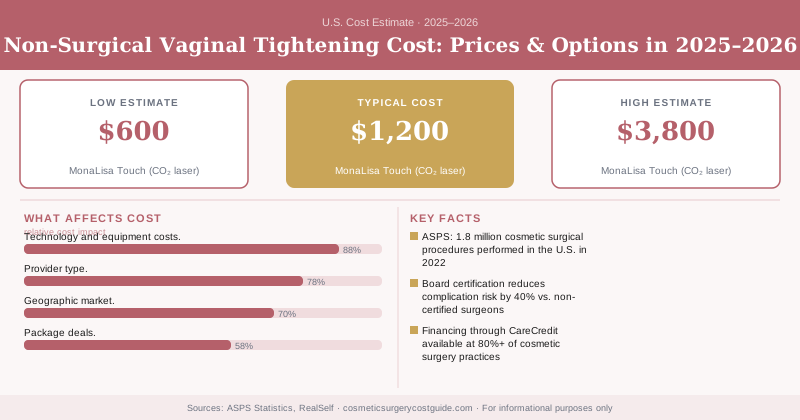
Technology and equipment costs. Laser platforms like MonaLisa Touch cost providers significantly more to maintain than RF devices, and that’s reflected in pricing. Newer platforms with stronger clinical backing often charge a premium.
Provider type. OB-GYNs, urogynecologists, and board-certified gynecologic surgeons who offer these treatments tend to charge more than medical spas — but also tend to be better positioned to evaluate whether you’re actually a candidate and rule out conditions that could be worsened by energy-based treatment.
Geographic market. Coastal cities and affluent suburbs run 20–40% higher than mid-sized inland markets.
Package deals. Most providers offer bundled pricing for the initial series (3 treatments) at a 10–20% discount off the per-session rate. Ask about this upfront.
May benefit from non-surgical tightening:
- Women with mild vaginal laxity postpartum or post-menopause
- Women experiencing mild dryness or discomfort during intercourse
- Women with mild stress urinary incontinence (leaking when you sneeze or jump)
- Women seeking to delay or avoid surgical vaginoplasty
NOT a good substitute for surgery if you have:
- Significant laxity after multiple vaginal deliveries
- Prolapse (bladder, uterine, or rectal)
- Active vaginal infections or inflammation
- History of vaginal mesh complications
Does It Actually Work?
Clinical evidence is mixed and often limited by small study sizes. The best evidence exists for the CO₂ laser platforms (MonaLisa Touch) for treating genitourinary syndrome of menopause (GSM) — dryness, atrophy, and discomfort. The FDA has not cleared most of these devices specifically for vaginal tightening or sexual function improvement, and the agency issued a warning in 2018 noting that claims around sexual enhancement lacked sufficient clinical evidence.
For mild laxity and dryness in post-menopausal women or women who have had children, most practitioners report patient satisfaction rates of 70–85% in their own outcome data. Published peer-reviewed studies show statistically significant improvements in vaginal pH, mucosal thickness, and patient-reported outcomes — but most studies are small and industry-funded.
Bottom line: these treatments are real but not magic. They work best as a non-surgical option for mild concerns, not as an alternative to surgical correction of significant laxity.
Insurance and Payment
Non-surgical vaginal rejuvenation is considered cosmetic and is NOT covered by insurance in almost all cases. The one exception may be CO₂ laser treatment for genitourinary syndrome of menopause (GSM) in some plans — check with your gynecologist about coding. FSA and HSA funds are generally not eligible for cosmetic uses.
What Questions to Ask Your Provider
Before booking any treatment, ask these directly:
- Which specific device do you use, and is it FDA-cleared? (Not all marketed platforms are cleared for the claims being made.)
- What outcomes do your own patients report? (Ask for their internal data, not manufacturer statistics.)
- Are you an OB-GYN or gynecologist, or are you a med spa? (This matters for safety and candidacy assessment.)
- What are the risks for someone with my health history?
- What happens if I don’t see improvement after the initial series?
The right provider will answer all of these directly. If you’re getting deflection or vague marketing language, walk away.
Alternatives Worth Comparing
If non-surgical options feel overpriced for what you’d get, consider:
- Pelvic floor physical therapy: $75–$250 per session, typically 6–12 sessions, covered by many insurance plans. Evidence-backed for laxity and incontinence.
- Topical estrogen (prescription): $15–$50/month with insurance for dryness and atrophy.
- Surgical vaginoplasty: $5,000–$12,000 for significant laxity, lasting result.
Non-surgical tightening sits in the middle — more than PT, less than surgery — and it fills a real gap for women who want something beyond topical treatment but aren’t candidates or ready for surgery.
Frequently Asked Questions
Non-surgical vaginal tightening typically costs between $1,000 and $4,500 per session, depending on the technology used (radiofrequency, laser, or ultrasound) and the provider's location and credentials. Most patients require 3–6 sessions spaced 4–6 weeks apart to see results, bringing total treatment costs to $3,000–$27,000 for a complete course.
Insurance almost never covers non-surgical vaginal tightening because it is classified as an elective cosmetic procedure rather than medically necessary treatment. Patients should expect to pay 100% out-of-pocket, though some med spas and clinics offer financing plans or package discounts for multiple sessions.
Most patients need 3–6 sessions spaced 4–6 weeks apart to achieve noticeable results, with some improvement visible after the first or second session. Results typically last 6–12 months, after which maintenance sessions every 6–12 months are recommended to sustain the effects, making this an ongoing cost commitment rather than a one-time procedure.