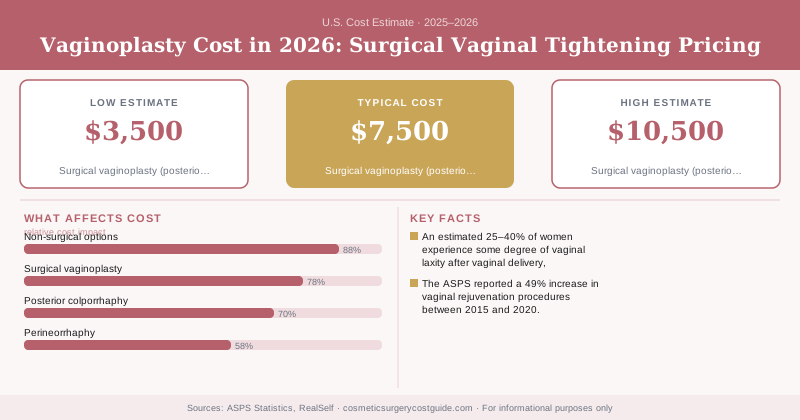
After childbirth, significant weight changes, or hormonal shifts with menopause, vaginal laxity is common. An estimated 25–40% of women experience some degree of vaginal laxity after vaginal delivery, according to data from the American Urogynecologic Society. It’s not talked about much, but it’s a real anatomical change that affects physical sensation, sexual satisfaction, and sometimes comfort during daily activities. Vaginoplasty — surgical repair of the vaginal canal and supporting muscles — directly addresses the structural changes that cause laxity. The ASPS reported a 49% increase in vaginal rejuvenation procedures between 2015 and 2020.
Vaginoplasty Cost Breakdown
| Procedure | Surgeon Fee | All-In Cost |
|---|---|---|
| Surgical vaginoplasty (posterior repair) | $3,500–$7,500 | $5,500–$10,500 |
| Perineoplasty (perineal repair) | $2,500–$5,000 | $4,000–$7,500 |
| Combined vaginoplasty + perineoplasty | $4,500–$9,000 | $6,500–$13,000 |
| CO2 laser vaginal treatment (non-surgical) | $800–$1,500/session | $2,500–$4,500/series |
| RF vaginal tightening (non-surgical) | $700–$1,200/session | $2,000–$3,600/series |
| Combined with labiaplasty | $2,500–$4,000 add-on | $8,000–$15,000 combined |
Non-surgical options (laser, radiofrequency) are cheaper per session but require maintenance treatments. Surgery is a one-time procedure — though a small percentage of patients need revision over time.
What Surgical Vaginoplasty Actually Does
Vaginoplasty for laxity addresses the vaginal canal and perineal body — the tissue and muscle at the entrance. During vaginal delivery, the muscles of the pelvic floor and the perineum can stretch, separate, or tear. While most tears are sutured immediately after delivery, the tissue doesn’t always heal to its original strength and caliber.
Surgical vaginoplasty:
- Makes an incision along the posterior (back) wall of the vaginal canal
- Identifies and approximates the separated or weakened levator ani muscles
- Removes excess vaginal tissue (the extra mucosa from the stretched wall)
- Closes the tissue in layers to reduce the caliber of the vaginal canal and restore muscular support
Perineoplasty specifically addresses the perineum — the area between the vaginal opening and anus — which often has visible scarring from episiotomies, perineal tears, or simple stretching with delivery. It restores the perineal body and tightens the vaginal opening.
Surgical vs. Non-Surgical: When Each Makes Sense
Non-surgical options (CO2 laser, RF): Work by stimulating collagen in the vaginal tissue, improving mucosal quality and elasticity. They work best for mild laxity, dryness and atrophy from hormonal changes (especially menopause), and early-stage changes. They require 3 sessions for initial treatment and annual maintenance. They cannot repair separated muscles.
Surgical vaginoplasty: Directly repairs the stretched or separated muscles and removes excess tissue. This is the only approach that addresses the structural changes from muscular separation. For women with moderate-to-significant laxity after vaginal delivery, surgery typically produces more complete results.
The right choice depends on the degree of laxity, age, whether further pregnancies are planned, and patient preference for recovery. A surgeon who recommends the same approach for every patient regardless of anatomy is a concern.
Vaginoplasty should ideally be performed after you’ve completed your family. Vaginal delivery after vaginoplasty can reverse the surgical repair — the stretched and separated tissue will redo the structural changes that surgery corrected. C-section delivery can preserve results, but requiring a C-section permanently isn’t typically recommended just to protect a vaginoplasty result. Most surgeons recommend delaying the procedure until you’re confident you don’t want more vaginal deliveries.
Who Performs Vaginoplasty
Board-certified gynecologists, urogynecologists (fellowship-trained pelvic floor specialists), and plastic surgeons who specialize in female genital surgery all perform this procedure.
For reconstruction after multiple deliveries with significant structural changes, a urogynecologist (OB/GYN with Fellowship in Female Pelvic Medicine and Reconstructive Surgery, FPMRS) is often the most appropriate specialist — they have the deepest training in pelvic floor anatomy. For patients combining vaginoplasty with labiaplasty or other cosmetic procedures, a board-certified plastic surgeon who focuses on genital surgery may be appropriate.
Recovery
General anesthesia or IV sedation with local blocks is used. Recovery is 2–4 weeks before returning to desk work and 6–8 weeks before resuming sexual activity or strenuous exercise. Some discomfort and swelling for 2–3 weeks is expected. Most patients rate the recovery as manageable and are satisfied with results within 6–8 weeks.
Avoid non-physician providers offering vaginal rejuvenation. The FDA has issued multiple warnings about unproven energy devices promoted for vaginal rejuvenation at non-medical settings. Surgical vaginoplasty should only be performed by a licensed MD or DO with training in gynecology or pelvic floor surgery, in an accredited surgical facility. Non-surgical laser or RF treatments should likewise be performed under physician supervision, using FDA-cleared devices. Always verify credentials and confirm the device is FDA-cleared for the specific indication before any vaginal energy treatment.
Insurance and Coverage
Vaginoplasty for purely cosmetic tightening is not covered by insurance. However, related functional procedures may have coverage:
Posterior colporrhaphy (vaginal wall repair when there’s a rectocele — rectal bulging into the vaginal wall) is often covered as a functional reconstruction under most major insurance plans.
Perineorrhaphy for symptomatic perineal body defects may be covered with appropriate documentation.
The cosmetic and functional components are billed separately in many cases. If you have symptoms beyond laxity — pressure, bulging, difficulty with bowel movements — see a urogynecologist first, as the functional repairs may be covered while the cosmetic tightening is self-pay.
Most practices offer financing for out-of-pocket costs. A $7,000 vaginoplasty on a 18-month 0% plan runs about $389/month.
Frequently Asked Questions
Vaginoplasty typically costs between $4,000 and $12,000 all-in, depending on surgeon experience, geographic location, and facility fees. Major metropolitan areas and board-certified plastic surgeons tend to charge toward the higher end of this range, while smaller markets or less experienced surgeons may fall toward the lower end.
Most health insurance plans classify vaginoplasty as elective cosmetic surgery and do not cover it, leaving patients responsible for the full $4,000–$12,000 cost out-of-pocket. However, if vaginal laxity causes documented functional problems or pain, some insurers may cover a portion; you should contact your plan directly with medical documentation from your gynecologist.
Vaginoplasty requires 4–6 weeks of downtime with activity restrictions, while laser or radiofrequency treatments typically allow return to normal activities within 3–7 days but may require multiple sessions costing $2,000–$6,000 total. Surgical vaginoplasty provides permanent results in a single procedure, whereas non-surgical options offer temporary improvements lasting 6–18 months.