The “vampire facial” went viral after a certain celebrity posted a blood-covered selfie — and now it’s one of the most Googled skin procedures in the country. What most people don’t realize: the dramatic photo is from the microneedling step, not the PRP. And the PRP (platelet-rich plasma) is the part that actually justifies the price.
Here’s what you’re paying for, what it costs, and whether it’s worth it for your skin goals.
What a vampire facial actually involves
A PRP facial — the clinical name for a vampire facial — combines two treatments:
- Blood draw and centrifuge: Your blood is drawn (typically 10–20mL), then spun in a centrifuge to separate plasma concentrated with platelets and growth factors. This is the PRP component.
- Delivery to the skin: The PRP is applied topically while microneedles create micro-channels in the skin (standard PRP facial), or injected directly into targeted areas (PRP injections, sometimes called the “vampire facelift”).
The growth factors in PRP — including PDGF, TGF, and VEGF — stimulate collagen production and accelerate tissue repair. The clinical evidence is real: a 2022 systematic review published in the Journal of Cosmetic Dermatology found PRP microneedling produced statistically significant improvements in skin texture, fine lines, and acne scarring compared to microneedling alone.
Vampire facial pricing by treatment type
| Treatment Type | Average Cost | Typical Range |
|---|---|---|
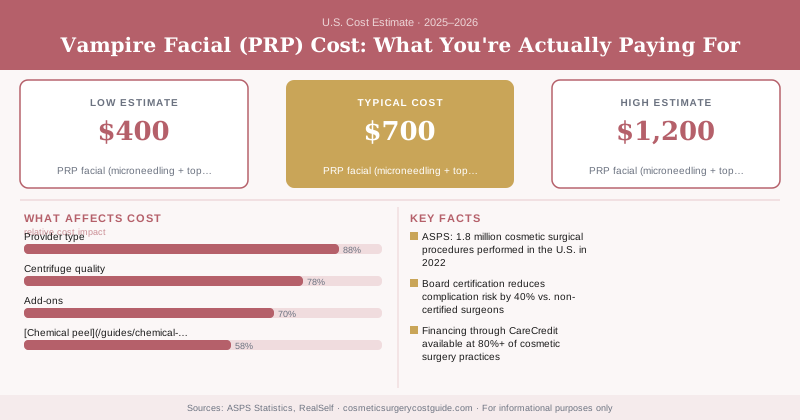
| PRP facial (microneedling + topical PRP) | $700 | $400–$1,200 |
| PRP injections (face, standalone) | $800 | $500–$1,500 |
| PRP + microneedling + RF (Morpheus8-style) | $1,200 | $800–$2,000 |
| PRP hair restoration (scalp) | $1,000 | $600–$1,800 |
| Series of 3 PRP facials (bundled) | $1,800 | $1,200–$3,000 |
The ASAPS reported consistent year-over-year growth in PRP-based aesthetic treatments, with combination procedures (PRP + microneedling or RF) accounting for most of the expansion. Standalone PRP injection appointments are more common in hair restoration than in facial rejuvenation.
What drives the cost variation?
The $400–$1,500 range is wide because PRP quality and delivery method vary significantly:
Provider type: Dermatologists and plastic surgeons charge more than med spas and aestheticians — and in most states, only licensed medical providers can perform PRP injections (as opposed to topical PRP application). Verify your provider’s credentials if injections are involved.
Centrifuge quality: Not all centrifuge systems produce the same platelet concentration. Higher-end systems (Arthrex Angel, EmCyte) produce 4–8x baseline platelet concentration; basic systems may produce 2–3x. Practices using premium systems tend to charge more and may produce better results.
Add-ons: Many practices combine PRP with microneedling (adds $150–$400), radiofrequency (adds $300–$600), or hyaluronic acid serums. These combinations can improve outcomes but also add cost.
- What centrifuge system do you use, and what platelet concentration does it achieve?
- Is the PRP applied topically or injected? (Results differ significantly)
- How many sessions do you recommend for my concern?
- Does the price include the microneedling, or is that a separate fee?
- Who performs the injections — a physician, NP, PA, or aesthetician?
How many sessions do you need?
For skin texture, fine lines, or acne scarring, most providers recommend a series of 3 sessions spaced 4–6 weeks apart, followed by maintenance every 6–12 months. Single sessions produce noticeable improvement but rarely deliver the full result.
For hair loss (androgenic alopecia), research protocols typically use 3–4 treatments spaced monthly, then quarterly maintenance. Results take longer — expect 6 months before full assessment.
Vampire facial vs. alternatives
PRP is one of several collagen-stimulating skin treatments. Here’s how it compares:
Chemical peel (medium depth): $150–$600 per session. Addresses surface texture and tone. Less targeted than PRP for deeper structural improvement.
Microneedling alone: $200–$700 per session. Less expensive than PRP combo, and effective for texture — but lacks the growth factor amplification.
Sculptra (poly-L-lactic acid): $800–$1,200 per session. Longer-lasting collagen stimulation (2+ years) but higher upfront cost. Different mechanism — injectable, not surface treatment.
PRP procedures use your own blood, which significantly reduces allergy and rejection risk. However, the procedure is not risk-free: improper technique can cause bruising, infection, or (with injections) rare vascular complications. Downtime after microneedling + PRP is typically 24–72 hours of redness and mild swelling — plan accordingly before social events.
Is it covered by insurance?
No. PRP facials are cosmetic and completely out-of-pocket. PRP injections for orthopedic conditions (knees, tendons) may have partial insurance coverage, but cosmetic PRP does not.
Most practices offer package pricing — booking a 3-session series typically saves 15–20% compared to individual appointments. If you’re serious about results, budget for the full series from the start.
Frequently Asked Questions
A single vampire facial session costs between $400 and $1,500, depending on your provider's experience, location, and clinic prestige. Most patients need 3–4 sessions spaced 4–6 weeks apart for optimal results, bringing total treatment costs to $1,200–$6,000 per treatment cycle.
No, vampire facials are considered cosmetic procedures and are not covered by any major US health insurance plans, meaning you'll pay 100% out-of-pocket. Some clinics offer financing plans or package discounts for multiple sessions to help manage costs.
Most dermatologists recommend 3–4 sessions spaced 4–6 weeks apart, with initial results visible after 2–3 weeks and peak results appearing 2–3 months after your final session. Maintenance sessions are typically needed every 6–12 months to sustain the skin rejuvenation benefits.