$6,800. That’s what the average patient pays for VASER liposuction on a single area, according to RealSelf community data — roughly 25–40% more than traditional tumescent lipo for the same region. Whether that premium is justified depends entirely on what you’re trying to accomplish and who’s doing it.
VASER (Vibration Amplification of Sound Energy at Resonance) uses ultrasound energy to selectively liquefy fat before removal. The technology makes high-definition body contouring — etching visible muscle definition — achievable in ways traditional lipo can’t match. But it also means you’re paying for specialized equipment, additional training, and longer procedure times.
VASER liposuction cost by treatment area
| Treatment Area | Low Estimate | Typical Range | High Estimate |
|---|---|---|---|
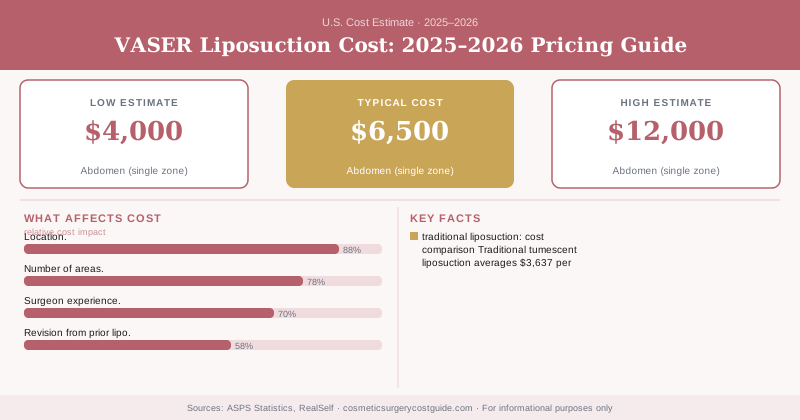
| Abdomen (single zone) | $4,000 | $6,500–$8,500 | $12,000 |
| Flanks / love handles | $3,500 | $5,500–$7,500 | $10,000 |
| Abdomen + flanks (360 lipo) | $6,500 | $9,000–$12,000 | $18,000 |
| Arms (both) | $3,500 | $5,500–$7,500 | $11,000 |
| Thighs (inner or outer) | $4,000 | $6,000–$8,000 | $12,000 |
| Back / bra fat | $3,500 | $5,500–$7,000 | $10,000 |
| VASER Hi-Def abs / full torso | $8,000 | $12,000–$16,000 | $20,000 |
| Male chest (gynecomastia) | $3,500 | $5,000–$7,500 | $11,000 |
Prices typically include surgeon fee, facility fee, anesthesia, garments, and follow-up visits. Always ask what’s bundled — some practices quote the surgeon fee alone.
What makes VASER cost more than standard liposuction?
Three factors push VASER pricing above traditional lipo:
Equipment and licensing. VASER devices are leased or purchased by the practice, and that cost gets passed to patients. Practices that own the equipment outright sometimes charge less than those paying monthly lease fees.
Technique specificity. Selective fat emulsification takes more time and precision than standard cannula techniques. A VASER Hi-Def procedure on the abdomen can run 4–5 hours in the OR vs. 1–2 hours for basic lipo.
Surgeon training. Not every plastic surgeon is trained in VASER Hi-Def sculpting. Board-certified surgeons who specialize in body contouring and have high patient volumes typically charge a premium.
VASER vs. traditional liposuction: cost comparison
Traditional tumescent liposuction averages $3,637 per procedure based on 2023 ASPS statistics (surgeon fee only). VASER runs $1,500–$3,000 more per area at most practices. The gap widens significantly for Hi-Def work.
For standard fat removal, traditional lipo produces comparable results at lower cost. VASER’s real advantage shows in two cases: patients wanting muscle definition sculpted in (Hi-Def), and patients with fibrous areas (flanks, back, male chest) where ultrasound energy helps break down denser fat more effectively.
What’s typically NOT included in the quote
- Compression garments: $80–$200
- Post-op lymphatic massage (often recommended): $80–$150/session, typically 3–6 sessions
- Lab work / pre-op clearance: $150–$400
- Prescription medications: $50–$100
- Time off work (variable)
Factors that move the price up or down
Location. Manhattan, Miami, and Los Angeles practices charge 30–50% more than the national average. Mid-sized cities like Phoenix, Houston, and Charlotte tend to be more affordable with equally skilled surgeons.
Number of areas. Most practices offer a discount when treating multiple zones in a single OR session — you pay one anesthesia fee instead of two.
Surgeon experience. A plastic surgeon with a 10-year VASER portfolio and thousands of cases will charge more than someone two years out of residency. In body contouring, the surgeon’s eye matters enormously.
Revision from prior lipo. If you’re correcting uneven results from a previous procedure, expect 20–40% higher fees due to scar tissue complexity.
Is VASER FDA-cleared?
Yes. The VASER system has FDA clearance for surgical lipoplasty. The Hi-Def aesthetic application (sculpting muscle definition) is a technique layered onto that clearance — the device is approved, but the level of artistry depends entirely on the surgeon.
Be cautious of VASER quotes below $3,000 for any multi-area procedure. Unusually low pricing can signal unlicensed providers, non-board-certified surgeons, or facilities that cut corners on anesthesia and sterility. VASER Hi-Def in particular requires surgical precision — this is not a procedure to bargain-shop.
How to evaluate quotes
Get at minimum two consultations from board-certified plastic surgeons (ABPS). Ask each to:
- Quote the full cost including all fees
- Specify exactly which areas will be treated and with how many passes
- Show before/after photos of patients with your body type
The ASPS 2023 statistics report that liposuction remains the second most-performed surgical cosmetic procedure in the US with over 294,000 procedures — so there’s no shortage of experienced providers. Take your time finding the right one.
Financing options
VASER is elective and not covered by insurance. Most practices offer:
- CareCredit: 6–24 month deferred interest plans
- Alphaeon Credit: designed specifically for cosmetic procedures
- In-house payment plans: varies by practice
- HSA/FSA: not eligible for elective cosmetic procedures
If price is a constraint, treating one area now and returning for a second area 6–12 months later is a legitimate strategy — and some practices offer returning-patient discounts.
Frequently Asked Questions
VASER liposuction typically costs $4,000–$20,000 depending on the number of treatment areas, surgeon experience, and geographic location. The average patient pays around $6,800 for a single area, which is 25–40% more than traditional tumescent liposuction for the same region.
VASER liposuction is considered a cosmetic procedure and is not covered by health insurance, meaning you'll pay the full cost out-of-pocket. Some surgeons offer financing plans or payment options to help manage the expense, but there are no insurance reimbursements or pre-tax medical savings account deductions available.
Most patients can return to light daily activities within 3–7 days and resume moderate exercise within 2–3 weeks, though full results typically appear after 2–3 months as swelling subsides. Your surgeon will provide specific timeline guidelines based on the extent of treatment, but compression garments are usually worn for 2–4 weeks to minimize bruising and support skin retraction.