Those yellowish, slightly raised plaques on your upper or lower eyelids? They’re called xanthelasma — deposits of lipid-laden macrophages just beneath the skin surface. They don’t hurt, don’t impair vision, and aren’t cancerous. But they’re highly visible, and most people who have them want them gone.
The problem: xanthelasma removal costs more than most people expect, recurrence rates are significant, and the delicate eyelid skin limits which treatments are safe. Here’s a clear look at what removal actually costs.
Who Gets Xanthelasma?
Xanthelasma palpebrarum is more common than most people realize. A 2014 study in BMJ Open Heart following over 12,000 Danish adults found that people with xanthelasma had a 52% higher risk of heart attack over a 10-year period — making it a meaningful cardiovascular marker, not just a cosmetic issue.
Roughly half of xanthelasma patients have elevated LDL cholesterol. The other half have normal lipid panels. Age (usually over 40), female sex, and family history of hyperlipidemia all increase risk. First step after diagnosis: get a lipid panel if you haven’t recently.
Cost by Removal Method
| Method | Typical Cost |
|---|---|
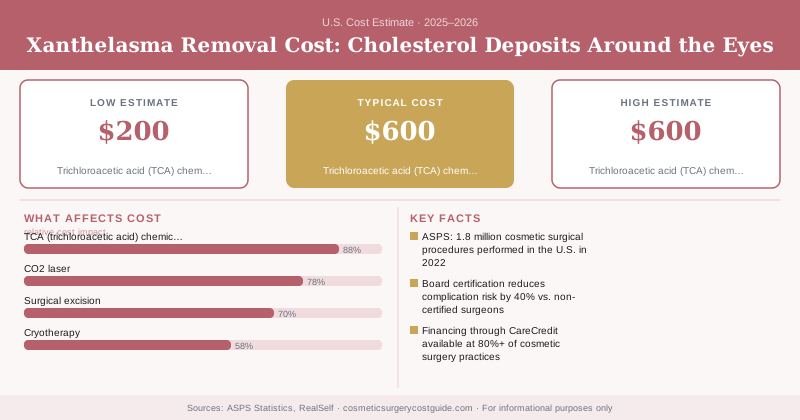
| Trichloroacetic acid (TCA) chemical ablation | $200 – $600 per session |
| CO2 laser ablation | $400 – $1,000 per session |
| Nd:YAG laser | $300 – $800 per session |
| Pulsed dye laser | $300 – $700 per session |
| Surgical excision | $500 – $2,000 |
| Radiofrequency ablation | $300 – $800 per session |
| Cryotherapy | $150 – $400 per session |
Breaking Down Each Option
TCA (trichloroacetic acid) chemical ablation is the most widely used first-line office treatment. High-concentration TCA (70–100%) is carefully applied to the plaques with a fine needle or applicator. The acid causes a controlled chemical burn that destroys the lipid deposits. Cost: $200–$600 per session. Multiple sessions are often needed for thicker plaques. Downtime is minimal — a few days of crusting.
CO2 laser vaporizes the xanthelasma tissue precisely. It’s the most popular treatment among oculoplastic surgeons for its precision in the periorbital area. Cost: $400–$1,000 per session. Most patients need 1–3 sessions. Temporary redness and crusting for 1–2 weeks.
Surgical excision offers direct removal with a scalpel and forceps. Best for larger, well-defined plaques. Higher upfront cost ($500–$2,000) but potentially more complete removal in a single procedure. The trade-off: a fine linear scar that, in the right hands of an oculoplastic surgeon, is usually barely visible once healed.
Cryotherapy (liquid nitrogen) is less commonly used for xanthelasma because eyelid skin tolerates cold poorly and results are less predictable. Cheaper ($150–$400) but higher recurrence.
Xanthelasma has a recurrence rate of 40–60% within 12 months depending on the treatment method and whether the underlying lipid abnormality is controlled. Surgical excision has the lowest recurrence rates (around 15–25%); TCA and laser typically see higher recurrence. If your cholesterol is elevated, managing it medically significantly reduces the chance of xanthelasma returning after removal.
Where to Get It Treated
This is not a general dermatology procedure. The eyelids are the thinnest skin on the body — misapplied chemical or laser energy can cause scarring, ectropion (outward-turning eyelid), or corneal injury. Seek a provider with specific experience treating periorbital conditions:
- Oculoplastic surgeons (ophthalmologists with plastic surgery fellowship) — most qualified for eyelid-specific procedures
- Dermatologists with periorbital laser experience — appropriate for chemical and laser approaches
- Plastic surgeons specializing in facial cosmetics
Ask to see before-and-after photos of xanthelasma cases specifically, not just general facial work.
Insurance Coverage
Xanthelasma removal is cosmetic unless there’s documented functional impairment (e.g., ptosis affecting vision — which xanthelasma rarely causes). Expect to pay out of pocket. However, the associated lipid workup and any cardiovascular medication or monitoring is typically covered by medical insurance as a separate claim. See your internist or cardiologist alongside your dermatologist.
Don’t attempt DIY chemical treatments for xanthelasma. Online “xanthelasma removal kits” with undiluted TCA or garlic-based solutions have caused corneal chemical burns and permanent eyelid scarring. The eyes are not a forgiving area for amateur chemistry. Professional treatment here isn’t just about cosmetics — it’s about safety.
Realistic Treatment Timeline and Cost
For small, early-stage xanthelasma (1–3 small plaques): 1–2 TCA or laser sessions at $200–$600 each. Total: $200–$1,200.
For larger or multiple plaques: surgical excision or 3+ laser sessions. Total: $1,000–$3,000+, especially if a second round is needed for recurrence.
Factor in at minimum one follow-up appointment at 8–12 weeks to assess recurrence — that’s another $100–$200 in consultation costs.
The Practical Plan
Start with a dermatologist or oculoplastic surgeon consultation ($150–$250, usually applied to treatment). Get your lipid panel checked — your GP can order this. If cholesterol is elevated, address it medically. Then proceed with treatment. Managing the underlying cause won’t make existing plaques disappear, but it dramatically reduces how much time and money you’ll spend fighting recurrence.
Most patients with small xanthelasma spend $400–$1,000 to achieve satisfactory results with one to two treatment sessions. Larger or recurrent cases can run to $2,000–$3,500 over time.
Frequently Asked Questions
Xanthelasma removal typically costs between $200 and $2,000 per treatment, depending on the method used and the extent of the deposits. Chemical peels are generally the least expensive option at $200–$500, while laser removal ranges from $500–$1,500, and surgical excision can cost $1,000–$2,000 or more.
Most insurance plans classify xanthelasma removal as cosmetic rather than medically necessary, meaning they typically do not cover the procedure and you pay the full cost out-of-pocket. However, if your dermatologist documents that the xanthelasma is causing functional problems or skin irritation, you may have a case for partial coverage—it's worth checking with your specific plan.
Recovery time varies by method: chemical peel patients can usually return to normal activities within 3–7 days with mild redness, laser treatment typically requires 1–2 weeks of healing with possible scabbing, and surgical excision may take 2–3 weeks for full healing with stitches removed around day 7. Keep in mind that xanthelasma has a recurrence rate of 10–60% depending on the method used, so some patients require repeat treatments.