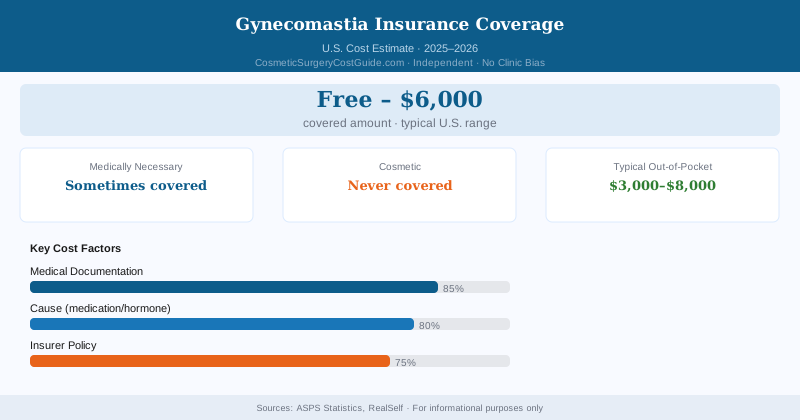
Gynecomastia — enlarged breast tissue in men — is a real medical condition, not just an appearance issue. But try telling that to your insurance company. Most will stamp “cosmetic” on the prior auth and send you a denial letter before your surgeon has even submitted paperwork. That said, coverage does happen. Around 10–15% of men who pursue it actually get it.
Here’s what separates the patients who succeed from the ones who don’t.
Will Insurance Actually Cover Gynecomastia Surgery?
Q: Does insurance ever cover this?
Yes, but rarely — and only under specific circumstances. Gynecomastia surgery is harder to get covered than female breast reduction, which itself is an uphill battle. Your best odds come with documented physical symptoms, an underlying medical cause, or a combination of both.
| Insurer Approach | Coverage Likelihood | Notes |
|---|---|---|
| Coverage with documented physical symptoms | Possible | Chronic pain, skin breakdown required |
| Coverage for psychological harm only | Very unlikely | Most insurers don’t accept this alone |
| Coverage for drug-induced gynecomastia | Low-moderate | If medication change isn’t an option |
| Coverage for secondary to disease | Moderate | Documented underlying endocrine disease |
| Purely cosmetic appearance concern | None | Not covered |
Q: What physical symptoms are insurers looking for?
Breast tenderness or pain documented at multiple physician visits is the strongest case. Skin breakdown, rashes, or infections under enlarged breast tissue also count. Functional limitations — activities you can’t do because of the condition — need to be written into your medical record by your doctor, not just mentioned verbally at an appointment.
Q: What if my gynecomastia has an underlying medical cause?
That actually improves your odds. Gynecomastia secondary to a hormone-producing tumor, hypogonadism, or thyroid disorder gets more insurer attention than idiopathic cases. So does medication-induced gynecomastia when the medication can’t be changed — for example, if you’re on spironolactone or an antipsychotic you can’t stop. Klinefelter syndrome and other chromosomal conditions are also in a better coverage category.
Q: What about psychological harm? I have real anxiety about this.
Some insurers will consider documented psychiatric diagnosis related to gynecomastia — but almost never as a standalone reason. It can strengthen a claim that already has documented physical symptoms. A psychiatrist’s letter carries more weight than a patient’s self-report.
Building a Documentation Case
For the best chance at coverage, document over 3–6 months before surgery:
See your primary care physician and specifically describe physical symptoms — pain rating (0–10), tenderness, activities limited by condition
Get an endocrinology evaluation: document hormone levels (testosterone, estradiol, LH, FSH, prolactin) and any underlying hormonal abnormalities
Document that the cause is investigated and managed (if medication-induced, document that alternative medications were considered and rejected)
If you have significant pain, get physical therapy records or pain management records documenting conservative treatment attempts
Have your plastic surgeon document the degree of gynecomastia (Simon Grade I-III), tissue composition (glandular vs. fatty), and the rationale for surgical treatment
Submit a detailed pre-authorization request that specifically addresses each coverage criterion
The Reality: Most Cases Are Self-Pay
For most men with gynecomastia seeking surgical correction for appearance reasons — which is the majority — insurance won’t cover it. The cosmetic reality of gynecomastia surgery falls squarely in the “cosmetic” classification, full stop.
The honest preparation strategy for most patients is budgeting for private-pay:
- Liposuction-only gynecomastia (pseudogynecomastia): $3,000–$5,500 all-in
- Full gland excision + liposuction: $5,500–$9,000 all-in
- Financing via CareCredit, Alphaeon, or personal loan
Teenagers and Insurance
Q: My teenager has severe gynecomastia causing depression and school avoidance. Any coverage options?
This is one of the narrower but real coverage paths. Some insurers have covered surgical correction for teenagers when a psychiatrist or psychologist documents clinically significant psychological harm in a formal letter — specifically stating that surgery is recommended as part of treatment.
Most surgeons also recommend waiting until the teen is 18 before operating, or at least until hormonal levels have stabilized post-puberty. That timing aligns reasonably well with insurance review processes, so the documentation window isn’t wasted.
Some online resources suggest claiming gynecomastia is “causing chest wall deformity affecting breathing” to get coverage. This is fabricated medical necessity — insurance fraud. The documentation strategies above focus on genuinely documented symptoms. If your symptoms don’t match the medical necessity criteria, the honest path is self-pay, not fabrication.
If Your Claim Is Denied
Q: I got denied. Is that the end of it?
No. File an appeal. Even for gynecomastia — which has lower coverage rates than breast reduction — appeals succeed in some cases:
- Review the denial letter carefully for the specific denial reason
- Obtain additional physician documentation specifically addressing the denial reason
- Request peer-to-peer review: your surgeon can speak directly with the insurance company’s medical reviewer — this conversation sometimes changes outcomes
- External review: if the first appeal fails, request an independent external review
If you have legitimate documented symptoms, don’t accept a first denial as final. The appeal process exists precisely for borderline cases, and it’s worth working through before writing a check for $7,000.
Bottom Line
Most gynecomastia surgery is paid out of pocket — budget $5,500–$9,000 for gland excision with liposuction. If you’ve got documented physical symptoms (pain, skin breakdown), an underlying medical cause, or are a teenager with documented psychological harm, pursuing insurance coverage is worth the effort. The ASPS and peer-reviewed medical literature both recognize gynecomastia as a legitimate medical condition — your job is making sure your insurer’s reviewer sees that documentation clearly. Work with your primary care physician and plastic surgeon to build the case before submitting a pre-authorization request.