Marcus had avoided taking his shirt off at the pool for three years. He’d tried cutting calories, adding more chest work to his gym routine, wearing compression shirts in summer. Nothing changed the shape of his chest. At 28, he finally Googled his symptoms and found out his condition had a name: gynecomastia. And a surgical fix.
His story is common. ASPS 2023 data shows gynecomastia correction ranked among the top five cosmetic surgical procedures for men, with over 26,000 procedures performed that year. The confusion most men arrive at their consultation with — “is this fat or something else?” — turns out to be exactly the right question. The answer determines everything about your surgical plan and your cost.
Gynecomastia Surgery Cost Breakdown
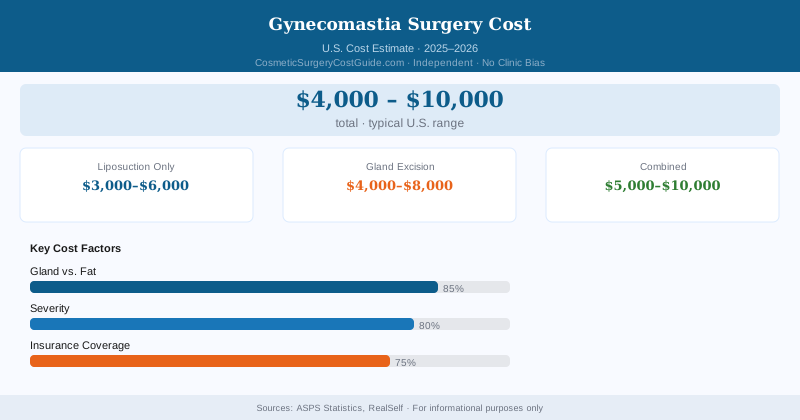
| Treatment Type | Surgeon Fee | All-In Cost |
|---|---|---|
| Liposuction only (pseudogynecomastia) | $2,500–$4,500 | $3,000–$5,500 |
| Lipo + glandular excision (true gynecomastia) | $4,000–$6,500 | $5,000–$8,000 |
| Glandular excision only (minimal fat) | $3,500–$5,500 | $4,500–$7,500 |
| VASER lipo + glandular excision | $4,500–$7,000 | $5,500–$9,000 |
| Anesthesia + facility fee | — | $1,500–$2,500 |
| Pre-op ultrasound (diagnostic) | — | $200–$400 |
True Gynecomastia vs. Pseudogynecomastia — This Distinction Is Everything
Pseudogynecomastia is chest enlargement caused by fat deposits — not glandular tissue. It’s essentially localized fat that creates a breast-like appearance. The fix is liposuction. Cost: $3,000–$5,500 all-in.
True gynecomastia involves actual glandular (breast) tissue behind the nipple-areola complex. This tissue doesn’t respond to diet or exercise — it won’t go away on its own. Liposuction alone won’t fully correct it either. True gynecomastia requires glandular excision (direct removal through a small incision at the areola edge) in addition to or instead of liposuction. Cost: $5,000–$8,000 all-in.
The diagnostic step is a chest ultrasound ($200–$400). This confirms whether glandular tissue is present and rules out other causes, including rare cases that require medical evaluation before surgery. Don’t skip it — a surgeon who quotes you for liposuction alone without ruling out glandular tissue is cutting corners.
VASER ultrasound-assisted liposuction is increasingly used for gynecomastia because it emulsifies fat more precisely than traditional liposuction and causes less trauma to surrounding tissue — which matters in the chest where you want smooth contouring without irregularities.
VASER costs $500–$1,500 more than traditional lipo. For a condition where the aesthetic result is highly visible (a bare chest), the extra precision may be worth it. Ask your surgeon specifically about their technique for chest cases.
What Drives Price Variation
Surgeon board certification: ABPS (American Board of Plastic Surgery) certification is the standard for plastic surgery. Some providers marketing gynecomastia surgery hold ABOtO (otolaryngology) or other board certifications without specific plastic surgery training. This distinction matters — chest contouring requires spatial judgment and surgical technique specific to plastic surgery. Verify ABPS certification at certificationmatters.org.
Technique and technology: Traditional liposuction costs less than VASER or power-assisted liposuction. The difference is typically $500–$1,500. For chest contouring specifically, many surgeons prefer ultrasound-assisted techniques for the smoother result.
Anesthesia type: Local anesthesia with sedation (common for liposuction-only cases) costs less than general anesthesia ($800–$1,200 vs. $1,200–$2,000). Glandular excision typically requires deeper sedation or general anesthesia.
Geographic location: Expect to pay 20–40% more in major coastal metros compared to mid-size cities.
Body Weight and Surgical Expectations
Gynecomastia surgery isn’t weight loss surgery. If you’re carrying significant extra weight overall, liposuction will remove chest fat, but the overall result may be less defined than a patient closer to their goal weight. Most board-certified surgeons recommend being within 20–30 lbs of a stable goal weight before surgery.
Avoid anabolic steroids, testosterone supplements, or DHEA for at least 6 months before and after surgery. These are among the most common causes of gynecomastia recurrence — and they can complicate surgical healing. Be honest with your surgeon about supplement and medication history.
Insurance Coverage: What It Takes
Coverage isn’t impossible — but it’s not easy. You’ll generally need:
- A formal diagnosis from a physician (not a surgeon’s self-referral)
- Ultrasound imaging confirming glandular tissue
- Documentation of physical symptoms (pain, skin breakdown) OR psychiatric evaluation documenting psychological harm
- Pre-authorization from your insurance carrier — in writing, before surgery
Many patients find the insurance process takes 3–6 months and still results in denial. For straightforward cases, scheduling cash-pay surgery is often faster and less stressful than the authorization process.
Recovery and Results
Most patients return to desk work in 5–7 days. You’ll wear a compression vest for 3–4 weeks. Heavy upper-body exercise is off-limits for 4–6 weeks. Final results — including resolution of swelling — are visible at 3–6 months.
The results are permanent for the glandular tissue component. Stay near your goal weight, avoid hormonal triggers, and recurrence is unlikely.
Frequently Asked Questions
If you have true gynecomastia, the glandular tissue is physically removed during surgery — it can't grow back on its own. However, certain medications (steroids, some antidepressants, hormone therapies) and recreational drug use can stimulate new glandular tissue growth. Significant weight gain can also cause pseudogynecomastia (fat-based chest enlargement) to recur. Stay near your goal weight and avoid known hormonal triggers, and recurrence is unlikely.
Sometimes. Insurance carriers may cover gynecomastia surgery when the condition causes documented physical symptoms (chronic pain, skin irritation, infection under breast tissue) or significant psychological harm supported by psychiatric documentation. You'll need a formal diagnosis, ultrasound confirming glandular tissue, and often a letter from your primary care physician. Coverage isn't guaranteed — prior authorization is required and denials are common. Cash-pay surgery is often faster than navigating the insurance process.
The simplest self-check: pinch the tissue behind your nipple. If you feel a firm, rubbery disc of tissue separate from the surrounding fat, that's likely glandular tissue — true gynecomastia. Pure pseudogynecomastia feels uniformly soft, like the fat anywhere else on your body. An ultrasound ($200–$400) is the standard diagnostic step before surgery — it confirms glandular tissue presence and rules out other causes. Don't skip this step.