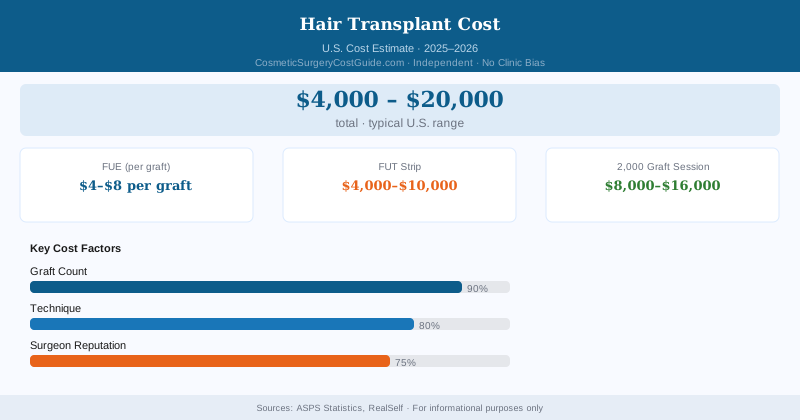
FUE vs. FUT: here’s what actually separates them, and which one you should probably be asking for.
Both techniques permanently restore hair. Both pull follicles from your genetically stable donor zone — the back and sides of your head — and move them to thinning or bald areas where they’ll keep growing for the rest of your life. That part’s the same. What differs is how the donor follicles are harvested, what scar you’re left with, and what you’ll pay.
The ISHRS (International Society of Hair Restoration Surgery) estimates that over 700,000 hair restoration procedures are performed globally each year. In the US, FUE has largely overtaken FUT in terms of patient preference — though FUT still has real advantages in the right situation.
Hair Transplant Cost in 2025
| Grafts Needed | Area Covered | FUE Total Cost | FUT Total Cost |
|---|---|---|---|
| 500–1,000 grafts | Hairline refinement | $3,000–$6,000 | $2,500–$4,500 |
| 1,000–2,000 grafts | Front hairline recession | $5,000–$10,000 | $4,000–$8,000 |
| 2,000–3,000 grafts | Moderate thinning | $8,000–$14,000 | $6,000–$11,000 |
| 3,000–4,000 grafts | Significant thinning | $12,000–$18,000 | $9,000–$14,000 |
| 4,000+ grafts | Extensive balding | $15,000–$25,000+ | $12,000–$20,000 |
FUE vs. FUT: The Key Technical Distinction
FUT (Follicular Unit Transplantation / “strip method”): A strip of scalp is removed from the donor area, individual follicular units are dissected from it under microscopes, and the donor site is closed with sutures — leaving a linear scar.
- Pros: More grafts available per session; lower cost per graft; better for large sessions
- Cons: Linear scar that can be visible with very short haircuts
- Best for: Patients who wear their hair longer and need larger graft counts
FUE (Follicular Unit Extraction): Individual follicular units are extracted one by one using a small punch (0.8–1mm diameter), leaving tiny dot scars scattered across the donor area rather than a single line.
- Pros: No linear scar; shorter recovery; donor area can be kept shorter
- Cons: More expensive per graft; slower extraction; limits on very large sessions
- Best for: Patients who prefer short hairstyles or are concerned about scar visibility
The standard way to compare hair transplant pricing is cost per graft:
- FUE: $3–$10 per graft
- FUT: $2.50–$7 per graft
- Robotic FUE (ARTAS system): $6–$12 per graft (premium pricing for robotic extraction)
When comparing quotes, ask for the cost per graft and the number of grafts in the quote. A $6,000 quote for 1,500 grafts ($4/graft) is very different from a $6,000 quote for 800 grafts ($7.50/graft). Both the quantity and the per-graft price matter.
What Determines How Many Grafts You Need
Three things drive the number:
- The size of the area to be covered
- The desired density
- Your donor hair characteristics (density, caliber, and whether it’s curly or straight)
Your consultation will include an assessment of your current hair loss pattern, donor density, and a projection of how many grafts can realistically be harvested and where they should go. Most patients need 1,000–3,000 grafts for typical hairline recession and crown thinning. Extensive balding can require 3,000–5,000+ grafts, sometimes in staged procedures spread across multiple days or visits.
Is the Result Permanent?
Transplanted follicles come from your “permanent zone” — the back and sides, which are genetically programmed not to undergo the same DHT-driven miniaturization as the top of the scalp. Once established, those follicles keep growing hair indefinitely.
But here’s what a lot of first-time patients don’t think through: your native hair keeps thinning. Someone who gets a hairline transplant at 30 might develop significant thinning behind the transplanted zone by 45. That means a second procedure — or medications to slow the progression of loss in untreated areas. A good surgeon plans for your entire lifetime of hair loss, not just where you are today.
Non-Surgical Alternatives
Before committing to a transplant, non-surgical options can help protect existing hair and may reduce the extent of future procedures needed:
- Minoxidil (topical/oral): FDA-approved for hair retention; $15–$50/month
- Finasteride (Propecia): FDA-approved DHT blocker; $30–$80/month (generic)
- Dutasteride: Stronger DHT blocker; off-label; $30–$80/month
- PRP scalp injections: $700–$1,500/session, 4–6 sessions; supported by clinical evidence for density improvement
Most patients use one or more of these after a transplant to protect non-transplanted hair.
Hair transplant results are highly dependent on surgeon skill and graft handling technique. Grafts are living tissue — they die quickly if mishandled, stored improperly, or implanted at the wrong angle. Graft survival rate (the percentage of transplanted follicles that actually grow) varies significantly by practice. Top practices report 90–95%+ survival; lower-quality practices may see 60–70%, producing noticeably thinner results from the same graft count. Research your surgeon thoroughly — look at before-and-after cases from patients who are 12+ months post-procedure, not just immediate post-op photos.
Medical Tourism for Hair Transplants
Turkey — particularly Istanbul — has become the dominant destination for international hair transplant tourism, with prices of $1,500–$3,500 for procedures that would cost $8,000–$15,000 in the US. Many clinics there are reputable and produce excellent results.
The trade-offs are real though: limited ability for follow-up if complications arise, variable clinic quality, and the cost of travel and accommodation. If you’re considering this route, verified before-and-after photos from actual patients (not clinic-provided stock imagery) and third-party review platforms are essential research tools.
Bottom Line
FUE for hairline recession (1,500–2,500 grafts): budget $6,000–$12,000 at a reputable US practice. FUT for the same graft count: $5,000–$9,000. Robotic FUE (ARTAS): $9,000–$15,000. Factor in ongoing maintenance medications ($50–$80/month) as part of the real cost. Don’t choose based on price alone — a botched transplant is expensive to fix and sometimes can’t be fully corrected.