The International Hyperhidrosis Society estimates that approximately 15 million Americans live with hyperhidrosis — excessive sweating that goes far beyond what normal temperature regulation requires. Ruined shirts, avoided handshakes, social events spent calculating where to sit so no one sees the sweat patches. It’s a genuinely disabling condition for the people dealing with it.
The treatments work. Here’s a practical protocol for figuring out which one applies to your situation, in the order you should try them.
Hyperhidrosis Treatment Cost Comparison
| Treatment | Cost | Duration | Effectiveness |
|---|---|---|---|
| Prescription antiperspirant (Qbrexza, Drysol) | $30–$100/month | Ongoing | Moderate |
| Botox (underarms) | $1,000–$1,500/session | 6–12 months | Very good |
| Botox (palms or feet) | $1,000–$2,000/session | 4–6 months | Very good (palms are painful) |
| miraDry | $2,000–$4,000 | Permanent | Very good to excellent |
| Iontophoresis device | $400–$600 (device) | Ongoing sessions | Good for palms/feet |
| Qbrexza wipes (Rx) | $50–$100/month | Ongoing | Moderate |
| Oral anticholinergics | $20–$100/month | Ongoing | Moderate (side effects) |
| Surgical (ETS – endoscopic thoracic sympathectomy) | $4,000–$12,000 | Permanent | Excellent, but significant risks |
Step 1: Start With Prescription Topicals (and Document the Failure)
Before anything else, try prescription-strength topical treatments — not because they’re the best, but because insurance typically requires you to have tried and failed these before covering more aggressive options.
Drysol (aluminum chloride) and Qbrexza wipes (glycopyrronium) are the two most common starting points. Cost runs $30–$100/month. For mild-to-moderate underarm sweating, these work reasonably well. For moderate-to-severe hyperhidrosis, they’ll probably fall short.
Document that you tried them. This paper trail matters for insurance coverage of Botox later.
Step 2: Botox — The Most Common Medical Treatment
Botox (onabotulinumtoxinA) is FDA-approved specifically for primary axillary (underarm) hyperhidrosis. It blocks acetylcholine release at sweat gland nerve junctions, dramatically reducing sweating in the treated area within 1–2 weeks.
What to expect:
- 25–50 injections per underarm using a very fine needle
- Significant reduction in sweating within 1–2 weeks
- Effect lasts 6–12 months (longer in underarms than other areas)
- Retreatment needed annually or twice yearly
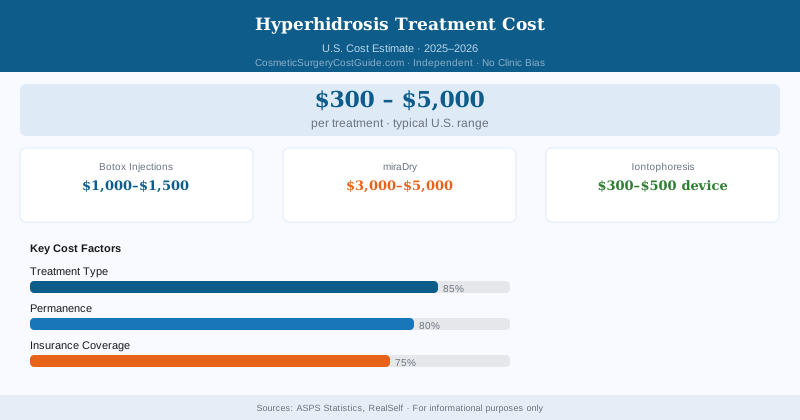
Cost: $1,000–$1,500 per session for both underarms.
Off-label use for palms and feet: Botox is also used for palmar and plantar hyperhidrosis, but fair warning — the palms in particular are more painful to treat. Topical numbing is used, but it’s still uncomfortable. Effect may also be shorter (4–6 months). Cost: $1,000–$2,000 per session.
This is where hyperhidrosis differs from purely cosmetic procedures. It’s a medical condition, and several treatments may actually be covered:
- Prescription topical antiperspirants: Often covered if non-prescription options have been tried
- Botox for underarms: May be covered if diagnosis is documented and conservative treatments have failed. Requires prior authorization. The FDA approval for this specific indication strengthens coverage arguments considerably.
- miraDry: Less commonly covered; many insurers treat it as newer technology
- Iontophoresis: Occasionally covered; devices can be prescribed by physicians
The key: have your diagnosis documented by a physician using the Hyperhidrosis Disease Severity Scale (HDSS), document that conservative treatments failed, and submit a detailed pre-authorization request for Botox. This coverage path is real.
Step 3: miraDry — If You Want Permanent
miraDry uses microwave energy to permanently destroy sweat (eccrine) and odor (apocrine) glands in the underarm area. Once they’re gone, they don’t regenerate.
What to expect:
- One session with local anesthesia; about 1 hour
- Swelling and discomfort for 1–2 weeks
- 80–90% reduction in sweating; full results at 3 months
- Some practices recommend a second session for maximum effect
Cost: $2,000–$4,000 for a single session. Two-session packages run $3,000–$5,000.
The math: Annual Botox at $1,200/year means miraDry breaks even at about 2–3 years. For anyone planning long-term treatment, the permanence is a real advantage.
Limitation: Only approved for underarms. Not an option for palms, feet, or the scalp.
Step 4: Iontophoresis for Palms and Feet
If your problem is palmar or plantar hyperhidrosis (hands or feet), iontophoresis is your best non-invasive option. It uses mild electrical current passed through tap water to temporarily suppress sweat gland activity.
The process: hands or feet are immersed in water while a low current is applied for 20–30 minutes, 3–4 times per week initially, then maintenance sessions.
A device costs $400–$600 (no prescription required; Hidrex and RA Fischer are popular brands). After the upfront purchase, ongoing treatment is essentially free.
The trade-off is commitment. It only works if you actually do the sessions regularly, and traveling with the device takes planning.
Surgical treatment (ETS — endoscopic thoracic sympathectomy) for severe hyperhidrosis carries a significant risk of compensatory hyperhidrosis — uncontrolled sweating that develops in the trunk, back, or thighs after surgery. This complication occurs in 30–80% of patients to varying degrees, and in severe cases it’s more disabling than the original condition. ETS should only be considered after every other option has failed, and you need to go into it fully informed about the compensatory sweating risk.
Lifestyle Factors That Help
Not replacements for treatment, but these reduce severity:
- Loose-fitting, breathable clothing (reduces trapped heat that triggers sweating)
- Antiperspirant applied to dry skin at night — more effective than morning application
- Cutting back on trigger foods (spicy food, caffeine, alcohol) for some patients
- Managing anxiety — psychological triggers significantly worsen hyperhidrosis for most people
Bottom Line
Start with prescription topical treatments and document the results. If they don’t cut it, Botox ($1,000–$1,500 per session, lasting 6–12 months) is the most effective medical option for underarms — and it may be covered if you’ve built a proper documentation trail. For a permanent solution, miraDry ($2,000–$4,000) beats annual Botox costs in 2–3 years. For palms and feet: iontophoresis ($400–$600 device) plus the discipline to do the sessions regularly. Don’t skip straight to ETS without exhausting everything else first.