Before IPL: a face with years of accumulated sun damage — scattered brown spots, diffuse redness that won’t quit, visible capillaries along the nose, and an overall unevenness that no amount of foundation quite covers. After a course of 3–5 IPL photofacial treatments: measurably clearer, more even-toned skin with significantly reduced redness and brown pigmentation.
That transformation is why the AAD (American Academy of Dermatology) includes IPL among the recommended treatments for sun-damaged skin and rosacea. It’s not magic, and it doesn’t fix wrinkles — but for pigmentation and vascular concerns, it’s often the most cost-effective tool available.
IPL Photofacial Cost in 2025
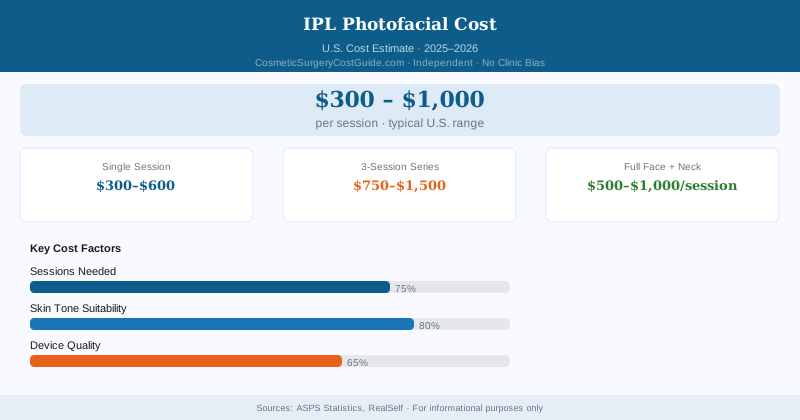
| Area Treated | Cost Per Session | Sessions Needed | Total Course Cost |
|---|---|---|---|
| Full face | $300–$700 | 3–5 | $900–$3,500 |
| Chest/décolletage | $400–$750 | 3–5 | $1,200–$3,750 |
| Hands | $250–$500 | 3–4 | $750–$2,000 |
| Neck | $300–$600 | 3–5 | $900–$3,000 |
| Arms | $400–$700 | 3–5 | $1,200–$3,500 |
| Face + neck combo | $500–$1,000 | 3–5 | $1,500–$5,000 |
| Maintenance session (after full course) | $300–$500 | 1/year | $300–$500/yr |
What IPL Actually Treats
IPL works with multiple wavelengths of light (not a single focused laser beam) filtered to target chromophores — color-bearing molecules in the skin. Two main chromophore targets:
Brown pigment targets (melanin):
- Sunspots and age spots
- Freckles
- Flat pigmented lesions
- Melasma (with caution — settings matter a lot here)
Red/vascular targets (hemoglobin):
- Rosacea and diffuse facial redness
- Broken capillaries (telangiectasias)
- Post-acne redness
- Spider veins on the face
What IPL doesn’t address:
- Raised, textured lesions
- Deep wrinkles (laser resurfacing does more work here)
- Significant skin laxity
- Very deeply embedded dark spots
What Happens During a Treatment
Before: normal skin, maybe with active sunspots or visible redness.
During: 20–45 minutes for a full face. The sensation is a rubber band snap or flash of heat with each pulse. Contact cooling from the device minimizes discomfort.
Immediately after: Skin looks normal or mildly pink — not dramatically different.
Days 1–5: Brown spots darken significantly and look like “coffee grounds” on the skin surface. This is a good sign.
Days 5–14: Those darkened spots flake off, leaving smoother, more even skin underneath.
Most patients can wear makeup over the darkened spots and continue normal activities throughout. The results build with each treatment in the series.
When IPL targets a brown spot, the melanin absorbs the light energy and the pigment is pushed to the surface. Over the following days, it aggregates and darkens visibly. This is what success looks like — the treatment worked. Those darkened spots flake off over 5–14 days, leaving clearer skin beneath.
If you have an important event, schedule IPL at least 2 weeks ahead so the spots have time to flake off and redness can settle.
IPL for Rosacea: One of Its Best Applications
For rosacea — characterized by diffuse redness, flushing, and visible capillaries — IPL is one of the most effective non-prescription approaches available. The AAD recognizes light-based treatments including IPL as first-line options for the vascular component of rosacea. It doesn’t cure the condition, but a series of 3–5 treatments significantly reduces background redness and visible vessels.
Rosacea is chronic, so maintenance treatments 1–2 times per year are typically needed. Annual maintenance: $300–$600.
For patients spending ongoing money on prescription topicals (azelaic acid, metronidazole) for modest improvement, IPL often delivers a better return on investment — especially for the redness component.
IPL vs. Laser for Pigmentation
IPL advantages: Treats brown and red simultaneously in one session; covers larger areas quickly; lower per-session cost; handles vascular concerns that single-wavelength lasers may miss.
Laser advantages: More precise energy delivery; better for stubborn isolated spots; devices like Q-switched Nd:YAG and Picosure address certain melasma and resistant pigmentation more effectively; better track record on some skin tones.
For most patients with mixed sun damage — brown spots and redness together — IPL is a solid first-line treatment. If spots are stubborn or isolated and haven’t responded to IPL, targeted laser follow-up makes sense.
IPL on darker skin tones (Fitzpatrick III–VI) requires careful settings and a provider with real experience treating your skin type. High-energy settings on darker skin can cause burns, hyperpigmentation, or hypopigmentation. Melasma is particularly risky — IPL can trigger more melanin production in a condition already driven by melanin stimulation. If you have medium or dark skin, or if you have melasma, seek out a dermatologist specifically experienced with your skin type before committing to IPL.
How Many Treatments Are Needed?
Full course: 3–5 treatments spaced 3–4 weeks apart. Initial improvement is visible after 1–2 sessions; the full course gets the most comprehensive clearing.
Maintenance: After completing the initial course, annual or twice-annual sessions prevent sun damage from rebuilding. Maintenance sessions are less involved (and often less expensive) than initial treatments.
The SPF reality: IPL doesn’t prevent new sun damage. Patients who skip daily SPF will rebuild brown spots and need retreatment. The equation for lasting results is IPL plus consistent sun protection.
Where to Get IPL
- Dermatology offices: $400–$800/session; medical oversight on-site
- Plastic surgery practices: $400–$800/session
- Physician-supervised medical spas: $300–$700/session
- Medical spas without adequate physician supervision: lower prices, variable safety
For darker skin tones or complex pigmentation concerns, a dermatologist is the right choice. For straightforward sun damage on lighter skin in an otherwise healthy patient, a well-trained provider at a physician-supervised med spa is typically appropriate.
Bottom Line
A 3-session IPL course for sun damage and redness: $900–$2,100 at most practices. For patients with brown spots, rosacea, or both, it’s one of the better value aesthetic treatments available. Use SPF 30+ every day after treatment — the results last much longer when you protect the investment.