Most people research labiaplasty quietly. They don’t talk about it with friends, they’re hesitant to ask their regular OB, and they’re not sure where to find information that isn’t either overly clinical or clearly written to sell them something.
So here’s a candid breakdown — what it costs, what’s actually happening in the OR, and how to think through whether it makes sense for you.
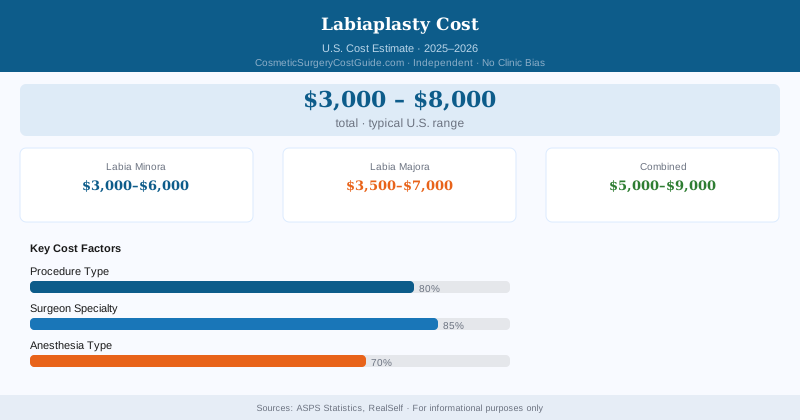
ASPS reported a 53% increase in labiaplasty procedures over recent years, making it one of the fastest-growing procedures in plastic surgery. ASPS 2024 data puts the average surgeon fee at $3,053. All-in costs with anesthesia and facility typically run $4,500–$8,000.
Labiaplasty Cost Breakdown
| Cost Component | Typical Range |
|---|---|
| Surgeon’s fee (labia minora) | $2,500–$5,500 |
| Surgeon’s fee (labia majora) | $2,000–$4,500 |
| Surgeon’s fee (both) | $3,500–$7,000 |
| Anesthesia (IV sedation or local) | $500–$1,500 |
| Facility fee | $500–$1,200 |
| Total all-in (labia minora) | $3,500–$7,500 |
| Total all-in (comprehensive) | $5,000–$10,000 |
What Labiaplasty Involves
Labiaplasty most commonly means reduction of the labia minora (inner lips), though procedures on the labia majora, clitoral hood, and vaginal opening (introitoplasty) are also performed. The goal is to reduce size, correct asymmetry, or both.
Two main techniques:
- Trim technique: The edge of the labia is trimmed along its length. Simpler and faster; removes the darkened edge tissue that many patients specifically want gone.
- Wedge technique: A pie-shaped section is removed from the middle of the labia, preserving the natural edge. Tends to look more natural; preferred by many experienced surgeons.
The procedure takes 1–2 hours under local anesthesia with IV sedation (or occasionally general anesthesia). Dissolvable sutures are used — you won’t need to come back to have them removed.
Who Seeks This Procedure and Why
Women come to this for a range of reasons that are all legitimate:
- Physical discomfort during exercise, cycling, or intercourse from excess tissue getting caught or twisted
- Visible protrusion in tight-fitting clothing or athletic wear
- Hygiene difficulties related to anatomy
- Aesthetic concerns — symmetry, size, appearance
Physical symptoms that cause functional impairment matter beyond just personal comfort. They may qualify as a medical indication, which is the threshold for potential insurance coverage. A lot of women have a combination of functional and aesthetic reasons, and both are valid.
Insurance companies evaluate labiaplasty claims based on documented functional symptoms: chronic irritation, recurrent infections related to anatomy, pain with activity or intercourse. If you have these symptoms, document them in your gynecologist’s records before approaching insurance. Insurers typically require conservative treatment attempts first — specific undergarments, hygiene measures — before approving surgery. Pure aesthetic concern is classified as cosmetic and not covered.
Insurance Coverage
Coverage for labiaplasty is possible but not common. To have any real shot at it:
- You need documented functional symptoms in your medical records
- Your gynecologist or primary care doctor supports the medical indication
- You must pre-authorize with your insurance company before proceeding
- Some insurers have blanket exclusions for all genital cosmetic procedures — in that case, appeal is your only option
Expect significant appeals effort if you pursue this path. Having a physician who will write detailed supporting documentation helps considerably more than doing it yourself.
Clitoral Hood Reduction (Hoodectomy)
Often performed alongside labiaplasty, hoodectomy reduces excess skin over the clitoral area. It’s typically a smaller part of a combined procedure — adding clitoral hood work to a labiaplasty usually adds $500–$1,500 to the surgeon’s fee.
Recovery
Labiaplasty recovery is more manageable than a lot of people expect:
- Swelling and bruising: significant for first 2 weeks
- Return to desk work: 3–5 days
- Return to physical activity: 4–6 weeks
- Return to sexual activity: 6–8 weeks
- Full tissue healing: 6–12 weeks
Post-op care costs:
- Post-op icing supplies: $20–$50
- Medications (antibiotics, pain relievers): $60–$130
- Specialized underwear/padded shorts: $30–$80
Surgeon experience matters more for labiaplasty than it does for many procedures. The amount of tissue removed has to be exactly right — too little and the patient is dissatisfied; too much and the result can include loss of sensation or chronic discomfort that’s difficult to correct. Ask your surgeon how many of these procedures they perform monthly, request to see their portfolio of results, and ask about their revision rate. Board certification in plastic surgery or gynecology, combined with specific training in cosmetic gynecology, is what you’re looking for.
Combining with Other Procedures
Labiaplasty is sometimes included in a mommy makeover, combined with vaginoplasty (vaginal tightening), or scheduled alongside a tummy tuck or liposuction. Combining reduces overall cost slightly compared to separate procedures and means one recovery period instead of multiple.
Vaginoplasty combined with labiaplasty: $6,500–$12,000 all-in for the combined procedure.
Bottom Line
For labia minora reduction with a board-certified surgeon experienced in this specific procedure: budget $4,000–$7,000 all-in in most US markets. If you have functional symptoms — discomfort, irritation, hygiene issues — document them thoroughly with your gynecologist before scheduling. Insurance rarely covers it, but rarely isn’t never, and the documentation work before submitting a claim costs you nothing except a few appointments.