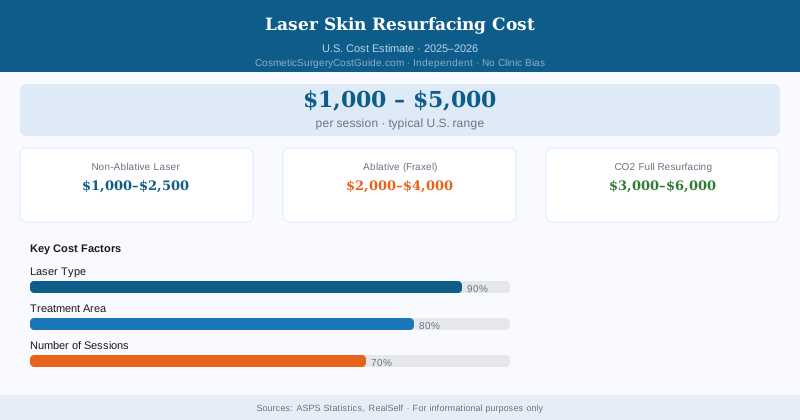
Here’s the choice every laser patient faces: dramatic results with real downtime, or modest results with almost none. That tradeoff — ablative versus non-ablative — is the core of laser resurfacing. And it explains why two patients can both have “laser” done and walk away with wildly different experiences and price tags.
Ablative lasers vaporize the surface of your skin so it heals fresh. Non-ablative lasers heat what’s underneath without disturbing what’s on top. Same category, completely different commitment. Here’s what each costs and which makes sense when.
Laser Resurfacing Cost at a Glance
| Laser Type | Treatment | Cost Per Session | Sessions Needed | Downtime |
|---|---|---|---|---|
| Fully ablative CO2 | Full-face resurfacing | $2,000–$5,000 | 1 | 7–14 days |
| Fully ablative Erbium | Full-face resurfacing | $1,500–$3,500 | 1 | 5–10 days |
| Fractional ablative CO2 (Fraxel CO2) | Full face | $1,500–$3,000 | 1–2 | 5–10 days |
| Fractional non-ablative (Fraxel Restore) | Full face | $1,000–$2,000 | 3–5 | 2–4 days |
| IPL (Intense Pulsed Light) | Full face | $400–$800 | 3–5 | 1–2 days |
| Halo laser (hybrid) | Full face | $1,500–$2,500 | 1–2 | 5–7 days |
| Clear + Brilliant | Full face | $300–$600 | 4–6 | 1–2 days |
Ablative vs. Non-Ablative: The Core Distinction
Ablative lasers vaporize the outer layers of skin. The skin heals from scratch, and the regenerated skin is smoother, tighter, and more evenly pigmented. Results are dramatic but require significant downtime — we’re talking raw, red skin that heals over days to weeks.
Non-ablative lasers heat the underlying dermis without removing the surface skin, stimulating collagen production while the outer skin stays intact. Much less downtime, but more subtle results. You’ll typically need multiple sessions to approach what ablative achieves in one.
Fractional lasers (both ablative and non-ablative) treat columns of tissue separated by untreated skin — dramatically reducing downtime compared to fully ablative approaches while still producing meaningful results. Fraxel is the dominant brand name, but many manufacturers make fractional platforms.
CO2 Laser: The Gold Standard for Wrinkles
Fully ablative CO2 laser resurfacing is the most powerful single-session treatment for facial aging available in aesthetic medicine. A full-face CO2 treatment can produce results comparable to a facelift when it comes to wrinkles and skin quality — though it doesn’t do anything for structural changes like sagging jowls.
According to ASPS statistics, demand for laser resurfacing has grown steadily as patients seek non-surgical results that actually hold up. Full-face CO2 at $2,500–$5,000 isn’t cheap, and 10–14 days of significant recovery (red, weeping skin that heals into a new surface) is a real commitment. But for appropriate candidates with deep wrinkles, significant sun damage, or severe acne scarring, the before-and-after can be genuinely transformative.
The Halo hybrid fractional laser combines ablative and non-ablative wavelengths in a single treatment. It produces results that approach ablative without the most extreme downtime — typically 5–7 days of significant social downtime (red, raw areas that peel).
At $1,500–$2,500, Halo has become one of the more popular recommendations for patients who want meaningful improvement but can’t take two weeks off. Many providers offer better package pricing for Halo than for single sessions — ask.
Clear + Brilliant: The Maintenance Laser
Clear + Brilliant is a fractional non-ablative laser running at much lower intensity than Fraxel. At $300–$600 per session, each treatment produces minimal improvement on its own — but regular quarterly treatments add up to solid results for skin quality. It’s popular as a “skin maintenance” treatment, not a correction for significant aging, but for keeping good skin looking good and slowing the slow creep of sun damage.
IPL Photofacial: For Pigmentation
IPL (Intense Pulsed Light) isn’t technically a laser — it uses broad-spectrum light filtered to target specific chromophores, meaning brown spots and red vessels. It’s highly effective for:
- Sun spots and age spots
- Rosacea and facial redness
- Broken capillaries
- Mild texture improvement
The AAD recognizes IPL photofacials as a well-established approach for facial pigmentation and redness. At $400–$800 per session with 3–5 sessions for best results, it’s accessible — but don’t expect it to touch wrinkles or significant skin laxity. That’s not what it’s designed for.
What Affects Laser Resurfacing Pricing
Laser platform: Facilities that’ve invested in premium platforms (Fraxel, Lumenis, Cutera, etc.) often charge more than those running older or less advanced equipment.
Geographic location: As with all aesthetic procedures, major metro areas charge more.
Treatment area size: Full-face costs more than treating only the perioral area or periorbital area. Some practices price by zone.
Provider type: Board-certified dermatologists and plastic surgeons tend to charge more than med spa providers. For more powerful ablative treatments, the provider’s clinical background matters — selecting appropriate settings and managing complications is where experience counts.
Laser resurfacing settings require precise calibration for each patient’s skin type. The same device at the same settings produces very different outcomes — and different risks — in Fitzpatrick I (fair) versus Fitzpatrick IV (medium-dark) skin. Hyperpigmentation and hypopigmentation after aggressive laser treatment in darker skin tones is a real and lasting complication. Always work with a provider who has specific experience with your skin tone, and ensure they’re using settings appropriate for your Fitzpatrick type. Never let a provider use aggressive ablative settings “just to see” on darker skin.
Package Pricing and Seasonal Timing
Many practices offer package pricing on non-ablative lasers: packages of 3 or 5 sessions often run 15–25% less than the per-session rate.
Timing matters for ablative treatments. Freshly resurfaced skin is extremely sun-sensitive. Most providers recommend ablative treatments in fall or winter when sun exposure is easier to manage.
Bottom Line
For significant sun damage, wrinkles, or acne scars: a fractional ablative CO2 treatment ($1,500–$3,000) delivers dramatic single-session results with 5–10 days of recovery. For maintenance and prevention: quarterly Clear + Brilliant at $300–$500/session. For pigmentation and redness: IPL photofacial at $400–$800/session for 3–5 sessions. Match the treatment to your specific concern and skin type — always with a provider who has experience with your Fitzpatrick type.
Frequently Asked Questions
Ablative laser treatments (CO2 and Erbium) typically cost $2,500–$5,000 per session due to their intensity and results, while non-ablative options like Fraxel and IPL range from $1,000–$3,000 per treatment. Most patients need 3–6 sessions of non-ablative lasers versus 1–2 sessions of ablative, making total costs comparable despite per-session differences.
Laser skin resurfacing is considered cosmetic and is not covered by most health insurance plans, including Medicare and Medicaid. You can expect to pay the full cost out-of-pocket, though some practices offer financing plans or payment packages to spread costs over several months.
Ablative lasers require 1–2 weeks of significant downtime with redness, peeling, and skin sensitivity, while non-ablative treatments allow you to return to normal activities immediately or within 24 hours with minimal visible recovery. This downtime difference is a major factor in choosing between the two types and affects your total treatment timeline.