Lip filler isn’t a permanent commitment. It’s the most reversible cosmetic procedure you can have. Hyaluronidase dissolves it completely in 24–48 hours — a fact most patients don’t know before they book. That reversibility is exactly why filler is the starting point for almost everyone exploring lip augmentation, and why the permanent options remain a small fraction of the market.
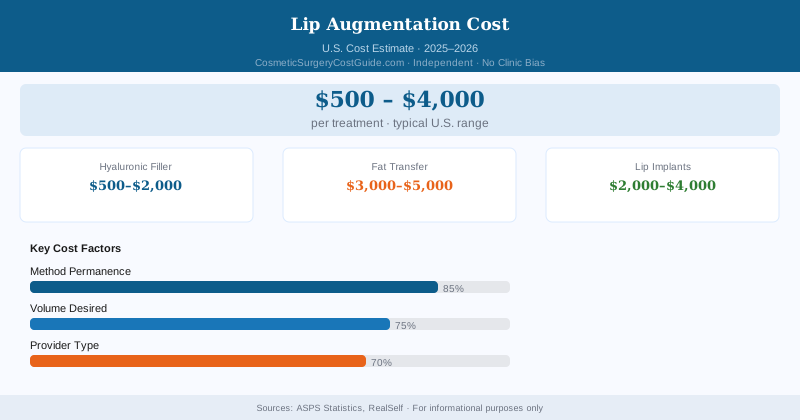
But “lip augmentation” covers a range of options — filler, fat transfer, implants, and surgical lip lifts — with costs from $600 to $5,000+ and lifespans from 6 months to permanent. Here’s how each option performs over time and what it actually costs.
Cost comparison across all lip augmentation options
| Option | Cost | Duration | Reversible? |
|---|---|---|---|
| Hyaluronic acid filler (1 syringe) | $600–$1,200 | 6–12 months | Fully — hyaluronidase dissolves it |
| Fat transfer to lips | $2,000–$5,000 | Semi-permanent (partial) | No |
| Lip implants (PermaLip silicone) | $2,000–$4,000 | Permanent | Yes — removable |
| Surgical lip lift (subnasal bullhorn) | $2,000–$4,000 | Permanent | No |
According to the American Society of Plastic Surgeons, soft tissue fillers — including lip filler — are consistently among the top five nonsurgical cosmetic procedures performed in the US, with millions of syringes administered annually. The FDA has approved multiple hyaluronic acid filler formulations specifically for lip augmentation, including Juvederm Ultra Plus, Juvederm Volbella, and Restylane Kysse.
Hyaluronic acid filler — why it’s the default starting point
Hyaluronic acid (HA) is a naturally occurring substance in the body. HA fillers — Juvederm Ultra Plus, Juvederm Volbella, Restylane Kysse, Restylane Silk — are the most commonly used products for lip augmentation. You’re in and out of the office in 20–30 minutes with minimal recovery.
At $600–$1,200 per syringe, one syringe (1mL) is the standard starting amount. One syringe adds visible fullness without dramatic change. Patients who want more volume sometimes start with 1.5 syringes — but beginning conservatively at 1 syringe, reviewing results after swelling resolves (about 2 weeks), and adding more at a follow-up is the smarter approach.
What makes HA filler unique: hyaluronidase can dissolve it completely within 24–48 hours. If you don’t like the result, it’s gone. No other augmentation option offers this.
The 5-year cost math — filler vs. one procedure
This is where the math gets interesting. At $800/syringe, two sessions per year, over five years: $8,000. Over ten years: $16,000. That’s considerably more than a one-time surgical option — if the surgical result is something you’d want permanently.
The question isn’t just cost. It’s this: Do you want the same exact lip, forever? Or do you want the flexibility to adjust volume up, down, or not at all based on how you feel about it? For most patients, the flexibility of filler wins — you’re not locked into anything.
Filler’s reversibility isn’t just a safety net for mistakes. It’s useful as preferences change. A 28-year-old who wants noticeable volume might prefer subtlety at 38. A patient recovering from illness might want to pause treatment. Filler accommodates all of this. Permanent options don’t. Before committing to any surgical or semi-permanent lip procedure, ask yourself whether you’d want the same result in 10 years — and whether you’re confident enough in your aesthetic preferences to say yes.
Fat transfer to lips — semi-permanent but unpredictable
Fat transfer harvests fat via mini-liposuction from another area of the body (typically abdomen or inner thigh) and injects it into the lips. Because it uses your own tissue, there’s no foreign body. But it comes with a catch: fat retention is unpredictable.
Typically 30–60% of transferred fat survives long-term. What remains is genuinely long-lasting — potentially permanent. But you can’t predict exactly what that percentage will be, and you can’t dissolve it if you don’t like the result. Swelling after fat transfer to the lips is also more significant and longer-lasting than with filler.
All-in cost: $2,000–$5,000, depending on whether it’s standalone or combined with another procedure (facelift, body contouring) where facility costs are shared. Fat transfer makes the most sense as an add-on to a procedure you’re already having, not as a standalone lip treatment.
PermaLip silicone implants — volume without the maintenance cycle
PermaLip is an FDA-cleared, soft solid silicone implant inserted through tiny incisions at the corners of the mouth. It sits inside the natural lip channel and provides permanent volume without dissolving.
Cost: $2,000–$4,000 all-in, including surgeon fee, anesthesia, and facility. Recovery involves noticeable swelling for 7–14 days. What distinguishes implants from other permanent options: they’re removable and replaceable. If you want a different size or want to stop, the implant comes out. That makes them more flexible than fat transfer, even though both are in the “permanent” category.
Implants are less adjustable than filler for subtle tweaks, and a small percentage of patients experience migration, firmness, or foreign-body sensation. But for patients who’ve been maintaining filler for years and consistently love the volume, implants eliminate the maintenance cycle.
Surgical lip lift — different problem, different procedure
A lip lift is frequently confused with lip augmentation, but it addresses a different concern entirely. As lips thin with age, the philtrum (the space between the base of the nose and the top lip) elongates — the upper lip drops downward, showing less pink lip tissue even with filler.
A subnasal bullhorn lip lift removes a small strip of skin just below the nose, shortening the philtrum and rolling the upper lip upward. This reveals more pink lip tissue and creates a more youthful lip shape — without necessarily adding volume.
Cost: $2,000–$4,000 standalone. The scar sits right at the base of the nose and is generally well-concealed once healed. Many patients combine a lip lift with filler for both shape correction and volume.
The lip lift does nothing for volume. If your complaint is thin lips, filler is the answer. If your complaint is a long philtrum and a lip that’s dropped with age, a lip lift addresses the root cause — filler applied to a long philtrum just makes the philtrum look fuller, not shorter.
Vascular occlusion — filler blocking a blood vessel in or near the lip — is a medical emergency. The lips have a rich blood supply and are one of the higher-risk injection areas. Signs include extreme pain, white discoloration, and skin changes after injection. Immediate hyaluronidase injection is the treatment. Every lip injector must have hyaluronidase on hand and know how to use it. Before booking any lip injection appointment, ask directly: “Do you have hyaluronidase, and have you treated a vascular occlusion before?” A provider who hesitates or doesn’t know shouldn’t be injecting lips.
Why the “duck lip” exists — and how to avoid it
The overfilled, unnatural lip result comes from too much product, wrong product selection, or poor injection technique — not from lip filler itself. Specifically:
- Too much volume for the patient’s natural lip anatomy
- Filler injected into the wrong plane (too superficial creates lumps; too deep changes shape without definition)
- Wrong product — high-viscosity fillers intended for cheeks don’t behave the same in lips
- Injecting too much at once rather than building gradually
The fix: find an injector with a visible portfolio of lip work you’d actually want. Start with less than you think you need. Review results after 2 weeks of swelling resolves. Add more if you want — you can always go up, and with HA filler you can always dissolve. The worst lip results come from going too big in one session.
Frequently Asked Questions
Most hyaluronic acid lip fillers last 6–12 months depending on the product and your metabolism. Juvederm Volbella tends to last on the longer end (9–12 months); Juvederm Ultra Plus and Restylane Kysse typically run 6–9 months. Most patients who maintain their results do 1–2 sessions per year. Lip filler metabolizes faster than filler injected in other areas because the lips move constantly — eating, talking, and muscle movement all accelerate breakdown.
Yes — when done by a skilled injector using the right amount. The 'duck lip' look results from too much filler, wrong placement, or wrong product choice — not from filler itself. One syringe (1mL) with a provider trained in lip anatomy can produce subtle, beautiful results that people can't identify as filler. Starting conservatively with 0.5–1 syringe and building gradually produces the most natural-looking outcomes. If you're nervous, find an injector whose before-and-after gallery shows results you'd want — not just a long menu of services.
Start with board-certified plastic surgeons or dermatologists who do injectables — they have the deepest anatomical training. If you go to a med spa, look for a nurse practitioner or PA with a dedicated injectables focus and a visible portfolio of lip work specifically. Ask how many lip injections they perform per month — volume matters. Request to see before-and-after photos from patients with similar lip anatomy to yours. And confirm they have hyaluronidase on hand before you book: a provider without the reversal agent shouldn't be injecting lips.