Picture this: you’re 15 pounds from where you want to be, eating well, working out consistently — but there’s a pocket of fat on your flanks or lower abdomen that just won’t budge no matter what you do. You’re not looking to lose weight. You’re trying to reshape an area that doesn’t respond to anything you try. That’s exactly who liposuction is designed for.
Estimates include surgeon fee, anesthesia, and facility costs. Revision surgery, pre-op labs, and compression garments add cost. Get 2–3 in-person consultations for accurate quotes.
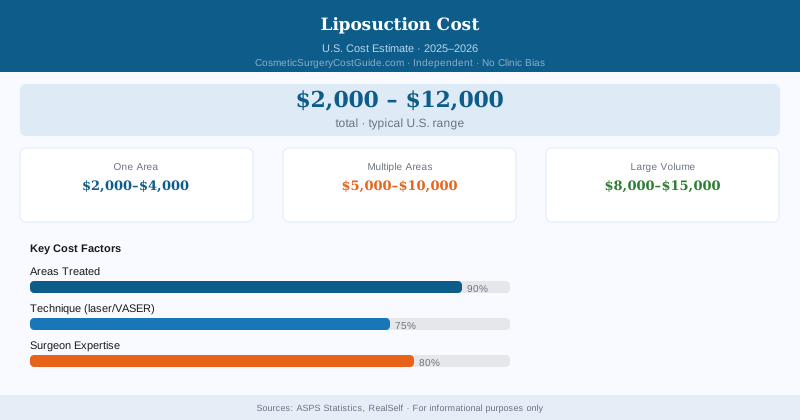
Liposuction is the most commonly performed cosmetic surgery in the United States — over 350,000 procedures per year according to ASPS data. It’s a body contouring tool, not a weight-loss procedure. And the cost depends heavily on how many areas you treat, where you are, and who does it.
ASPS 2024 reports the average surgeon fee for liposuction at $3,637. Add anesthesia and facility, and most patients pay $4,000–$10,000 depending on the scope.
Liposuction Cost by Body Area
| Treatment Area | Surgeon Fee | All-In Cost |
|---|---|---|
| Chin/neck | $1,500–$3,000 | $2,000–$4,500 |
| Upper arms | $2,000–$4,000 | $3,000–$5,500 |
| Bra rolls | $1,800–$3,500 | $3,000–$5,000 |
| Abdomen (upper or lower) | $2,500–$5,000 | $4,000–$7,000 |
| Full abdomen | $3,500–$6,500 | $5,500–$9,500 |
| Flanks/love handles | $2,000–$4,000 | $3,500–$6,000 |
| Abdomen + flanks (combined) | $4,000–$8,000 | $6,000–$12,000 |
| Inner thighs | $2,000–$4,000 | $3,500–$6,000 |
| Outer thighs/saddlebags | $2,000–$3,500 | $3,500–$5,500 |
| Knees | $1,500–$2,500 | $2,500–$4,000 |
| Buttocks | $2,000–$3,500 | $3,000–$5,500 |
| Male chest (gynecomastia) | $2,500–$4,500 | $4,000–$7,000 |
How Multi-Area Treatments Are Priced
This is where lipo pricing gets more nuanced. When you treat multiple areas in a single session, you pay anesthesia and facility once — spreading those fixed costs across every area treated. Most surgeons discount additional areas done in the same session.
A practical example: treating just the abdomen might cost $6,000 all-in. Adding the flanks in the same session might bring the total to $8,500 — not $12,000 (which is what you’d pay for two separate procedures). The more areas you bundle, the better your per-area value.
Before committing to a single-area treatment, think about all the areas you’d eventually like addressed. Treating them in one session: saves anesthesia fees (typically $900–$1,600 per procedure), one recovery instead of multiple, and often a lower combined surgeon’s fee. Many patients who start thinking they want just their abdomen end up also treating flanks once they understand the pricing logic — the marginal cost is often $1,500–$2,500 per additional area when bundled.
Types of Liposuction and Cost Differences
Tumescent liposuction: The standard. Fluid is injected to reduce bleeding and allow fat removal via cannulas. Most techniques build on this foundation.
VASER liposuction (ultrasound-assisted): Sound energy liquefies fat before removal, allowing more precise contouring and less trauma to surrounding tissue. Costs 15–25% more than standard lipo; worth it for high-definition contouring cases.
Power-assisted liposuction (PAL): A motorized cannula vibration lets the surgeon work more efficiently. Minimal cost premium over standard tumescent.
Laser-assisted liposuction (SmartLipo, SlimLipo): Laser energy both liquefies fat and tightens skin somewhat. Costs $500–$2,000 more. Most useful for areas where mild skin tightening is desired along with fat removal.
Hi-definition liposuction: An advanced technique that sculpts the surface to enhance muscle definition (six-pack, etc.). Significantly more expensive — $8,000–$20,000 for the abdomen — and requires a specialist with specific experience in this approach.
What Affects Price Most
Number of areas treated: By far the biggest price driver.
Surgeon credentials and location: Board-certified plastic surgeons command higher fees than other specialties performing lipo. Geographic premiums are real — California and New York average 30–50% above national rates.
Facility type: Outpatient surgery centers are 20–35% cheaper than hospital ORs. For 1–3 areas, an accredited outpatient center is typically appropriate and safe.
Anesthesia: Smaller areas (chin, bra rolls) can sometimes be done under local anesthesia with oral sedation, significantly reducing anesthesia costs. Large-volume or multi-area lipo typically requires IV sedation or general anesthesia.
Large-volume liposuction (removing more than 5 liters of fat) carries meaningfully higher medical risks including fluid shifts, pulmonary complications, and infection. ASPS guidelines recommend limits on the volume removed in a single session. Be skeptical of any provider offering to remove dramatic amounts of fat in one aggressive session — safety limits exist for good reason. Staged procedures are safer than trying to do too much at once.
Recovery and Additional Costs
- Compression garment (worn 6 weeks): $60–$150 if not included by surgeon
- Post-op lymphatic drainage massages: $75–$150/session, 4–8 sessions typical
- Medications: $75–$150
- Time off work: 3–5 days for desk work, up to 2 weeks for physical jobs
- Final results visible at 3–6 months (swelling takes time to fully resolve)
Bottom Line
Single-area liposuction with a board-certified surgeon: budget $3,500–$6,500 all-in. Multi-area treatment (abdomen + flanks + inner thighs): $7,000–$13,000. Get a consultation with a board-certified plastic surgeon who can assess your fat distribution and skin quality — that last part matters because lipo removes fat but doesn’t tighten skin. If you have significant skin laxity, a tummy tuck may be a better fit than liposuction alone.
Frequently Asked Questions
Liposuction costs between $2,000 and $8,000 per area in the United States, depending on the size of the area and surgeon expertise. Common treatment areas like the abdomen, thighs, flanks, and arms each fall within this range, with larger areas or multiple areas treated in one session typically costing toward the higher end.
No, liposuction is considered cosmetic surgery and is not covered by health insurance plans, meaning you will pay the full cost out-of-pocket. Some surgeons offer financing options or payment plans to help make the procedure more affordable for patients.
Most patients can return to light activities within 1 to 2 weeks, though full recovery typically takes 4 to 6 weeks before resuming intense exercise or heavy lifting. Compression garments must be worn for 2 to 4 weeks to minimize swelling and support the treated areas during healing.