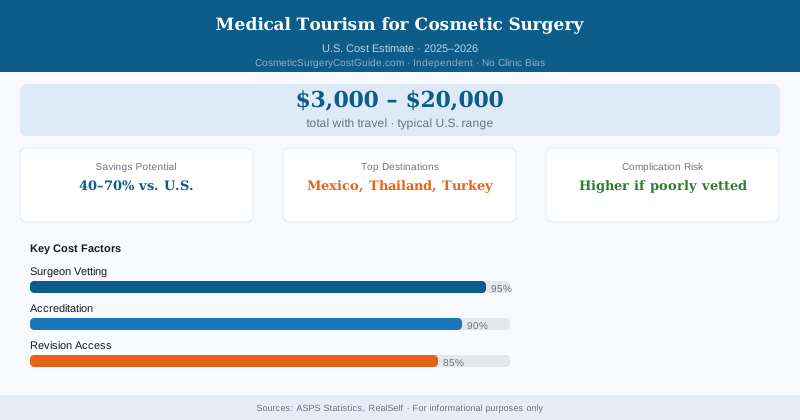
Over 1.4 million Americans travel abroad for medical procedures each year, and cosmetic surgery is among the most common reasons. The cost savings are real — procedures in Mexico, Colombia, Thailand, and Turkey routinely run 40–70% less than US prices for the same operations.
Whether those savings justify the trade-offs is a different question. And the honest answer is: sometimes yes, sometimes no. Here’s how to think through it carefully.
Cost Comparison: US vs. Medical Tourism Destinations
| Procedure | US Average All-In | Mexico | Colombia | Thailand | Turkey |
|---|---|---|---|---|---|
| Rhinoplasty | $8,000–$12,000 | $3,000–$6,000 | $3,500–$6,500 | $3,000–$6,000 | $2,500–$5,000 |
| Breast augmentation | $6,500–$11,000 | $3,000–$5,500 | $3,500–$6,000 | $3,500–$6,500 | $2,500–$5,000 |
| Tummy tuck | $9,000–$14,000 | $4,000–$7,000 | $4,500–$8,000 | $4,000–$7,000 | $3,500–$6,500 |
| Mommy makeover | $14,000–$22,000 | $6,000–$12,000 | $7,000–$13,000 | $7,000–$13,000 | $5,000–$11,000 |
| Hair transplant | $7,000–$15,000 | $3,000–$6,000 | $2,500–$5,000 | $3,000–$6,000 | $1,500–$3,500 |
| BBL | $8,000–$14,000 | $4,000–$8,000 | $4,500–$8,500 | — | $3,000–$7,000 |
Why Procedures Cost Less Abroad
The cost differential comes from real economic differences, not inferior care:
- Lower labor costs: Surgeons, nurses, and staff earn significantly less in Mexico, Colombia, and Turkey than in the US
- Lower overhead: Facility, malpractice insurance, and administrative costs are all lower
- Currency advantages: Favorable exchange rates have made procedures even more accessible for US patients
- Lower medical education debt: Foreign physicians often carry less student loan burden, which reduces compensation expectations
The best international surgical programs use high-quality imported implants, modern equipment, and surgeons trained at reputable institutions — sometimes in the US or Europe.
What to Verify Before Going Abroad
Not all international providers are equal. Before you book anything, work through this checklist:
Step 1 — Verify surgeon credentials:
- Board certification by the relevant national plastic surgery board (Mexico: CMCP, Colombia: SCCP, etc.)
- Membership in ISAPS (International Society of Aesthetic Plastic Surgery)
- Training history — where they completed their surgical residency
Step 2 — Confirm facility accreditation:
- JCI (Joint Commission International) accreditation is the gold standard for international hospitals
- Local facility accreditation from the country’s health ministry
- Dedicated ICU capability and blood bank on-site
Step 3 — Research patient history:
- Verified before-and-after photos from the surgeon’s actual patients
- Third-party review platform reviews (with long-term follow-up, not just fresh post-op results)
- Facebook groups and Reddit communities where patients share specific experiences with named providers
Step 4 — Have a video consultation with the surgeon — not a coordinator, the surgeon — before you commit to anything
Be cautious if a provider:
- Cannot provide verification of their board certification with the national plastic surgery board
- Facility is not JCI-accredited or nationally accredited
- Prices are dramatically below even local market rates (cheapest in Mexico isn’t necessarily safe in Mexico)
- Operates through social media DMs without a formal medical process
- Promises “package deals” that seem too convenient (housing + surgery at suspicious low prices without medical vetting)
- Cannot provide a video consultation with the surgeon before travel
The existence of medical tourism brokers doesn’t guarantee quality. Some brokers direct patients to the highest-commission facilities, not the best-quality ones.
True Total Cost of Medical Tourism
The advertised savings are partly offset by travel expenses and logistics:
- Flights: $300–$1,500 round trip depending on destination
- Accommodations: $50–$150/night × 10–21 days = $500–$3,150
- Recovery accommodations (medical tourism packages): Often $150–$400/night for combined room and nursing
- Companion travel: If you bring someone, double most costs
- Translation/coordination: Sometimes included in packages; sometimes an additional cost
- Post-procedure US follow-up: If complications arise after you return home, US physicians may not be familiar with your procedure — or willing to manage complications from surgery they didn’t perform
- Emergency costs: If a complication requires US emergency care, the costs can be enormous and uninsured
True total cost of a $6,000 tummy tuck in Mexico after adding $2,500 in travel and accommodation: $8,500 — versus $11,000–$14,000 in the US. Still meaningful savings, but not the 60% reduction advertised.
The most critical risk in medical tourism is not the procedure itself — it’s managing complications after you return home. Infection, wound separation, implant issues, and other complications that develop weeks after your return require care from US physicians who: (a) may have limited information about what was done, (b) may be reluctant to manage complications from other surgeons’ work, and (c) will bill at US rates for any emergency or follow-up care. Research your home city’s options for managing complications BEFORE you travel. Identify a board-certified plastic surgeon in your home city who will accept follow-up care if needed — many will not.
Procedures Best Suited to Medical Tourism
Some procedures carry lower complication risk and simpler follow-up, making medical tourism more practical:
Lower complexity: Hair transplants, minor facial procedures, injectable treatments in experienced hands
More complex: Body contouring, major breast surgery, rhinoplasty — these carry higher complication rates and require skilled follow-up
Highest risk: BBL — the mortality risk from this procedure makes selecting the highest-quality surgical team essential. The cheapest BBL option is not where to seek savings.
Bottom Line
Medical tourism offers genuine savings of 30–60% after all travel expenses are factored in. It makes sense when you’ve thoroughly verified surgeon credentials and facility accreditation, you understand the follow-up care plan, and you have a home-city physician who will manage any post-return complications. It carries real risks that US surgery does not — primarily around complication management. Turkey and Colombia have emerged as destinations with some highly reputable practices. Do significant research and allow 6–8 weeks abroad for adequate recovery before flying home.
Frequently Asked Questions
Medical tourism typically costs 40–70% less than US prices for the same procedures. For example, a facelift might cost $12,000–$15,000 in Mexico or Colombia versus $20,000–$30,000 in the US, though final prices depend on the surgeon's experience and facility quality.
No — cosmetic surgery is rarely covered by US health insurance whether performed domestically or internationally, since it is considered elective. You will pay out-of-pocket for the procedure itself, though you may be able to use a Health Savings Account (HSA) or Flexible Spending Account (FSA) if the surgery qualifies as medically necessary.
Most cosmetic procedures require 1–2 weeks before safe air travel, though full recovery takes 4–8 weeks depending on the type of surgery. You should plan to stay near your surgical facility for at least 5–7 days post-op for follow-up care and to monitor for complications before flying back to the US.