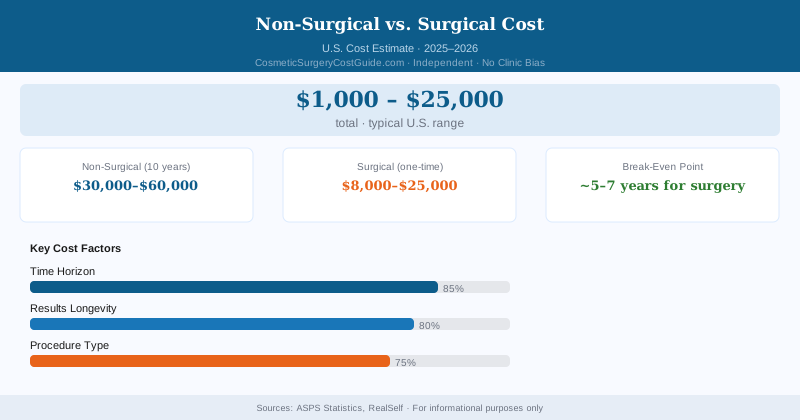
The average American who maintains a consistent injectable routine — Botox three times a year plus a couple filler syringes — spends $5,000–$8,000 annually on their face. Over a decade, that’s $50,000–$80,000. A facelift that lasts 7–12 years runs $12,000–$20,000 all-in.
That’s not an argument for surgery. Both tools have their place. But a lot of people assume non-surgical is the cheaper option by default — and it’s just not true once you do the math. A $700 syringe feels more manageable than a $12,000 procedure. Emotionally, that’s real. Financially, it’s worth examining.
The Accumulation Problem With Non-Surgical Treatments
Non-surgical cosmetic treatments are temporary by design. Botox wears off in 3–4 months. HA fillers dissolve in 6–18 months. Laser results aren’t permanent. CoolSculpting removes fat cells, sure — but it doesn’t stop new fat from accumulating if your weight goes up.
Surgical procedures aren’t permanent either. No cosmetic surgery stops the aging process. But the results last substantially longer. A facelift lasts 7–12 years. A rhinoplasty is permanent. An upper blepharoplasty holds up 10–15 years before you’d even think about touching it again.
That durability is what makes the 10-year math so surprising to people who haven’t run it.
Facelift vs. Injectable Maintenance: 10-Year Math
Take a 52-year-old dealing with jowling, neck laxity, and volume loss — a pretty typical scenario for someone researching facelifts.
Non-surgical approach:
- Botox (3x/year, 60 units): $1,620–$3,240/year
- HA filler (full-face maintenance, 4 syringes/year): $3,200–$5,600/year
- Sculptra (maintenance, 1 vial/year): $900–$1,100/year
- Total annual: $5,720–$9,940
- 10-year total: $57,200–$99,400
Surgical approach:
- Facelift (all-in): $12,000–$20,000
- Neck lift if included: sometimes combined at $2,000–$4,000 additional
- Fat grafting at time of surgery: $2,000–$3,500 add-on
- Ongoing Botox maintenance (reduced amount — forehead/brow area only): $800–$1,200/year
- 10-year total (facelift at year 1, possible revision at year 8–10): $20,000–$35,000
Surgery wins on 10-year cost by a factor of 2–3x. But that’s only true if the patient was already planning to maintain non-surgical treatment at this level anyway. That’s a key qualifier.
| Comparison | Non-Surgical 10-Year Cost | Surgical 10-Year Cost | Surgery Break-Even |
|---|---|---|---|
| Facelift vs. full-face injectable maintenance | $57,000–$99,000 | $20,000–$35,000 | Year 3–4 |
| Upper blepharoplasty vs. brow Botox + filler | $8,000–$14,000 | $5,000–$8,000 | Year 4–5 |
| Liposuction vs. CoolSculpting repeats | $6,000–$15,000 (3–4 rounds) | $4,000–$8,000 (one-time) | Year 2–3 |
| Rhinoplasty vs. non-surgical nose job maintenance | $3,000–$6,000 (repeats) | $7,000–$14,000 (one-time) | Year 8–10 |
| BBL vs. filler-based gluteal enhancement | $3,500–$7,000 (3 rounds) | $8,000–$15,000 (one-time) | Year 5–7 |
When Non-Surgical Wins on Cost
The surgical break-even calculation assumes consistent maintenance. Flip that assumption, and the math reverses completely.
Occasional Botox only ($800–$1,000/year): 10-year total $8,000–$10,000 vs. a $15,000 facelift. Botox is cheaper. Simple.
Single filler session for lips ($700/year): 10-year total $7,000 vs. lip implant surgery at $3,500–$5,000. Surgery might technically be cheaper, but the recovery and permanence are entirely different propositions. That’s not really a fair comparison.
Laser hair removal ($1,500–$3,000 for a body area over multiple sessions) vs. lifetime waxing ($600–$1,200/year × 15 years = $9,000–$18,000). Laser wins decisively by year 3–4.
Non-surgical wins when:
- Treatment volume is low or occasional
- You value reversibility more than permanence
- You’re not a surgical candidate for health reasons
- The surgical alternative doesn’t exist or doesn’t fit your goals
One element of surgical cost calculations that’s often missed: during recovery from surgery, patients typically pause their injectable and device maintenance for 3–6 months. A patient who gets a facelift in January won’t be spending on Botox, filler, or laser treatments through June. On a $5,000–$8,000 annual maintenance budget, that pause saves $1,250–$4,000 — a real offset to the surgical cost.
Additionally, post-surgical maintenance requirements often decrease after surgery restores structural volume and position. A patient who needed 4 syringes of filler annually to maintain the appearance of a lifted midface may need 1–2 syringes annually after a facelift achieves the structural correction the filler was approximating.
The Rhinoplasty Exception: Surgery Is Not Cheaper
This is the one comparison where non-surgical often wins, at least for the average patient.
Non-surgical rhinoplasty — injecting filler to smooth a dorsal hump, lift a tip, or correct asymmetry — costs $700–$1,200 per treatment and lasts 9–18 months. Over 10 years: $4,700–$13,000.
Surgical rhinoplasty: $7,000–$15,000 all-in, permanent.
Surgery only wins if you’re maintaining non-surgical rhinoplasty consistently for 8–10+ years. Plenty of patients don’t do that. They try it once or twice, decide it’s good enough, and move on. For those patients, surgery genuinely doesn’t pencil out.
There’s also the recovery to factor in. Surgical rhinoplasty means two weeks of significant downtime and 3–6 months before the final result is visible. Non-surgical has essentially none. You can’t separate the cost calculation from that reality.
The Non-Surgical Premium: What You’re Actually Paying For
When non-surgical is the more expensive option over time, you’re paying for real things. Don’t dismiss them:
- Reversibility: Fillers dissolve. Botox wears off. A bad result isn’t permanent.
- Zero recovery: No downtime, no two weeks off work, no social absence.
- Incremental commitment: You can stop at any point. You’re not locked into a surgical result.
- Lower single-event risk: Injectables carry risks, but they’re rarely on the same scale as surgical complications.
These matter. The question is whether they’re worth an extra $20,000–$60,000 over 10 years — and that answer is genuinely different for different people.
The 10-year cost calculations above assume stable pricing. In reality, Botox and filler costs have increased 15–25% over the past decade as demand has grown, product improvements have been priced in, and inflation has affected practice costs. Surgical procedure costs have also increased but more moderately. For patients in their 30s planning ahead, the long-term cost advantage of surgical procedures is likely to be larger than the current-pricing models suggest.
How to Actually Make This Decision
The cost comparison is one input, not the whole decision. A few other things that should be in the mix:
Where you are right now: If you’re 38 with mild jowling, non-surgical at $5,000–$6,000/year might be exactly the right call for another decade before surgery becomes the obvious choice.
Your risk tolerance: Surgery carries real risk — anesthesia, healing issues, results that don’t match what you expected. If that kind of risk genuinely weighs on you, the cost premium for non-surgical isn’t irrational.
Whether you can actually take time off: Some people can’t realistically take two weeks away from work for a facelift recovery. That constraint is real, and it changes the math.
What you’re actually trying to fix: Filler adds volume. Surgery repositions structure. These aren’t always interchangeable. A patient who needs structural correction isn’t getting that from filler no matter how much they spend.
Bottom Line
If you’re already spending $5,000–$8,000 a year on non-surgical maintenance, surgical procedures will typically break even on cost within 3–5 years and come out substantially cheaper over 10. If you’re an occasional-treatment person, non-surgical stays cheaper. The decision isn’t purely financial — recovery time, reversibility, and how much risk you’re comfortable with all play a role. But don’t walk into it assuming you’re taking the cheaper path just because you’re skipping surgery. Run the 10-year numbers first.