Here’s a belief that circulates constantly in rhinoplasty forums: “Revision rhinoplasty is just a touch-up. It should cost less than the original since they’re only fixing a small thing.”
That’s almost always wrong, and it’s worth explaining why — because the misunderstanding leads a lot of patients to go into revision consultations completely unprepared for what they’re going to hear.
Revision rhinoplasty is among the most challenging operations in all of plastic surgery. Every prior nose job leaves scar tissue behind, alters the cartilage structure, and changes the tissue relationships the next surgeon has to work with. According to the American Society of Plastic Surgeons (ASPS), revision rates for rhinoplasty are estimated at 5–15% — and those revision procedures are technically harder, longer, and more expensive than the first surgery, almost without exception. The surgeon isn’t doing less work. They’re doing harder work on less cooperative anatomy.
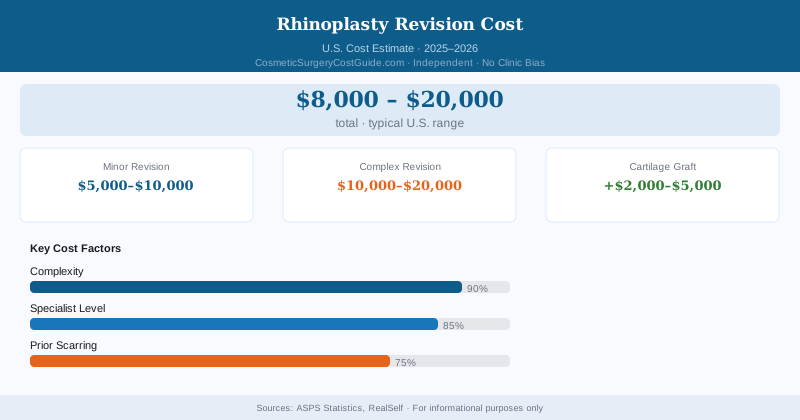
Revision Rhinoplasty Cost
| Revision Complexity | Surgeon Fee | All-In Cost |
|---|---|---|
| Minor revision (small refinement) | $3,500–$6,000 | $5,000–$9,000 |
| Moderate revision (structural work) | $6,000–$10,000 | $9,000–$15,000 |
| Major revision (significant reconstruction) | $8,000–$18,000 | $12,000–$25,000 |
| Top-specialist revision rhinoplasty | $12,000–$25,000 | $17,000–$35,000 |
| Primary rhinoplasty (for comparison) | $3,500–$8,000 | $5,500–$12,000 |
The most sought-after revision specialists in the US — surgeons who focus specifically on secondary rhinoplasty — charge $20,000–$35,000+ all-in, and they have waiting lists of 6–18 months. That’s not gatekeeping. That’s what their schedules look like because demand is real.
Why Revision Costs More: The Technical Reality
Scar tissue: After any rhinoplasty, the plane between tissue layers fills with scar. Surgeons can’t move through it the way they can through untouched anatomy. Every step is slower, more deliberate, more demanding.
Structural distortion: Previous cartilage work may have weakened or destabilized the underlying framework. What looks like a minor cosmetic issue from the outside can require rebuilding the structural foundation from scratch.
Cartilage deficit: Many primary rhinoplasties involve removing cartilage — shaving down a hump, for example. Revision may require adding cartilage back. That cartilage has to come from somewhere, and each source adds complexity:
- Septal cartilage: Easiest to harvest, but there may not be much left if the septum was already operated on
- Ear cartilage (conchal bowl): Good supply, works well for softer structural work, leaves a small scar behind the ear
- Rib cartilage: Unlimited supply and the strongest material available, but the harvest is a genuinely complex surgical step used for major reconstructions
Rib cartilage grafting is needed when:
- Sufficient septal and ear cartilage isn’t available (used up in prior surgeries)
- Major structural rebuilding is required
- Significant tip projection or support must be created from scratch
The rib harvest adds 30–60 minutes to the operating time and creates a small chest scar (typically 2–3cm, fades well). The rib warping risk (cartilage bending over time) is a known complication managed through carving technique. When rib cartilage is needed, the all-in cost typically runs at the higher end of revision pricing.
How Many Revisions Is “Too Many”?
Each successive rhinoplasty depletes the available tissue planes, cartilage supply, and blood supply. Most surgeons treat a third rhinoplasty as significantly higher risk than a second, and a fourth as very high risk. There’s no hard rule, but if you’re considering your third or fourth revision, you need the most experienced revision specialist you can find — not the most convenient one, and not the cheapest.
Finding a Revision Rhinoplasty Specialist
Another myth worth addressing: “Any rhinoplasty surgeon can handle revisions.” Not really. Revision rhinoplasty is a subspecialty within a subspecialty. When you’re looking for the right surgeon, focus specifically on:
- High volumes of revision rhinoplasty specifically — not just rhinoplasty overall
- Demonstrated experience with cartilage grafting, including rib
- Academic publications or presentations on rhinoplasty techniques
- Before-and-after portfolios of revision cases with anatomy similar to yours
- Membership in rhinoplasty-focused societies like the Rhinoplasty Society
One underrated resource: patient communities on RealSelf and Reddit’s rhinoplasty forums. People who’ve had successful complex revisions talk about their surgeons, and those names often surface before they appear in formal referral channels.
The Importance of Waiting After a Primary Rhinoplasty
Here’s something a lot of rhinoplasty patients genuinely don’t know: swelling takes 12–18 months to fully resolve. A result that looks off at 4 months can look completely different at 14 months.
Wait at least 12 months — ideally 18 — before consulting on revision. Most surgeons who see patients at the 12-month mark tell them one of three things: keep waiting, you’re actually happy now that the swelling is gone, or yes, you’re a candidate and here’s the plan. Revising at 4–6 months, when tissues aren’t settled, produces less predictable results and is technically harder for the surgeon.
If you’re unhappy with your rhinoplasty result, consult with your original surgeon first — but also seek at least one independent second opinion from a different board-certified rhinoplasty surgeon before proceeding with revision. Some surgeons are appropriately conservative; others may recommend revision prematurely before full healing has occurred. An independent opinion from a surgeon with no financial stake in your decision is extremely valuable.
What the All-In Revision Cost Includes
When a reputable revision practice gives you a quote, it should cover all of this:
- Surgeon’s fee
- Anesthesia (most revisions require general anesthesia)
- Accredited facility fee
- Rib or ear cartilage harvest if needed (typically included in the surgeon’s fee with a small additional facility time charge)
- All post-operative follow-up for 1–2 years
- A revision policy for touch-up work if needed
If a quote is missing any of these, ask directly what’s not included and get it in writing.
Bottom Line
Moderate revision rhinoplasty with a board-certified rhinoplasty specialist: budget $9,000–$15,000 all-in. Complex reconstructions run $15,000–$25,000+. Surgeon selection matters even more for revision than for a primary procedure — the technical demands are higher and there’s less margin for error. Wait 12–18 months after your primary surgery before consulting. Get at least two independent opinions before committing to anything.